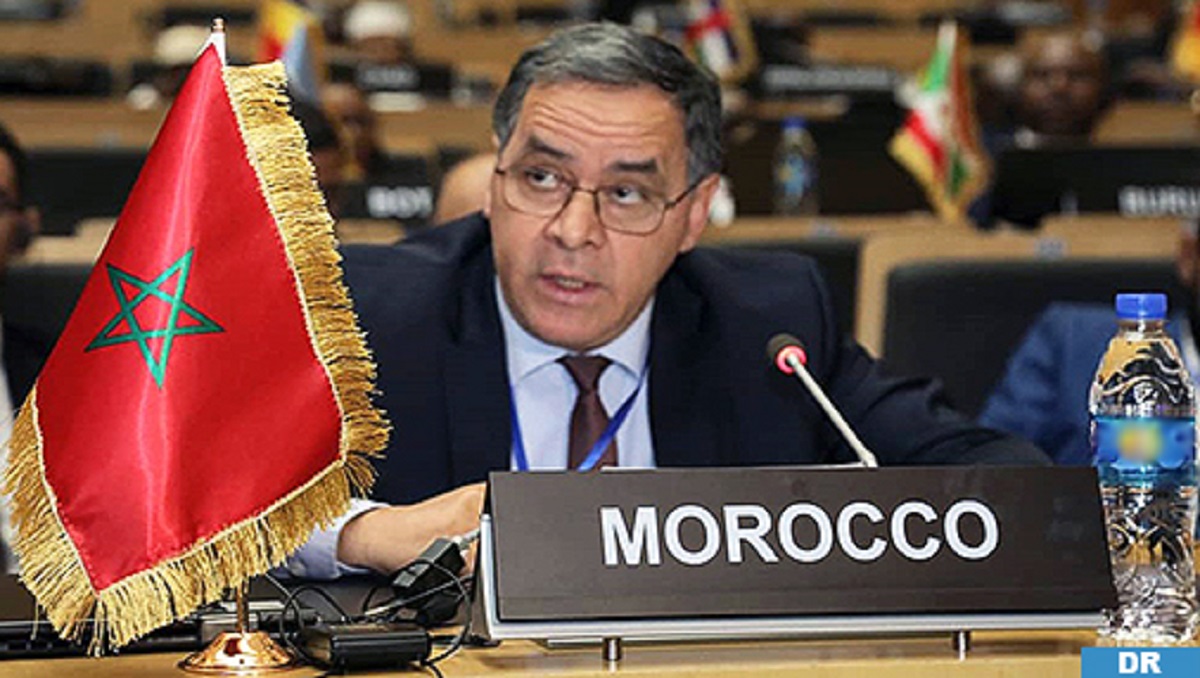
Addressing the Peace and Security Council, Ambassador Mohamed Arrouchi underscored the Kingdom’s consistent mediation efforts, ranging from the pivotal Bouznika meetings to more recent dialogues involving representatives from Tripoli and eastern Libya.
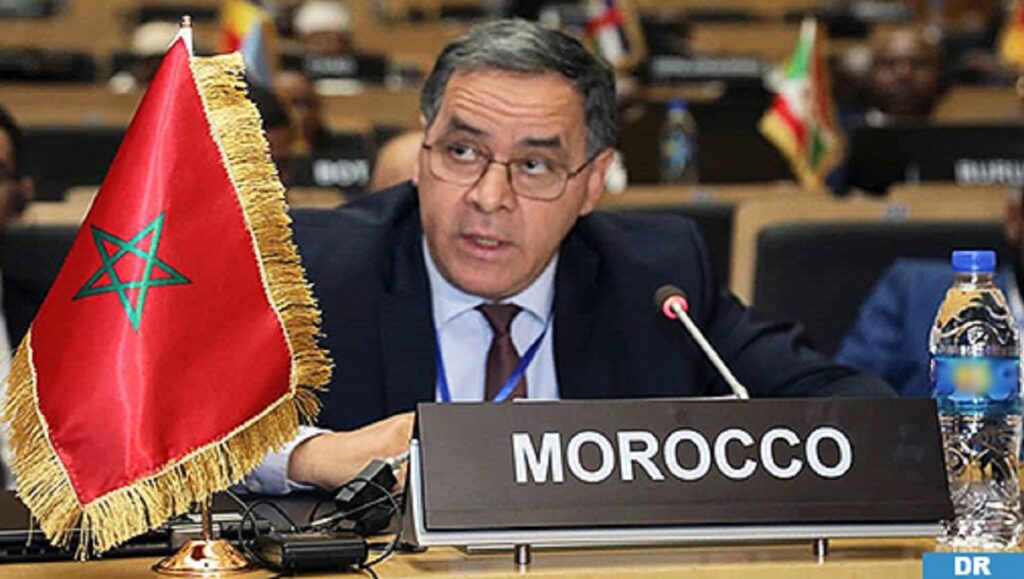
Morocco recently reaffirmed its unwavering dedication to achieving a political resolution for the ongoing Libyan crisis during a session of the African Union’s Peace and Security Council (AUPSC).
During a focused discussion on the situation in Libya, Mohamed Arrouchi, Morocco’s Ambassador and Permanent Representative to both the African Union and the United Nations Economic Commission for Africa, reiterated the Kingdom’s strong support for national reconciliation initiatives and ongoing dialogue among Libya’s various factions.
Ambassador Arrouchi underscored that the Skhirat Agreement, signed on December 17, 2015, under the auspices of the United Nations, remains a foundational framework for forging a sustainable resolution to the prolonged conflict. He further stressed the paramount importance of preserving Libya’s unity, sovereignty, and territorial integrity.
Morocco also expressed its profound appreciation for the African Union’s persistent efforts in fostering peace, security, and stability across the continent, particularly its initiatives aimed at facilitating a political pathway out of the Libyan crisis.
The ambassador also referenced significant meetings held in Tripoli and Zenten, which culminated in an agreement signed on January 7, 2026, in the Libyan capital. This accord was reached between representatives of the Government of National Unity and the eastern Libyan administration.
Furthermore, he highlighted Morocco’s instrumental role in guiding Libya’s political trajectory through its dedicated endeavors to bridge divides and encourage rapprochement among the diverse Libyan stakeholders.
According to Arrouchi, these diplomatic engagements are firmly anchored in international legality, uphold the principles established by the Skhirat Agreement, and align with the understandings forged in Bouznika. In this context, the Kingdom reiterated the critical necessity of pursuing continuous efforts toward a political settlement, explicitly rejecting military interventions.