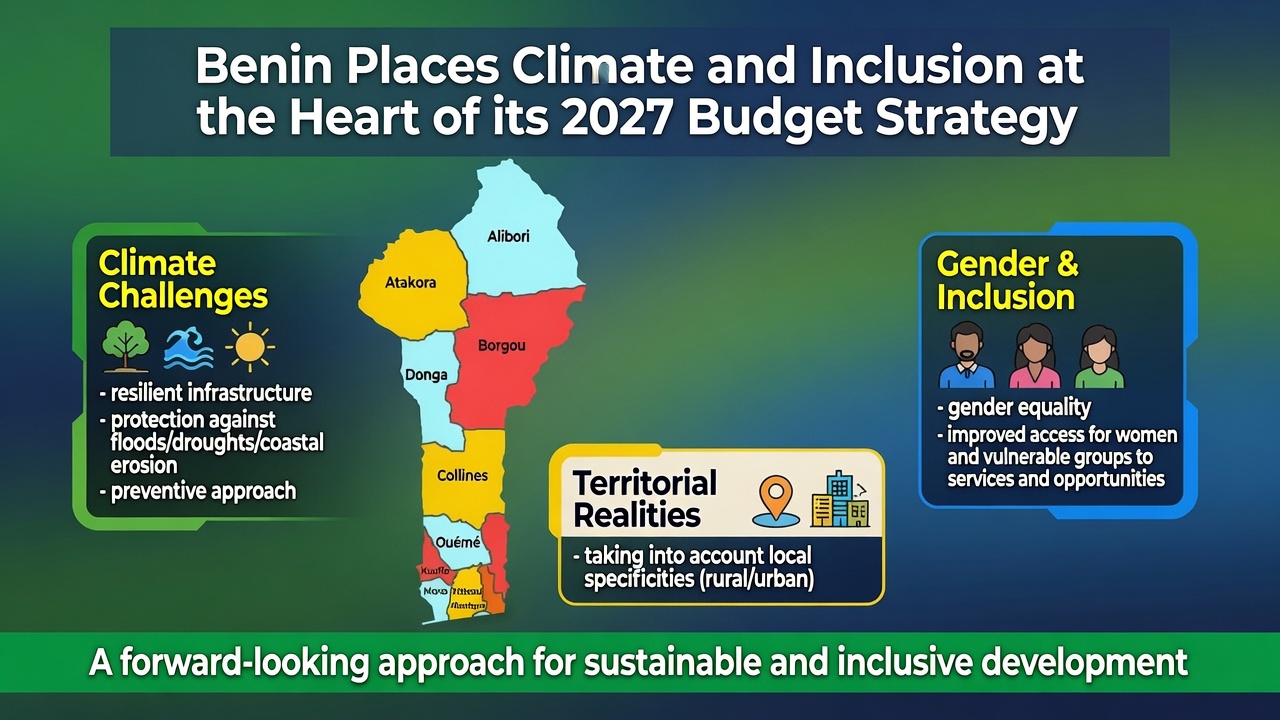
Benin has embarked on a transformative journey in public policy modernization with its 2027 budget framework. The inaugural government of the seven-year term has made a strategic decision to embed climate resilience, gender equality, and regional disparities at the core of fiscal planning. This forward-thinking approach transcends conventional budgetary management, positioning public investment as a catalyst for sustainable development and societal resilience.
A paradigm shift in fiscal planning
The 2027 budget framework reflects a fundamental shift in how Benin approaches financial governance. In an era defined by escalating climate crises, dwindling natural resources, and persistent social inequalities, the government recognises the critical need for proactive measures over reactive responses. This vision underscores a commitment to long-term stability rather than short-term crisis management.
Climate resilience as a fiscal priority
The integration of climate risk mitigation into budgetary decisions marks a significant evolution in national economic strategy. By directing investments toward resilient infrastructure, enhancing protections for vulnerable communities, and bolstering disaster preparedness, the government aims to mitigate the devastating impacts of floods, droughts, and coastal erosion. This preventive approach not only safeguards populations but also reinforces economic stability by reducing the long-term financial burden of climate-related disasters.
Gender mainstreaming in public finance
Another groundbreaking development lies in the explicit incorporation of gender considerations into budgetary planning. Acknowledging that public policies often yield unequal outcomes for women and men, the administration is taking decisive steps to foster a more equitable society. This initiative ensures that women, youth, and marginalised groups gain improved access to essential services, economic opportunities, and social protection mechanisms, thereby strengthening inclusive growth.
Territorial equity and localised development
The recognition of regional disparities represents yet another critical advancement. Urban and rural areas face vastly different challenges, requiring tailored policy responses. By integrating localised needs into budgetary preparations, the state enhances the efficacy of its interventions, ensuring that national priorities align with ground realities. This localisation strategy bridges the gap between policy formulation and citizen experience, fostering a more responsive and effective public sector.
A strategic tool for national transformation
This budgetary evolution signals a broader shift toward strategic, anticipatory governance. No longer confined to fiscal numbers, the budget emerges as a dynamic instrument capable of guiding Benin’s economic, social, and environmental transformation. By addressing vulnerabilities proactively, the government positions itself to build a more resilient and adaptive nation, better equipped to navigate the complexities of the 21st century.
Strengthening international partnerships
The adoption of this integrated approach enhances Benin’s standing among international partners and financial institutions. Global stakeholders increasingly prioritise climate-resilient, socially inclusive, and sustainable budgetary policies. By aligning with these emerging standards, Benin positions itself to attract greater funding for resilience projects, ecological transition initiatives, and territorial development programmes.
A vision for sustainable progress
The 2027 budget framework exemplifies a commitment to proactive governance over crisis response. By embedding climate, social, and territorial considerations from the outset, the government demonstrates a modern, forward-looking approach to public finance management. This strategy not only fosters resilience and equity but also lays the groundwork for a more balanced and sustainable development trajectory, ensuring shared prosperity across all segments of Beninese society.