Can a single authority resolve the tug-of-war between tourism growth and wetland loss along Benin’s most strategic coastline? The government in Cotonou is betting it can. A new body has been tasked with supervising development across the Fidjrossè-Ouidah corridor — a stretch where the Route des Pêches tourism drive collides with chaotic occupation of wetlands and mounting flood risk.
A corridor transformed by investment
On Benin’s southern coast, the axis linking Fidjrossè to Ouidah has become a showcase of the country’s ongoing transformation. Once defined by natural spaces, wetlands and local livelihoods, this corridor now attracts heavy investment aimed at boosting its appeal.
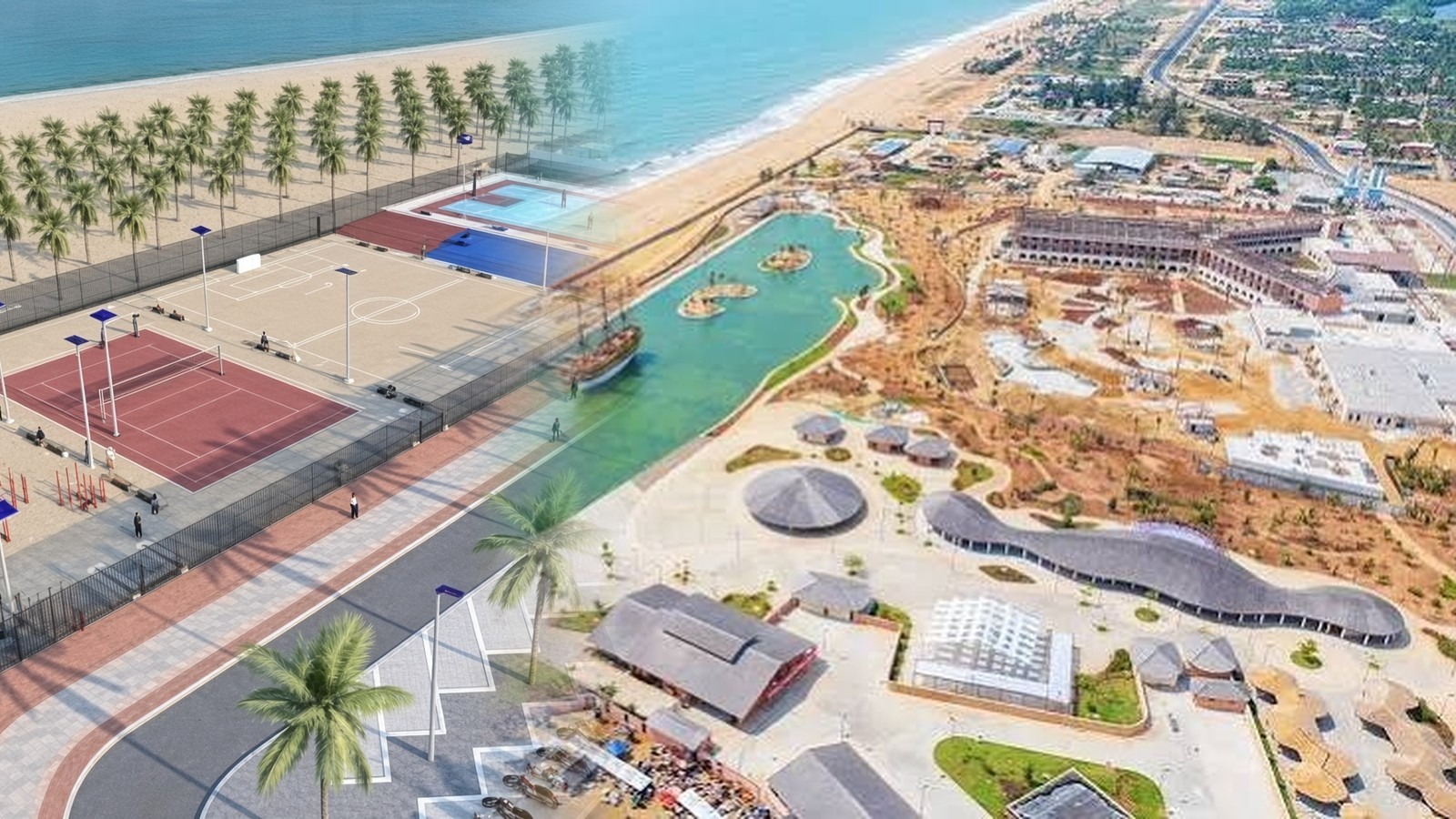
New roads, drainage works, landscaping and tourism infrastructure have gradually reshaped this stretch of shoreline.
But modernisation cuts both ways. Rising land pressure and human activity are threatening natural areas — particularly the marshes and wetlands that play a vital role in water regulation.
It is precisely this tension between development and preservation that the government now intends to bring under control.
Wetlands at the centre of the debate
According to the findings presented at the Council of Ministers, parts of the public natural domain are being occupied in an unregulated manner. Marshes and other wetlands are especially affected.
These areas are not simply vacant land awaiting urbanisation. They help retain water and reduce the impact of heavy rainfall.
Their artificialisation or gradual occupation erodes that natural capacity. For Benin’s authorities, this is an aggravating factor behind flooding.
The creation of a structure dedicated to this territory aims to prevent tourism and real estate ambitions from causing irreversible damage to the natural environment.
A new authority to coordinate competing uses
The future Authority for the Development of the Basins of the Fidjrossè-Ouidah Zone will have a particularly broad mandate.
It will coordinate territorial planning, environmental protection, urban and landscape development, as well as tourism development and sustainable coastal management.
Its intervention perimeter will notably cover the sensitive and wetland areas between Fidjrossè and Ouidah.
This creation complements the framework set out by Benin’s 2018 law on the protection, development and enhancement of the coastal zone. That law established the National Cell for Coastal Protection and Management to coordinate actions related to coastal preservation.
Erosion and submersion: the other threats
The issue is not limited to rain-driven flooding.
The coastline is also exposed to coastal erosion and marine submersion. The new Authority will therefore help implement structures and measures to limit these risks, in collaboration with the relevant administrations.
It will also monitor the environmental quality of the sector and regulate discharges, pollution and nuisances likely to affect the coastal domain.
Particular attention will be paid to the dune belt, coastal ecosystems and wetlands, whose preservation is now seen as a condition for the sustainability of the developments underway.
Tighter control over construction
Another key dimension is urbanisation.
The new structure will enforce urban planning rules and specifications applicable to various projects. It will also monitor land use and ensure compliance with architectural and urban standards specific to the coast.
Its role will be especially important for temporary occupation permits on the public maritime and lagoon domain. Its binding opinion will be required before they are granted.
This provision should strengthen oversight of activities and installations in a territory where multiplying uses can quickly clash with environmental imperatives.
Tourism remains central to the strategy
The creation of this Authority does not mean tourism development is being called into question. Rather, according to the government, it is about organising it better.
The structure will review projects involving tourism, seaside, cultural and recreational infrastructure. It will also coordinate commercial, artisanal, sports and tourism activities along the coastal strip.
The goal is to make several functions coexist in the same space: tourism, leisure, economic activities, urbanisation and environmental protection.
A balance that will be decisive for the future of the Route des Pêches, one of Benin’s flagship tourism development projects.
The private sector called to participate
To finance and operate future facilities, the government is also banking on public-private partnerships.
The new Authority will be tasked with promoting this type of collaboration to mobilise investment around planned infrastructure and equipment.
This approach comes as Benin seeks to strengthen its tourism appeal and turn its coastline into a driver of economic development.
But the success of this strategy will also depend on the authorities’ ability to prevent investment and urbanisation from weakening the very natural spaces they seek to enhance.
A new stage in Benin’s coastal management
The new Authority’s statutes have already been approved by the Council of Ministers. The minister in charge of the Living Environment and Sustainable Development must now, together with other relevant ministries, organise its effective establishment.
For Benin, the challenge goes beyond simply creating a new administration. It is about regaining control of a territory under growing pressure, even as it stands as one of the country’s showcases for tourism development.
Between wetland protection, erosion control, urbanisation oversight and tourism development, the Fidjrossè-Ouidah corridor now appears as a full-scale laboratory for the difficult equation between urban growth and coastal preservation.