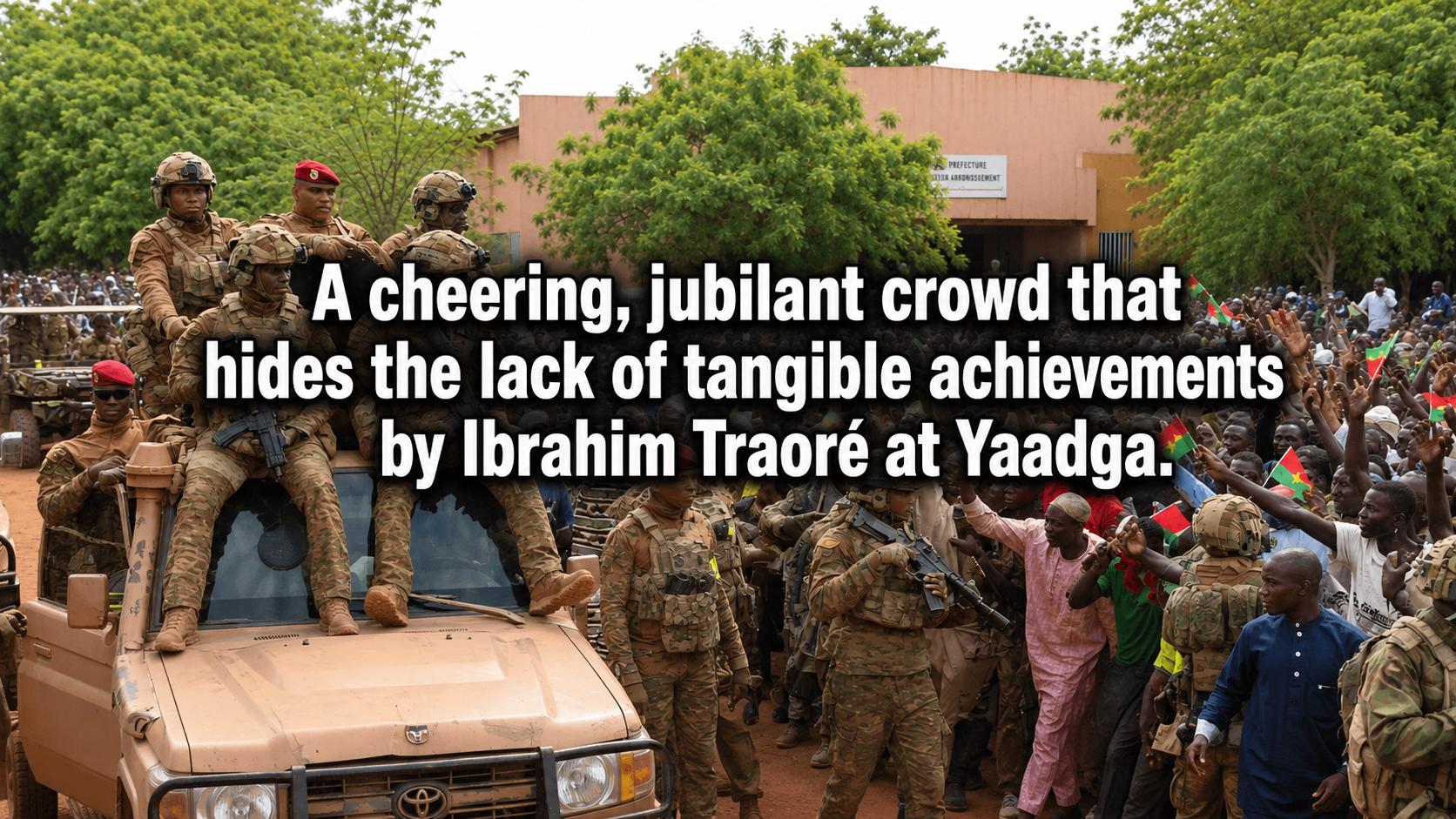
Footage from Captain Ibrahim Traoré’s recent visit to the Yaadga region in Burkina Faso captured scenes of jubilant crowds lining the streets to welcome and farewell him. While his supporters view these gatherings as evidence of overwhelming public endorsement for his leadership, such enthusiasm does not necessarily reflect the true state of governance.
Political leaders across nations often receive enthusiastic receptions during official visits, yet these moments rarely serve as accurate measures of effective governance. True evaluation comes from assessing concrete policies, measurable outcomes, and tangible improvements in citizens’ daily lives.
Critics argue that Ibrahim Traoré’s leadership strategy is heavily reliant on populist rhetoric. Frequent references to national pride, historical narratives, and criticism of neighboring countries dominate his public addresses, while ordinary Burkinabè citizens prioritize immediate solutions to pressing challenges. For these observers, such discourse is more about sustaining emotional engagement than delivering tangible progress.
Rather than emphasizing regional history or external blame for Burkina Faso’s struggles, detractors suggest the head of state should redirect his focus toward fulfilling commitments to the population. Key areas of concern include security, economic revival, youth employment, access to public services, and poverty reduction.
According to these critics, the current governance model prioritizes symbolic gestures over concrete results. While appeals to sovereignty and national dignity resonate with segments of the population, they cannot substitute for critical needs such as infrastructure, education, healthcare, jobs, or sustainable security in conflict-affected zones.
There are also concerns that this approach serves as a political distraction. Public debates centered on international relations or historical grievances risk overshadowing the urgent priorities of Burkinabè citizens. Citizens demand measurable progress, not merely motivational speeches.
The viral images of public enthusiasm should not be mistaken for an endorsement of policy performance. Historical precedents demonstrate that a leader’s popularity is often transient, heavily dependent on long-term results rather than fleeting displays of support.
Ultimately, critics assert that Burkina Faso requires governance rooted in tangible achievements rather than persistent communication campaigns. While inspiring speeches and historical references can bolster an image, they cannot replace essential reforms, investments, and solutions to the nation’s most pressing challenges. Until tangible progress aligns with public expectations, displays of popularity will fall short of addressing the unmet needs of the Burkinabè people.