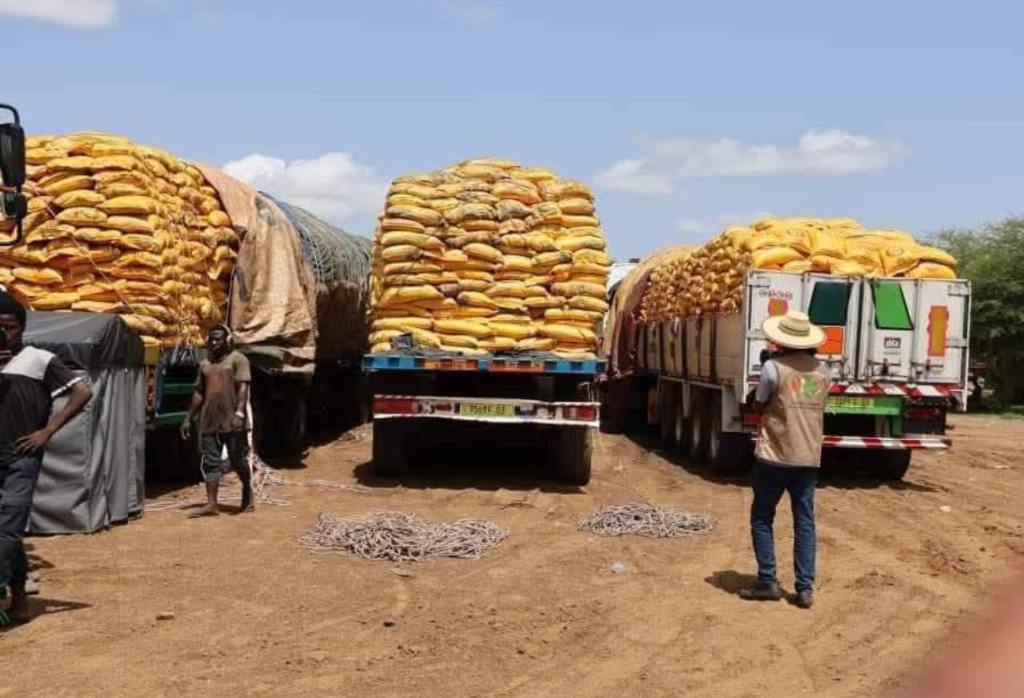
Burkina Faso’s promises of self-sufficiency are crumbling under the weight of a deepening food crisis, as the transitional government scrambles to plug the gap with emergency rice donations from Pakistan, China, and Canada.
The stark reality emerges from recent shipments: 2,422 metric tons of Pakistani rice arrived in Ouagadougou, a symbolic gesture that exposes the stark disconnect between military rhetoric and on-the-ground failure. Over three years into the rule of the Patriotic Movement for Safeguarding and Restoration (MPSR), security and food systems remain in tatters, with more than 3.5 million Burkinabè now dependent on international aid just to survive.
From slogans to shortages: the illusion of food sovereignty
While Captain Ibrahim Traoré’s government touts its vision of “reclaimed sovereignty,” the influx of foreign rice tells a different story. Each shipment—whether from Islamabad, Beijing, or Ottawa—serves as a public admission of policy failure. What was meant to be the backbone of Traoré’s leadership—local agricultural revival—has instead collapsed into a desperate cycle of external dependency.
The situation is especially dire in the northern and eastern regions, where insecurity has severed supply chains and left communities isolated. Once the breadbaskets of the nation, these areas now face extreme food shortages, with families surviving on handouts rather than harvests. Despite government claims, these regions are far from “liberated”—they are trapped in a cycle of vulnerability, cut off from normal trade and agricultural recovery.
Security failures fuel a humanitarian emergency
Observers increasingly point to the junta’s military-first strategy as the root cause of the crisis. Heavy-handed operations and armed group blockades have devastated rural livelihoods, turning fertile land into abandoned fields. Over 2 million people have been displaced, their displacement not just a humanitarian tragedy but a direct blow to the nation’s food production capacity.
According to the Integrated Food Security Phase Classification (IPC), parts of the country are teetering on the brink of Phase 4: emergency. The outlook is bleak: by year’s end, more than 600,000 children are projected to suffer from acute malnutrition. These numbers aren’t just statistics—they represent lives hanging in the balance as the rainy season approaches and food stocks dwindle.
Distrust deepens: aid flows stall as transparency fades
The arrival of Pakistani rice, managed by the Ministry of Humanitarian Action, has done little to ease international concerns. Donors and aid groups now question not just the effectiveness of distribution but the very credibility of Burkina Faso’s crisis governance. Military control over aid channels and strained relations with humanitarian organizations have eroded trust, leaving the 2026 Humanitarian Response Plan only 18% funded.
This funding shortfall is more than a budgetary gap—it reflects a growing skepticism among donors toward Ouagadougou’s political direction. When aid becomes the primary response to a crisis of governance, it signals systemic failure rather than resilience. For Traoré, the message is clear: sovereignty cannot be declared from a television studio. It must be built in fields that remain unsecured, in markets that remain closed, and in policies that prioritize long-term recovery over short-term propaganda.
The rice from Pakistan offers only a fleeting reprieve for a nation on the edge. Without real security, real investment in rural agriculture, and real accountability, Burkina Faso’s path to food independence remains a distant dream—one that continues to slip further out of reach with every passing season.