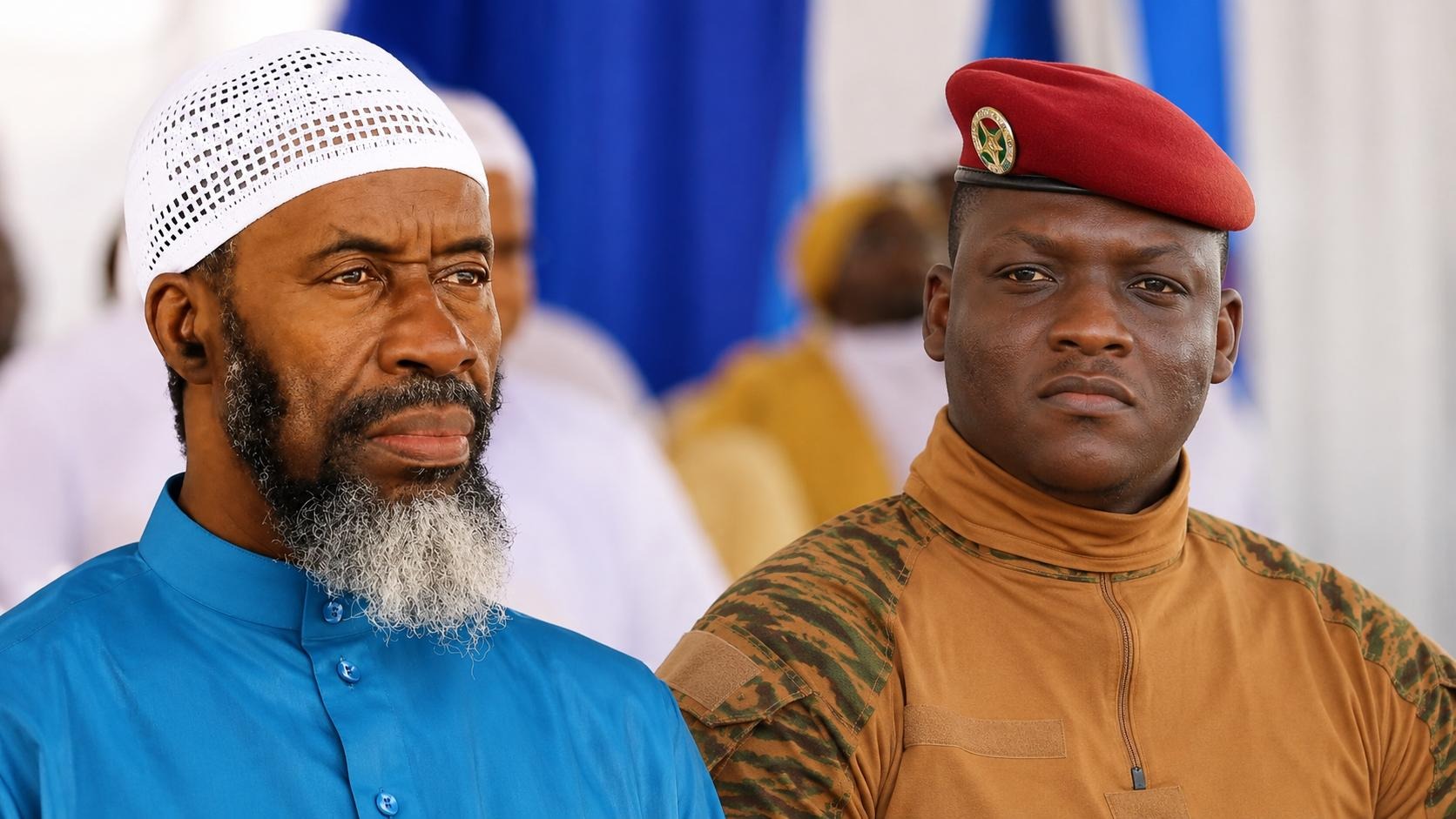
The recent decision by authorities in the Kadiogo region to shut down the largest Sunni mosque in Ouagadougou has sent shockwaves through public opinion. While the government has long relied on the fervor and backing of religious communities to bolster its legitimacy, this abrupt action marks a stark departure that risks deepening the country’s already fragile social fabric.
An administrative order issued on May 28, 2026, seals the doors of this prominent Sunni mosque under the pretext of preventing « threats to public order ». Though preserving security remains a core state duty, the timing of this drastic measure raises serious questions about the long-term strategy of Burkina Faso’s leadership in dealing with its former allies.
a calculated gamble that backfired
To understand this decision, one must revisit the political dynamics that shaped Burkina Faso’s recent history. During periods of transition and political consolidation, the current administration actively courted religious and community leaders, often leveraging their influence for public support. The Sunni movement, known for its disciplined following and mobilization capacity, became a critical pillar of popular legitimacy.
By exploiting themes of piety, nationalism, and religious simplicity, officials transformed places of worship into platforms for political endorsement. Believers, who once rallied behind what they believed was a noble cause for national stability, now find themselves on the receiving end of a bitter irony: the very spaces that amplified their voices in support of the regime now stand locked by the same authorities they helped elevate.
« Turning faith into a political tool only to later criminalize its expressions at the first sign of dissent reveals a dangerous miscalculation—one Burkina Faso can ill afford in its current state. »
a risky move in a fragile context
Burkina Faso stands at a crossroads, grappling with a multidimensional crisis where social cohesion remains the last line of defense. In such a precarious environment, directly confronting a major religious group is not just ill-advised—it is destabilizing. Rather than easing tensions, the abrupt closure risks fueling resentment, fostering a sense of betrayal among worshippers, and pushing grievances underground, where they become harder to manage.
The haste with which this administrative decision was executed underscores a troubling lack of judgment regarding the delicate balance of social relations. When a state silences a community’s central place of gathering under vague security pretexts, it does not prevent unrest—it incubates dissent.
dialogue must prevail over repression
The rule of law must be upheld, but justice loses its moral authority when applied selectively against those who once placed their trust in inclusive governance. Burkina Faso’s leaders would do well to remember that stability is not built by shuttering mosques, but by engaging in genuine, patient, and transparent dialogue with faith-based leaders and civil society.
Continuing down this path of repression risks alienating a key religious constituency and reinforcing accusations of political opportunism and ingratitude. The government would be wise to suspend this order immediately and prioritize mediation before the divide between the state and its religious base becomes unbridgeable.