A recent joint portfolio review conducted in Yaoundé on July 14, 2026, between the Cameroonian government and the African Development Bank (AfDB) has unveiled a critical financial vulnerability for Cameroon. Seven significant operations, previously approved by the pan-African institution’s authorities and valued at 373.419 million Units of Account (UA) – approximately 292 billion FCFA – now face the risk of cancellation. This precarious situation stems not from a lack of available funds but rather from protracted internal procedural delays hindering project implementation.
It is crucial to clarify that these are not funds already disbursed that Yaoundé would be obligated to repay. Instead, these allocations represent approved loans and grants from the AfDB where either the necessary agreements were not signed within stipulated deadlines, or, despite legal formalization, no payments have been initiated. Six of these cases fall into the former category, with one project representing the latter. The cumulative value of financings awaiting agreement signatures alone amounts to 339.419 million UA, equivalent to nearly 265 billion FCFA.
Ngoura-Yokadouma road: a 207 billion FCFA symbol of stalled progress
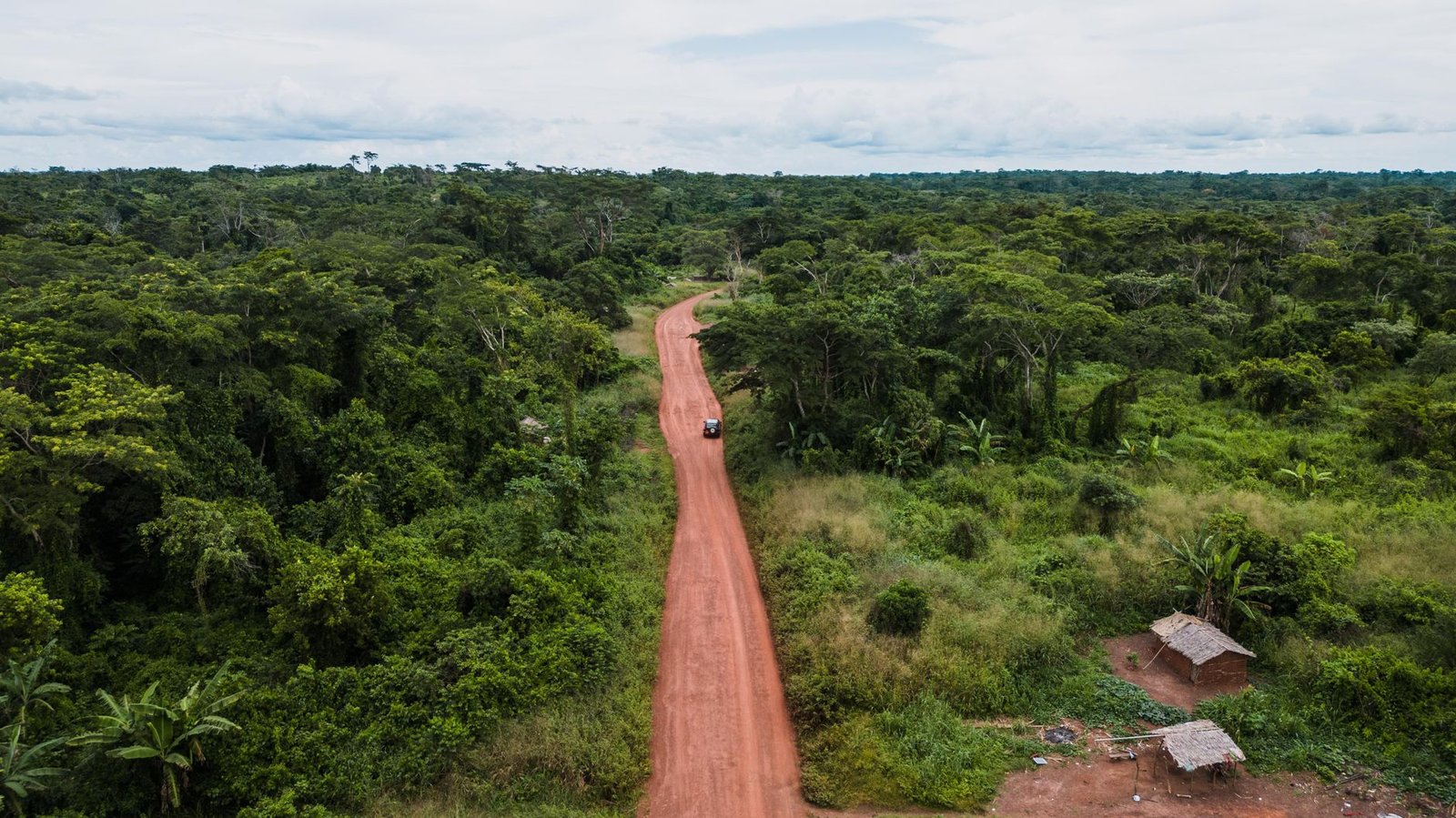
One particular initiative stands out due to its sheer scale. The Cross-Border Economic Basins De-enclavement and Connectivity Program, designated to fund the development of the Ngoura-Yokadouma road in Cameroon’s Eastern region, single-handedly accounts for 265.4 million UA, or approximately 207 billion FCFA. This massive operation alone represents over 71% of the total funds currently exposed to cancellation risk. Despite its approval on February 18, 2026, the loan agreement for this vital infrastructure project was still awaiting signature at the time of the review.
Five additional projects find themselves in a similar administrative deadlock. Among the operations awaiting signature is Phase 2 of the Pan-African University Support Project, allocated 3.64 million UA by the African Development Fund (AfDF) and approved on December 19, 2024. Also stalled are the Minkouma hydroelectric development study on the Sanaga River (2.994 million UA), the CUA-Y2 university city study project (2.320 million UA), and the PROSTABLT program focused on risk prevention through stabilization efforts in the Lake Chad basin (5.095 million UA).
Furthermore, a crucial regional strategic initiative is on this list: the transport and trade facilitation project, which includes the construction of a bridge over the Ntem River at the border with Equatorial Guinea. Approved on November 29, 2023, this project combines an AfDB loan of 39.97 million UA and an AfDF loan of 20 million UA.
PARZIK2: fifteen months without a single disbursement
The seventh project highlights a distinct yet equally costly issue. The second phase of the Kribi Industrial and Port Zone Access Roads Development Project, known as PARZIK2, actually boasts a signed agreement. However, despite this formalization, over fifteen months have passed since the signature without a single disbursement from its 34 million UA allocation, equivalent to approximately 26.54 billion FCFA. This project has thus also entered the high-risk category, even though Kribi is recognized as a pivotal component of the nation’s industrial and port strategy.
Execution cycle: twice as slow as the standard
The data presented during the review paints a troubling picture of project execution. The average time from a financing approval to the signing of its agreement currently stands at twelve months, significantly exceeding the AfDB’s standard of three months. Subsequently, an average of sixteen months passes before the agreement enters into force, compared to an expected five months. The first disbursement typically occurs twenty-one months post-approval, while the target is a mere twelve months. This means nearly two full years can elapse before any funds are effectively deployed on the ground.
Alamine Ousmane Mey, the Minister of Economy, Planning, and Regional Development, acknowledged the gravity of these findings. He highlighted several contributing factors, including inadequate project preparation, prolonged public procurement processes, deficiencies within certain management units, and the delayed mobilization of counterpart funds that the state is required to provide as a complement to external resources. Such inefficiencies not only escalate project costs but also undermine Cameroon’s credibility with its international donors.
Since its inaugural operation in Cameroon in November 1972, the AfDB has committed to 130 loans and grants, totaling an estimated 3.345 trillion FCFA. The current 2023-2028 program outlines eleven new operations, with an approved volume projected at 833.8 billion FCFA. However, the critical challenge remains transforming these substantial commitments into tangible, effective projects. This conversion process currently represents the weakest link in the financial cooperation between Yaoundé and the pan-African institution.