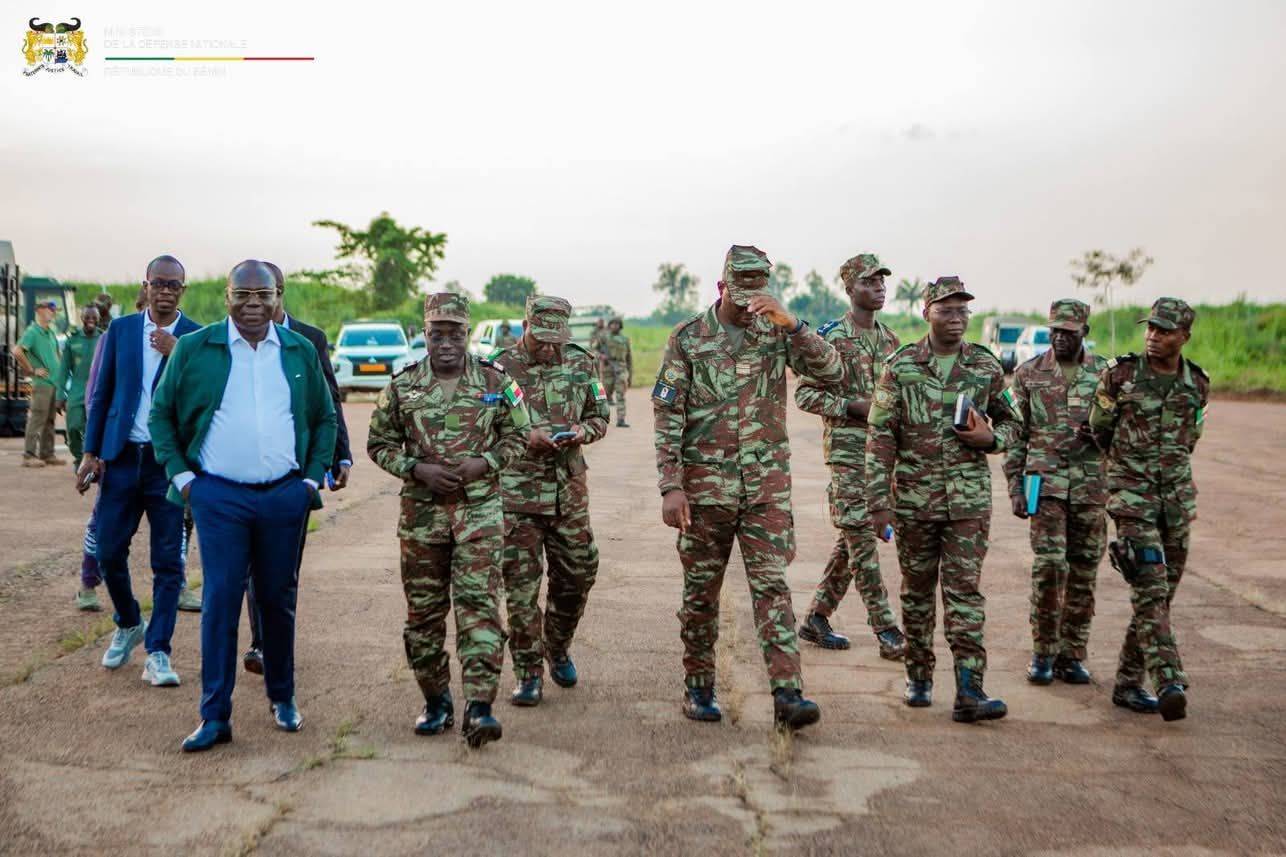
Is Benin’s ambition to train its own military pilots, drone operators and aircraft technicians entirely on home soil realistic — or is a crumbling runway at the heart of the Cana air base about to expose the gap between political rhetoric and operational reality? That is the uncomfortable question hanging over the École aéronautique militaire de Cana (EAM-Cana) after a high-level ministerial immersion laid bare both its promise and its pressing infrastructure needs.
Inside the EAM-Cana: training ground for Benin’s air force
Set within the Cana air base, the EAM-Cana exists to sharpen the aeronautical skills of the Beninese armed forces. Its curriculum covers piloting, aircraft maintenance, air traffic control and technical support. Classrooms, flight simulators, workshops and innovation spaces are all geared towards equipping service members for the growing demands of the air force. The institution is also involved in training the 100 drone pilots recruited by the general staff.
Why a ministerial visit put the school’s future under the spotlight
It was against this backdrop that the minister delegate in charge of national defence, Gildas Habib Bignon Agonkan, travelled to Cana on Friday, 9 October 2026. The working visit allowed him to assess the school’s capabilities, exchange views with its leadership and hear directly about the needs of the training units stationed on the base.
Welcomed by Lieutenant-Colonel Olayéni Thierry Monda, commander of the Cana air base, the minister attended a series of briefings covering the missions, equipment and difficulties faced by military structures. Among those presenting were the 1st Mixed Artillery Battalion, the National Officers’ School and the Peacekeeping Operations Training Centre.
What the minister saw: simulators, drones and a runway in decline
The delegation then toured the EAM-Cana’s teaching and technical facilities, including classrooms, flight simulators and maintenance workshops. A reconnaissance drone demonstration, flown by trainee military personnel, was also staged. The visit concluded with an inspection of the aerodrome’s landing strip, which base officials say has aged to the point where it no longer meets current standards or operational requirements.
A clear message: train at home to secure Benin’s skies
At the end of the immersion, Gildas Agonkan praised the command’s work and the commitment of instructors and trainees. He stressed the importance of training pilots and technicians on national territory in order to strengthen Benin’s autonomy in military aeronautics.
The minister reaffirmed the government’s determination to support the school’s development. The stated ambition is to turn EAM-Cana into a sub-regional reference hub. Achieving that will require investment in infrastructure, equipment and teaching resources — particularly to meet the escalating demands of aeronautical training.
The stakes: sovereignty on the ground and in the air
Through this visit, the authorities are highlighting the role of specialised training in modernising the Beninese armed forces. The development of EAM-Cana is thus emerging as a genuine air sovereignty issue — one whose success will depend on whether words are matched by concrete upgrades, starting with the runway that currently undermines the school’s operational credibility.
