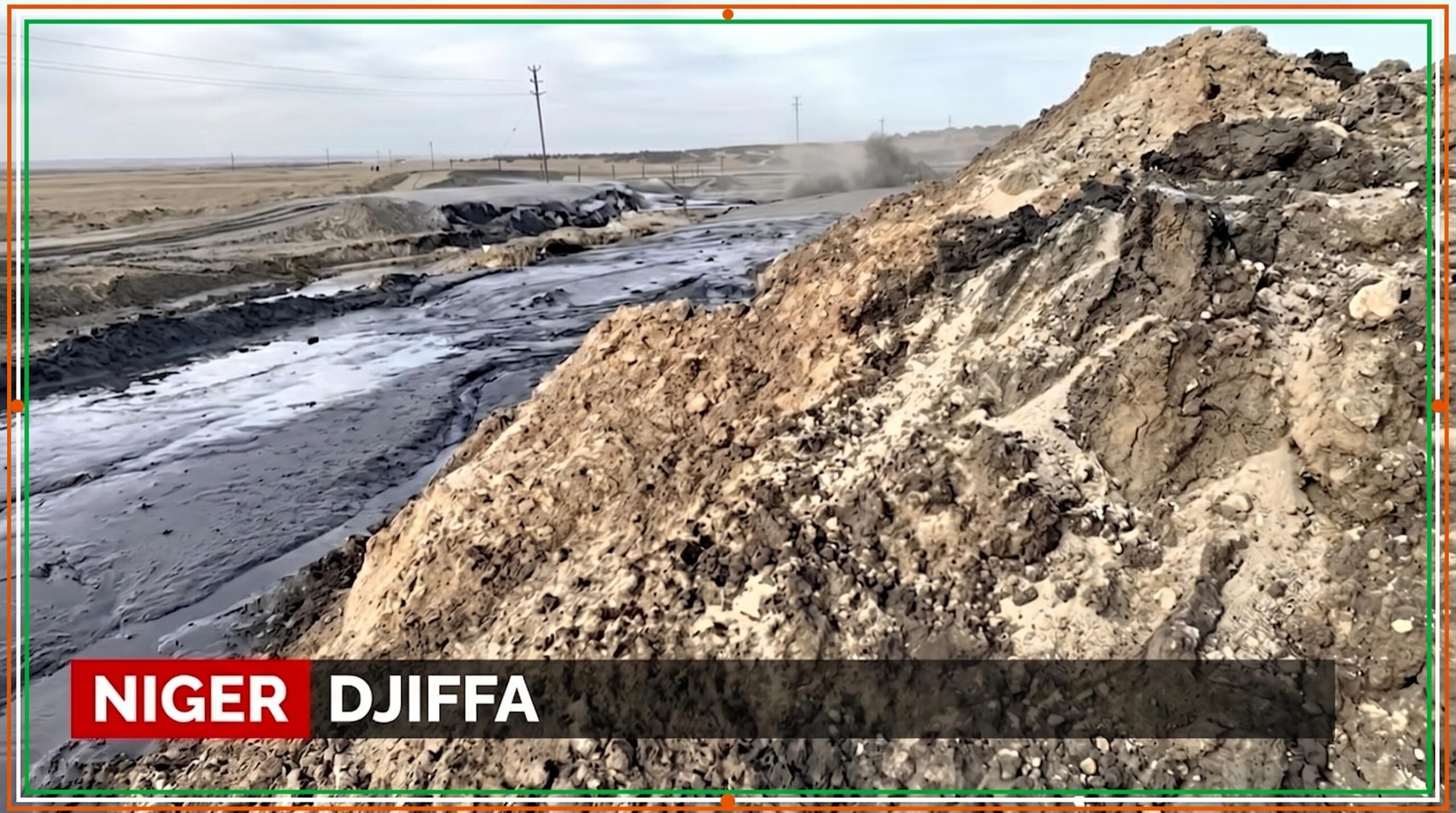
Oil is one of Niger’s most valuable economic assets, yet a crude spill reported in the Diffa region has turned that asset into a source of deep anxiety. The flow is said to have continued for nearly a week, and the central question now is simple and urgent: how much longer can the country wait before a real, coordinated response is launched to stop it?
A spill that has been running for days
DIFFA, NIGER — A dark slick is reported to be spreading across the ground, and crude oil, normally a strategic resource for Niger’s economy, has become a threat to the land and the people who live on it. In Diffa, in the country’s east, a leak has been reported for close to seven days, and concern is mounting. The situation, described as an oil spill, raises a fundamental question: how long will it take before concrete action is taken to address this environmental emergency?
At this stage, the exact scale of the pollution, the volume of oil released, the source of the leak and any human or environmental damage remain to be established through field investigation. But one thing is certain: any prolonged hydrocarbon discharge demands a rapid, coordinated and transparent reaction.
Why every hour counts in Diffa
In a region where oil-related activity plays a significant role, leaks cannot be treated as mere technical incidents. When crude escapes from installations and spreads into the natural environment, each hour matters. The longer the flow continues, the more complex containment and cleanup operations become.
The first priority is to pinpoint the leak, determine its cause and halt the flow. Specialized teams must then map the affected area, prevent the oil from spreading further and collect samples to assess the nature and extent of the contamination.
Allowing such a situation to evolve without clear public information would be deeply troubling. Residents have a right to know what is happening in their environment, what risks they may face and what measures are being taken to protect their health and their livelihoods.
The stakes for local communities
Behind the images of an oil slick lie consequences that can reach far beyond the immediate perimeter of the spill. Depending on the terrain and the proximity of water resources, hydrocarbons can contaminate soil, degrade natural habitats and disrupt farming or herding activities.
Surface water and drinking water sources may also be at risk if the oil reaches them. The impact depends on the volume released, the composition of the crude, weather conditions and how quickly responders intervene.
For riverside communities, persistent pollution can become a source of economic and health uncertainty. Families who depend directly on natural resources are especially vulnerable if their land, water points or livelihoods are affected.
Silence is its own kind of risk
Anxiety grows when available information does not clearly reflect what is happening on the ground. If the leak has indeed continued for several days, the competent authorities and the operators of the affected facilities must communicate about the measures being taken.
Who operates the installations near the site? Has the leak been located? Have containment operations begun? Have samples been taken? Have nearby residents been informed of precautions to take?
These questions demand precise answers, not guesswork. It falls to the relevant services to confirm the facts, report initial findings and publish the results of environmental assessments.
Transparency is essential. It helps counter rumors, reassures residents on the basis of verifiable facts and establishes responsibility if shortcomings are identified.
Oil wealth should not come at the environment’s expense
The growth of oil-related activities can contribute to public revenue, jobs and investment. But those economic benefits cannot justify minimizing environmental risks or leaving communities to face the consequences of an industrial accident alone.
The situation reported in Diffa is a reminder of how much prevention matters: regular infrastructure maintenance, facility monitoring, effective early-warning systems and well-prepared response teams. A credible environmental policy is measured not only by announced commitments but also by the ability to prevent accidents and respond immediately when they occur.
If responsibilities are established, the procedures set out in regulations must be applied. Cleanup, restoration of affected environments and, where appropriate, compensation for harm suffered by communities should be part of the response.
What needs to happen next
Faced with this alert, three priorities stand out: stop any active leak, protect local populations and measure the possible damage. Environmental authorities, oil-related services and facility operators must act in a coordinated way, with support from experts able to produce a reliable diagnosis.
Niger needs to exploit its natural resources in a way that respects public health and preserves ecosystems. In Diffa, the stakes go beyond the management of a single incident: they concern a collective responsibility toward present and future generations.
An oil spill is not just a dark stain on the ground. It can leave lasting marks on land, water and the living conditions of communities. That is why the alert must be taken seriously, the facts verified without delay and protection measures made public.
In Diffa, the urgency is not to look away, but to shed full light on this reported leak, stop its effects and ensure that environmental protection is never pushed to the back burner.