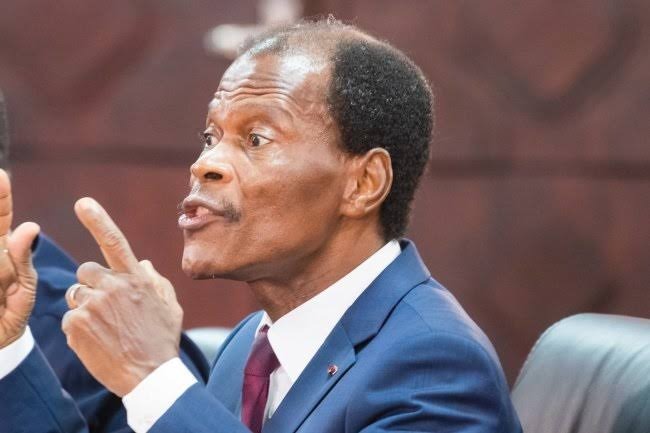
In Cotonou, the decision to keep Candide Azannaï behind bars has reignited a question many are asking: what exactly is at stake for Benin’s justice system as it navigates one of its most sensitive cases in years? The president of the Restaurer l’Espoir party remains in pretrial detention in connection with the alleged coup attempt foiled on 7 December 2025, and the latest ruling from the Court of Appeal has thrown that dilemma into sharp relief.
Why the stakes go far beyond one defendant
At first glance, the case looks like a straightforward legal matter. But the decision to uphold the detention of a well-known political figure tests something larger: the capacity of Benin’s institutions to handle a high-profile prosecution without bending to public emotion or political pressure. The magistrates have framed their choice as a procedural necessity, not a punishment, insisting that the pursuit of truth requires time and rigor.
The charges against the former minister are serious. Prosecutors working with the Court for the Repression of Economic Offences and Terrorism (CRIET) allege conspiracy against state security and incitement to rebellion. In a constitutional democracy, such accusations cannot be treated lightly — they demand a thorough investigation into every branch of the alleged destabilization attempt.
What the appeal hearing revealed about due process
The recent hearing before the Court of Appeal offered a window into how the system is handling the case. After the Chamber of Liberties and Detention rejected a request for provisional release, Azannaï’s lawyers exercised their right to appeal. Rather than a rushed or closed-door proceeding, the defendant was brought from his place of detention to appear in person before the judges.
That detail matters. It shows that the courts are extending to the accused the opportunity to be heard, to present arguments, and to benefit from the legal guarantees set out in the Code of Criminal Procedure. The Court took time to examine the case file before confirming the detention, grounding its decision in two procedural realities: the existence of fugitives still at large and the need to continue investigations without risk of evidence being altered or witnesses interfered with.
The defense lawyer’s measured words
Perhaps the most telling signal of how the process is unfolding came from the defense itself. Me Aboubacar Baparapé, counsel for Azannaï, acknowledged after the hearing that the essential stages of the judicial investigation had been conducted properly.
“His interrogation on the merits is complete, there are no other elements,” the lawyer stated publicly. With those words, he confirmed that the investigation into his client’s individual case had run its course, giving Azannaï the chance to provide a full account and present his version of events to the investigating judges.
Baparapé also stressed that his client had enjoyed complete freedom of speech throughout the proceedings. “In any case, he said he is not involved in this affair, that he is not concerned by everything invented around him in relation to this case,” the lawyer noted. That account suggests the rights of the defense were carefully preserved, allowing the accused to proclaim his innocence and reject the allegations against him in a calm setting before the court.
The lawyer also made clear that the defense would keep using the legal avenues available. “We will, at the appropriate time, file a new request until we can be heard,” he said — a reminder that Benin’s justice system provides ongoing mechanisms for review based on how the case and the judicial timeline evolve.
The real question: can procedure hold firm under scrutiny?
For the defense, the continued detention is naturally a disappointment. Yet the appeal court’s ruling reflects an attempt to put facts above political considerations. In a case of this magnitude, the judges’ timeline is not driven by urgency or emotion. The magistrates are asserting their independence and professionalism by placing the full establishment of truth above individual expectations.
By ensuring the investigation proceeds calmly while suspected co-authors remain at large, the judiciary says it is protecting society while guaranteeing a fair and impartial trial. Whether that argument ultimately satisfies public opinion is the open question — and it is one that will shape how Benin’s justice system is judged for years to come.