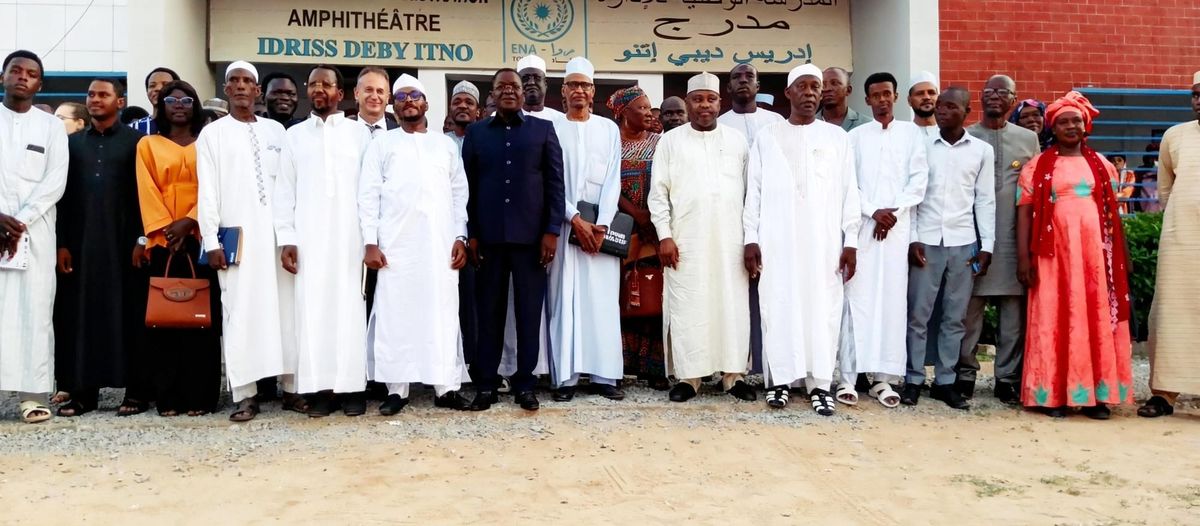
Chad is at a critical juncture in its institutional evolution, and the debate surrounding decentralization has never been more urgent. In a packed conference at the Idriss Déby Itno amphitheater of the National School of Administration (ENA), former Prime Minister and current Senator Albert Pahimi Padacké delivered a scathing critique of the country’s entrenched centralized governance model. The event, held on May 29, drew a diverse audience of civil servants, students, and political stakeholders, all eager to explore the potential—and pitfalls—of provincial autonomy.
From policy to practice: the gap in decentralization
The conference, titled “Decentralization in the Dynamics of Development: The Case of Provincial Councils”, served as a platform for Pahimi Padacké to dissect the disconnect between Chad’s legal commitments to regionalization and the reality on the ground. While the theoretical benefits of decentralization are well-documented—closer governance, localized decision-making, and equitable resource distribution—its implementation remains stifled by bureaucratic inertia. The senator, a prominent figure in the RNDT-Le Réveil party, emphasized that without genuine administrative and financial autonomy, provincial councils risk becoming mere administrative extensions of N’Djamena’s ministries rather than engines of local progress.
Centralization’s chokehold on local governance
At the heart of the issue lies what Pahimi Padacké described as the ‘vertical centrality’ of the state—a system where power and resources remain tightly controlled by the central government. His assessment painted a stark picture: despite formal decrees and policy frameworks, provincial authorities are hamstrung by financial dependence and a lack of decision-making authority. “A decentralization that does not empower provinces economically is nothing more than a bureaucratic facade,” he asserted, drawing applause from the audience. The frustration is palpable: laws exist, but implementation is stymied by a reluctance to cede control, leaving local leaders ill-equipped to address pressing needs in education, healthcare, and infrastructure.
The call for bold reforms
The senator’s address was less a critique and more a rallying cry for systemic change. He urged a paradigm shift—one where the state trusts local leaders to drive development from the ground up. For Pahimi Padacké, the solution lies in three pillars: financial autonomy for provinces, clear competency transfers from the center, and institutional support for elected officials. His vision is clear: provincial councils should evolve from passive administrators to proactive agents of change, capable of tailoring solutions to their communities’ unique challenges. The lively post-conference discussions, particularly with ENA trainees, underscored the urgency of this reform—one that could redefine Chad’s developmental trajectory.