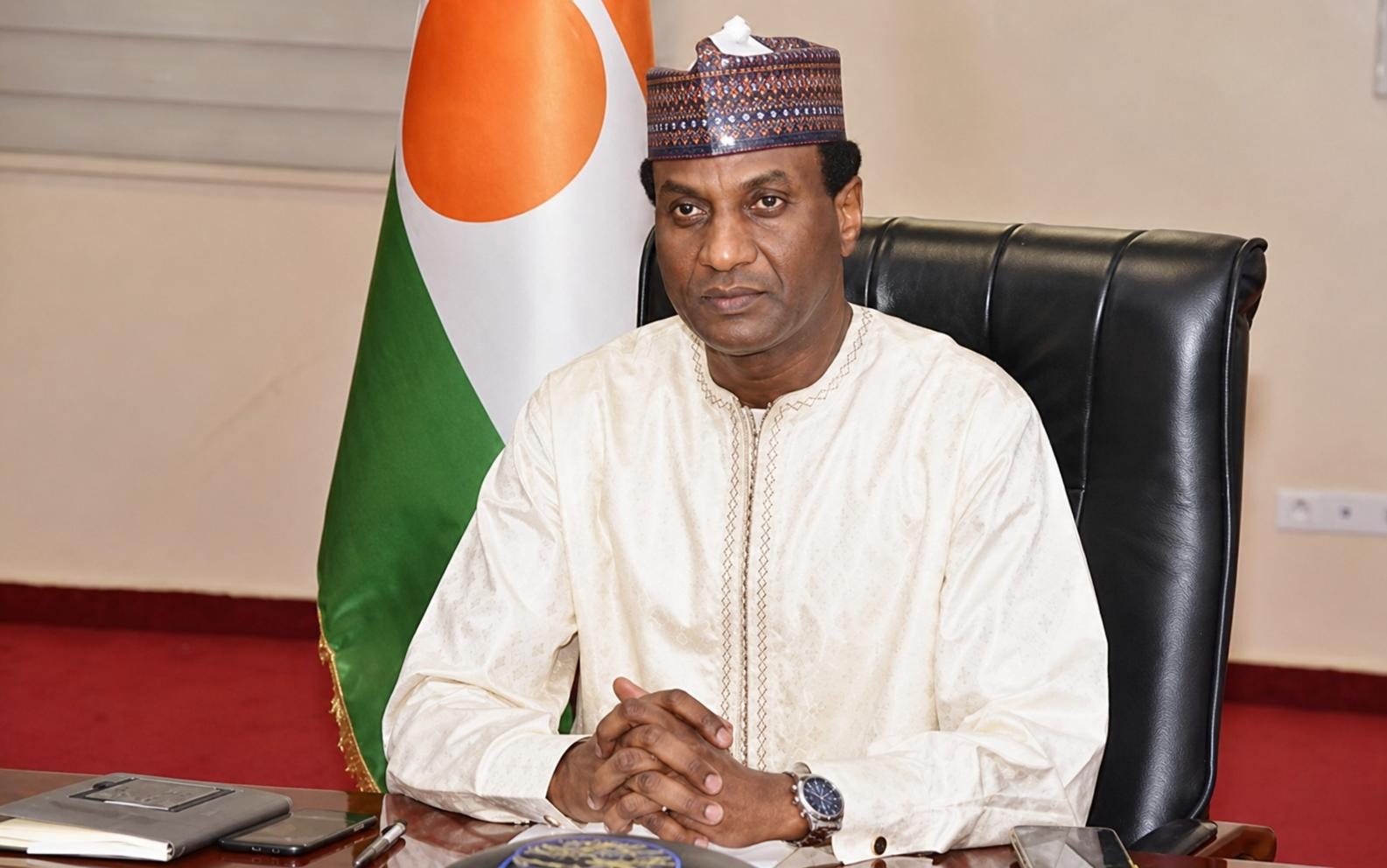
In the shadow of military-led transitions, the line separating trusted collaborators from potential threats can dissolve without warning. In Niger, recent developments surrounding Prime Minister Ali Mahamane Lamine Zeine have reignited concerns about the precarious position of civilian officials within a junta-dominated government.
The Prime Minister’s immediate entourage has been abruptly overhauled, with reports of tightened security protocols raising eyebrows. Once-regular visitors now face mandatory body searches before gaining access, while Lamine Zeine’s prolonged absence from official duties—attributed to a severe bout of malaria—has only deepened speculation. Behind closed doors, whispers of a de facto house arrest have grown louder, amplified by unverified claims of an impending resignation.
The absence of a transparent explanation is not merely an administrative oversight; it is a deliberate tactic. In systems where military power dictates the pace of governance, information control serves as a primary tool of authority. When security measures around a civilian figure resemble containment rather than protection, the message is clear: dissent will not be tolerated, even within the halls of government.
a pattern of silent exclusion
The current situation reflects a long-standing pattern in Sahelian military transitions: the doctrine of absolute alignment. When civilian technocrats or ministers resist aligning with the junta’s strategic or ideological shifts, the security apparatus swiftly moves to neutralize perceived disloyalty. Rather than risk public backlash through an open dismissal, authorities often resort to a subtler approach—restricting movement, monitoring communications, and isolating the individual from key decision-making circles. This method preserves the illusion of institutional stability while allowing the military command to consolidate control.
The strategy also serves as a litmus test. By maintaining an official presence while gradually eroding a figure’s influence, the junta gauges reactions from domestic stakeholders, foreign partners, and internal factions before taking more decisive action. In this context, the Prime Minister’s predicament is not just personal—it is emblematic of a broader dilemma: the fragile autonomy of civilian leaders in military-led transitions.
civilian figures as temporary stabilizers
In several Sahelian nations, civilian technocrats are often brought in to project an image of economic competence and institutional credibility. They serve as economic shock absorbers, reassure international donors, and provide a veneer of structured governance. Yet this legitimacy is conditional—rooted in unquestioning loyalty to the military command rather than in independent decision-making.
Niger’s experience echoes similar dynamics in neighboring countries. Whether examining the turbulence faced by Choguel Maïga in Mali or the shifting power dynamics around Apollinaire Kyélem de Tambèla in Burkina Faso, the same principle applies: civilian figures are tolerated only as long as they fulfill a specific role—whether as economic buffers or diplomatic fig leaves. The moment their actions diverge from the junta’s expectations, the consequences are swift and uncompromising.
For Lamine Zeine, the stakes are now existential. His ability to navigate this labyrinth of suspicion hinges on his capacity to operate within a system where every movement is scrutinized and every silence scrutinized. The broader lesson is sobering: in military-led governments, the presence of civilian officials in official titles does not equate to real authority. Their power remains provisional, contingent on the military’s tolerance—and subject to reversal at any moment.