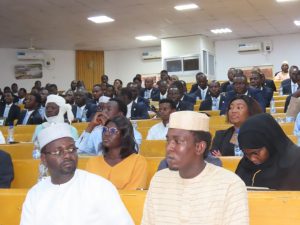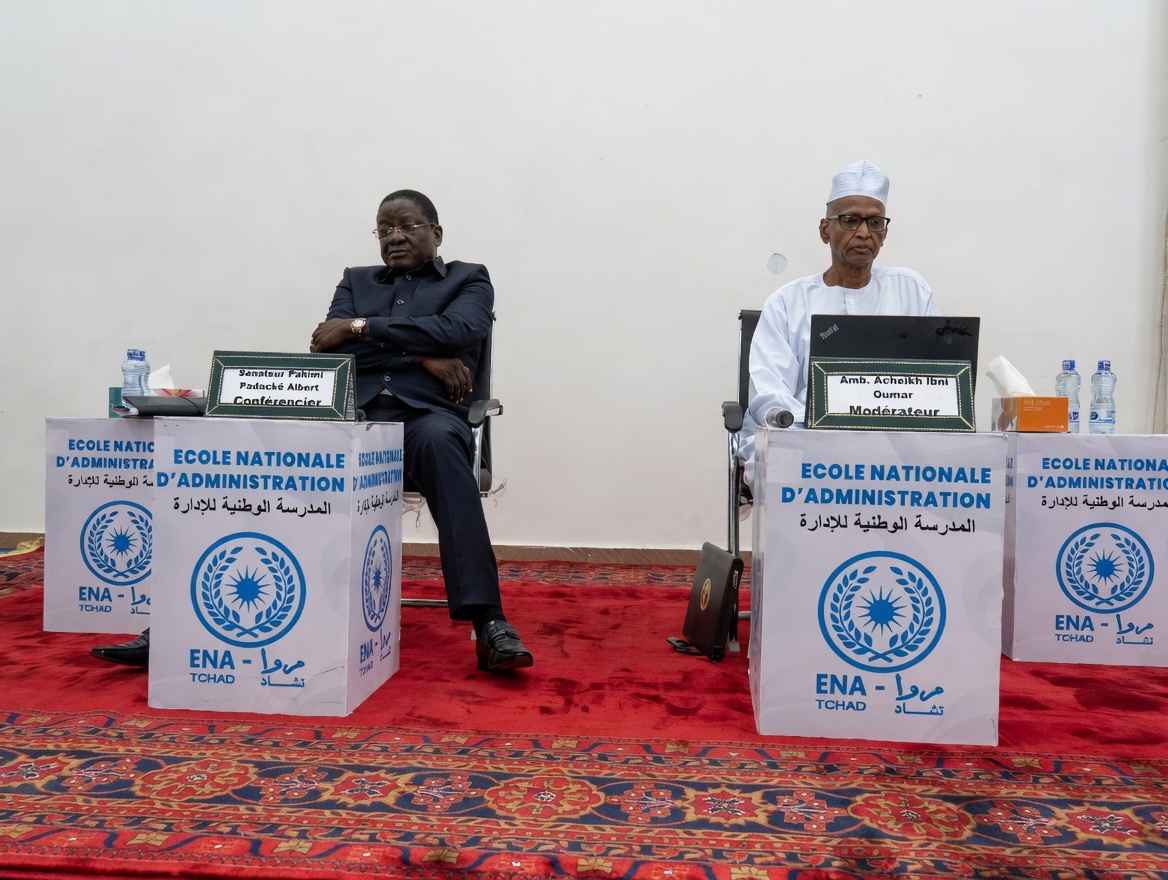
The École Nationale d’Administration (ENA) hosted a high-profile debate this Friday afternoon as part of its « Grands rendez-vous de l’ENA » series. The event brought together students, civil servants, administrators, and political figures to explore a pressing topic: « Decentralization in the dynamics of development: the role of provincial councils ». The session featured Albert Pahimi Padacké, a seasoned politician, former Prime Minister, senator, and civil administrator, who delivered a compelling and pragmatic address.
With decades of experience in governance, Pahimi Padacké captivated the audience by framing the discussion within both historical and international contexts. He traced the roots of Chad’s decentralization process to the 1990s, a period marked by democratic transitions across Africa, donor pressure, and the rise of a people-centered governance paradigm. The core question of the debate was clear: Are provincial councils already driving development, or can they become catalysts for it?
three pillars of a transformative debate
To structure his intervention, Pahimi Padacké broke down the topic into three key areas:
- Political and normative foundations of decentralization as a development catalyst: He emphasized how the 1993 National Sovereign Conference laid the groundwork for a unitary yet highly decentralized state, later enshrined in the 1996 Constitution and reaffirmed in subsequent texts, including the 2023 Constitution of the Fifth Republic.
- Challenges hindering provincial councils from fulfilling their potential: The former Prime Minister highlighted systemic delays in transferring financial and human resources, gaps in technical and administrative capacity, and coordination issues between deconcentrated administrations and elected local bodies.
- Pathways to unlocking local development: He proposed accelerating the transfer of revenues—including oil and tax shares—to provincial councils, strengthening the skills of elected officials and staff, and fostering robust monitoring and evaluation mechanisms.
legal milestones that shape decentralization
The discussion also delved into the legal framework underpinning decentralization. Pahimi Padacké pointed to critical organic laws, such as Law No. 14 (2024) on the status of autonomous collectivities and Law No. 28 (2024) on the division of competencies between the central government and local authorities. He underscored the principle of subsidiarity—enshrined in Article 271 of the Constitution—which mandates that decisions be made at the most local level feasible to serve citizens effectively.
concrete steps toward meaningful decentralization
In his closing remarks, Pahimi Padacké outlined actionable solutions to bridge the gap between policy and practice. He called for:
- Immediate action to transfer resources—such as revenue shares from oil and taxes—to provincial councils.
- Targeted capacity-building for elected officials and administrative staff to enhance governance.
- Stronger collaboration between civil society, development partners, and local authorities.
- Rigorous adherence to the principle of subsidiarity to ensure decentralization is not merely symbolic but transformative.
The former Prime Minister urged future administrators to recognize that the success of decentralization is pivotal to balanced national development and bringing governance closer to the people.