Political analyst Christian Moleka recently offered a critical assessment of Kinshasa’s military and diplomatic responses to the protracted conflict in the Eastern Democratic Republic of Congo. Speaking during a Space live event, Moleka concluded that despite substantial financial commitments, the operational outcomes on the ground have fallen short of expectations.
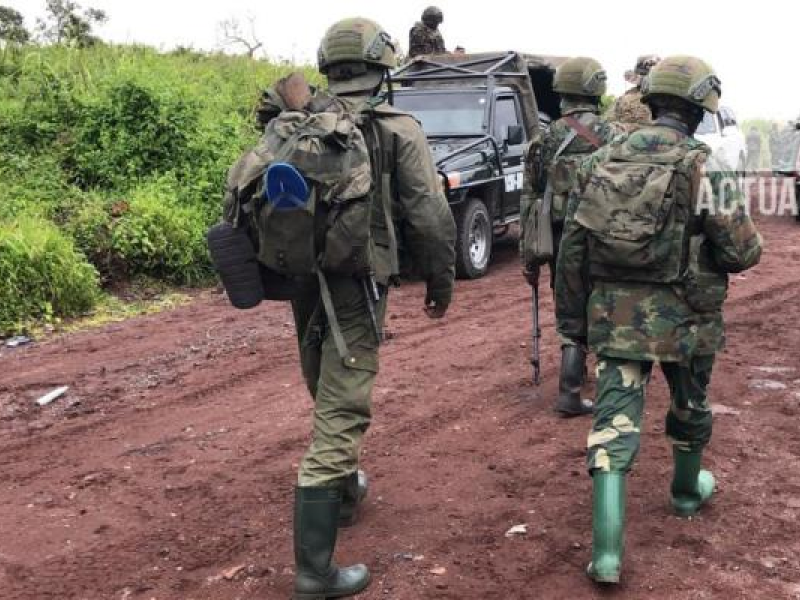
He highlighted that a budget of 4.5 billion dollars was earmarked for military programming between 2022 and 2025. However, the Forces Armées de la République Démocratique du Congo (FARDC) have yet to regain the upper hand against the Alliance des Forces du Congo (AFC)/M23 rebels since their seizure of Bunagana in 2022, suggesting a significant disconnect between allocated resources and tangible results.
On the diplomatic front, Moleka acknowledged several positive developments. These include the implementation of European Union sanctions against Rwanda, an observable shift in the perception of the conflict within Washington, and the unanimous adoption of a resolution by the United Nations Security Council. Nevertheless, he pointed out a persistent disparity between these diplomatic achievements and the harsh realities faced on the battlefield.
Citing a report from the United Nations Group of Experts, Moleka underscored that the M23 has expanded its occupied territory by an additional 35% since the Doha agreements. He summarized these diplomatic tools as providing only “partial and temporary results,” failing to translate into decisive gains for the DRC.
When pressed to identify the primary factor behind this mixed record, Christian Moleka unequivocally stated, “I would say it lies more with the military.” He drew an analogy between diplomacy and military effort, likening them to a two-person dance, where “one cannot maintain a diplomatic position without a military component to support it.” The analyst cautioned that the progress achieved on the international stage could ultimately backfire on Kinshasa if not complemented by a more favorable military balance of power.
Moleka concluded his analysis by contextualizing the conflict within a broader historical perspective, characterizing it as a “war of attrition” spanning three decades. In such a conflict, he argued, “it is not intensity that matters, but the capacity to endure over time” – a challenge he believes confronts both Congolese diplomacy and its armed forces.