Gabon advances fiscal and customs modernization for revenue growth
Libreville — July 19, 2026 — A nation’s capacity to fund its development hinges on its ability to secure revenue streams. In Gabon, this principle is taking on new urgency as authorities accelerate reforms to modernize public revenue collection. By aligning customs and tax administrations under a unified strategy, the government is prioritizing integrated financial governance to strengthen budgetary sovereignty and economic transparency.
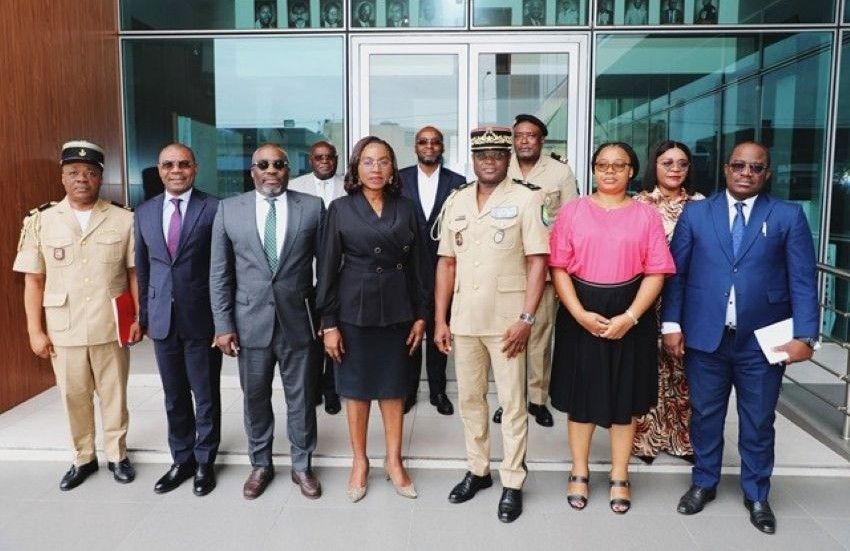
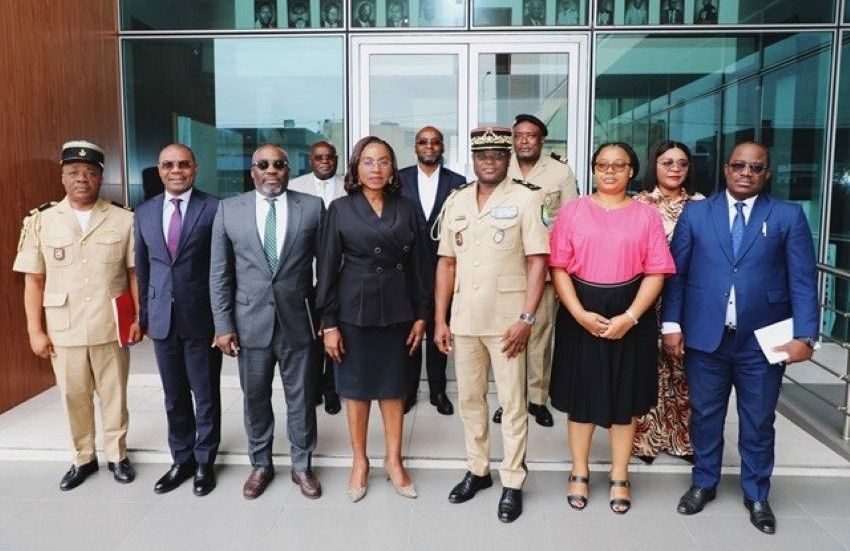
This initiative transcends routine administrative coordination. It reflects a fundamental shift in public governance, where closer collaboration between financial institutions becomes a tool for combating fraud networks and enhancing fiscal efficiency. On July 14 in Libreville, the Director-General of Customs and Indirect Taxes, Brigadier General Hugues Modeste Odjangou, and the Director-General of Taxes, Édith Laure Oyaya épouse Mbiguidi, launched a comprehensive review to deepen operational ties between Gabon’s two key revenue agencies.
A unified approach to revenue management
Contemporary economic models increasingly favor seamless cooperation between tax and customs authorities. Shared data systems, coordinated inspections, and joint enforcement efforts have proven effective in boosting tax yields while closing loopholes for fraud. Gabon is now formalizing this model to align with international best practices.
During the working session, the leadership teams identified several priority areas: integrating fiscal and customs intelligence, harmonizing field inspection protocols, pooling operational resources, and developing joint anti-fraud strategies targeting tax evasion, customs violations, and illicit trafficking. This strategic alignment aligns with national leadership’s vision for a more coordinated, results-driven public administration.
Institutional foundation for lasting change
The momentum is not merely political—it is now backed by legal structure. Officials confirmed that the joint tax-customs commission, established under Decree No. 073/MEFDPLVC of April 10, 2026, now serves as the formal platform for this collaboration. The framework promotes joint audits in line with CEMAC customs regulations and streamlines information exchange between the two agencies.
This move positions Gabon alongside regional leaders like Rwanda, Morocco, and Côte d’Ivoire, where synchronized tax and customs operations have significantly improved fiscal performance and reduced informality. Future technical meetings will focus on operationalizing the joint commission, ensuring follow-through on decisions, and coordinating upcoming enforcement actions.
Beyond revenue collection: reshaping public governance
This initiative marks a turning point in Gabon’s administrative culture. Historically treated as separate entities, the Customs and Tax administrations are now adopting a shared mission. Together, they account for the majority of state revenue—making their integration a strategic lever to expand fiscal space without increasing the burden on compliant taxpayers.
The core target remains fraudulent behavior, misreporting, opaque trade networks, and other practices that deprive public coffers of essential development funds. The partnership also signals to global partners, investors, and financial institutions that Gabon is committed to modernizing its economic governance, securing domestic revenue, and enhancing the credibility of its financial administration.
Ultimately, this alignment is not just about reorganizing services—it’s part of a broader ambition. It envisions a state that protects its resources more effectively, funds national priorities through domestic revenue, and builds an administration that is efficient, transparent, and outcome-focused. In this vision, the partnership between Customs and Tax authorities is not merely administrative—it is a cornerstone of Gabon’s new financial architecture.