The fragile calm of northern Mali was shattered once again when an improvised explosive device (ied) tore through a civilian truck near Aguelhok in the Kidal region. This latest attack underscores the persistent and grave security risks facing local communities in one of the country’s most volatile areas.
The blast, which occurred on a remote stretch of road, left the vehicle—and its cargo—completely destroyed. Early field reports indicate that several passengers sustained life-threatening injuries and were rushed to nearby medical facilities, though the area’s limited healthcare infrastructure complicates their recovery.
The explosion reduced the truck to scrap metal, scattering its contents across the unforgiving terrain. While no group has yet claimed responsibility, security analysts and local officials strongly suspect terrorist armed factions operating in the region. These groups frequently employ mines and ieds to disrupt military movements, yet it is almost always innocent civilians who bear the devastating consequences.
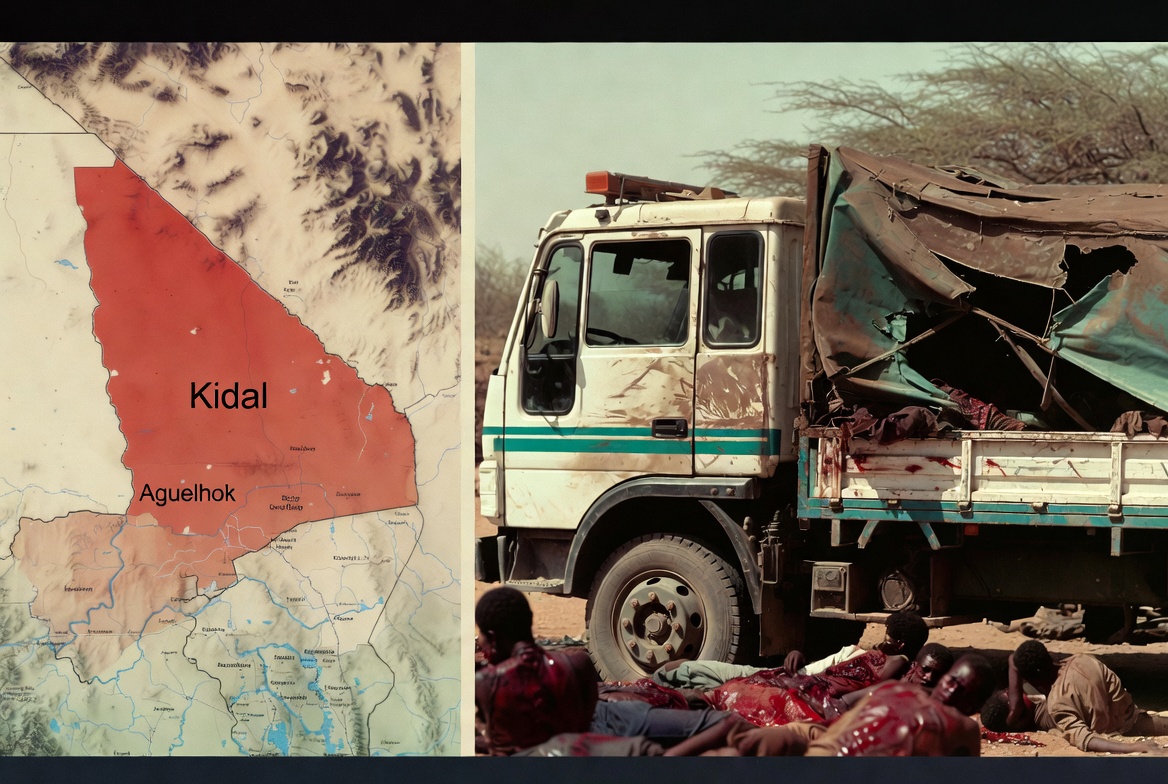
danger lurks beneath the sand: a region under siege
« Travelling through Kidal feels like playing Russian roulette. One wrong move, and you’re gone—there’s no warning, no way to know where the next bomb is hidden, » shared a local resident who requested anonymity. The incident highlights the perilous reality of the Gao-Kidal-Tessalit corridor, where every journey is a gamble between life and death.
Beyond the human toll, these attacks cripple the region’s already fragile economy. Fear of ambushes and explosions deters transporters from delivering essential goods to remote villages, leaving communities isolated and vulnerable. Despite ongoing demining efforts and increased patrols, the vast, barren landscapes of northern Mali provide cover for assailants to plant their deadly traps undetected.
a grim reminder: peace remains out of reach
For the people of Aguelhok, this tragedy is a stark reminder that lasting stability is still a distant dream. The dusty roads of northeastern Mali continue to echo with the sounds of explosions, serving as a painful metaphor for a conflict that shows no signs of abating.