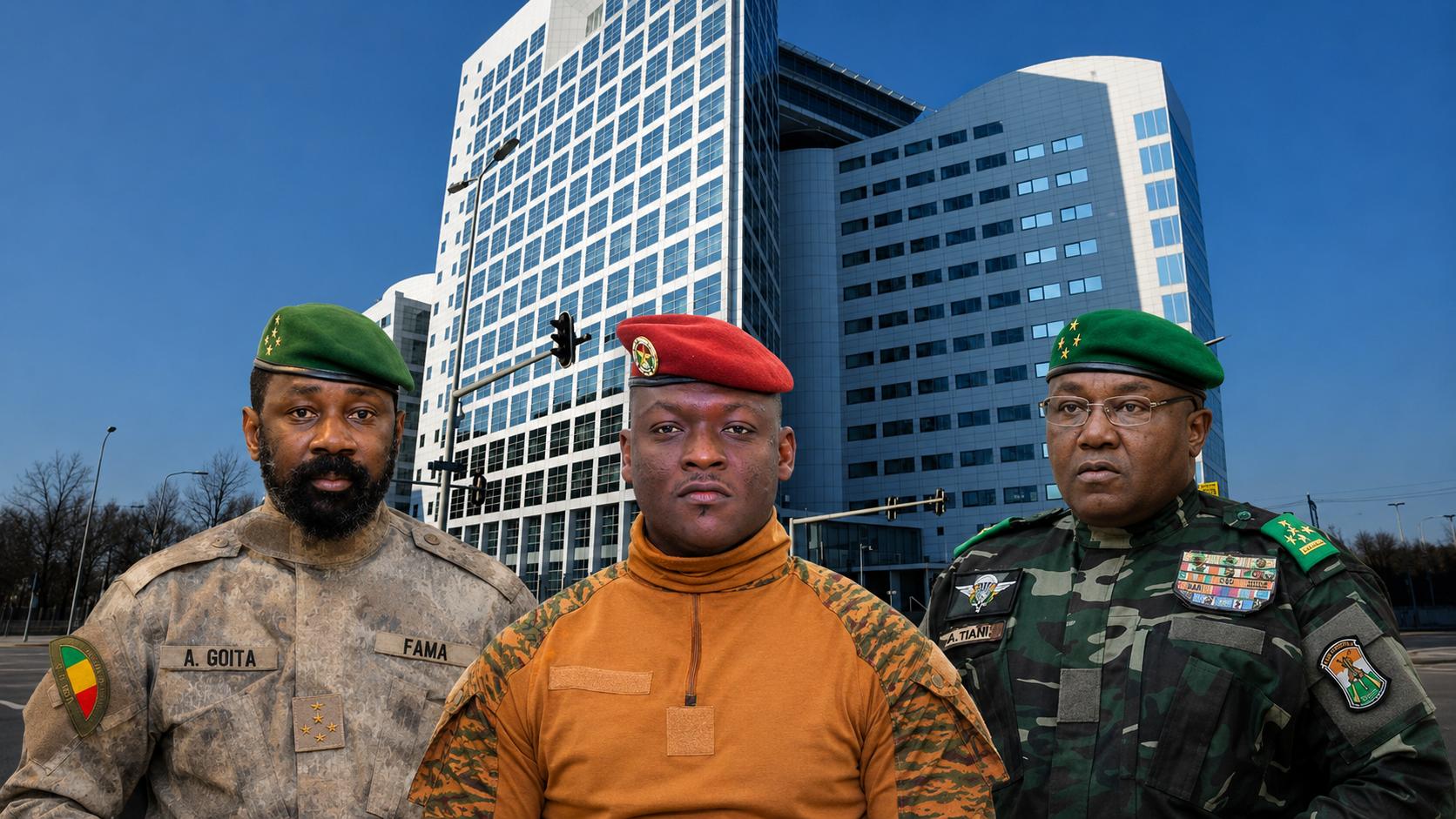
The military juntas of Mali, Burkina Faso, and Niger have finalized their withdrawal from the International Criminal Court (ICC), a move that underscores a deliberate strategy to evade accountability for grave human rights violations. While Niamey, Bamako, and Ouagadougou frame this decision as a defense of national sovereignty against a supposedly “politicized” justice system, the reality points to a far more calculated calculation—one that prioritizes regime survival over the rule of law.
From rhetoric to reality: the illusion of sovereignty
The official narrative from these transitional governments is consistent: the ICC is a tool of Western neocolonialism, a selective justice system designed to target African leaders. Yet this populist rhetoric masks a glaring contradiction. The court’s mandate extends beyond the Sahel, with active investigations in Ukraine and the Middle East, proving its global reach. The true motivation behind this withdrawal is not justice, but legal immunity for those in power.
Why the ICC matters in a region under siege
Designed to prosecute the most heinous crimes—war crimes, crimes against humanity, and genocide—when national judiciaries fail or refuse to act, the ICC serves as a critical safeguard for civilians caught in conflict zones. In the Sahel, where asymmetric warfare rages, human rights organizations have documented not only the atrocities committed by armed groups but also the escalating abuses by state forces and their allied militias, including foreign mercenaries operating in Mali. By severing ties with the ICC, these juntas are effectively placing themselves, and their forces, beyond the reach of international accountability.
The populist shield: how authoritarian regimes weaponize nationalism
The claim that the ICC unfairly targets Africa has been a recurring argument for years. While this critique once held some weight, it has now been exploited by these regimes to justify their retreat from global legal oversight. The irony is stark: the very governments that suppress dissent, silence journalists, and dismantle civil society are now invoking “sovereignty” to block any scrutiny of their own actions. The playbook is familiar—criminalize opposition, erode democratic institutions, and isolate the country from international observers to operate with impunity.
A dangerous precedent for Sahelian civilians
The consequences of this withdrawal fall hardest on the populations of the Sahel. Caught between the brutality of terrorist groups and the unchecked violence of state security forces, civilians are left without recourse. While the ICC’s jurisdiction technically extends to crimes committed before the withdrawal, the signal sent is unambiguous: the door to justice is closing. History has shown that impunity does not bring stability—it only deepens grievances and delays the inevitable reckoning that awaits authoritarian regimes.