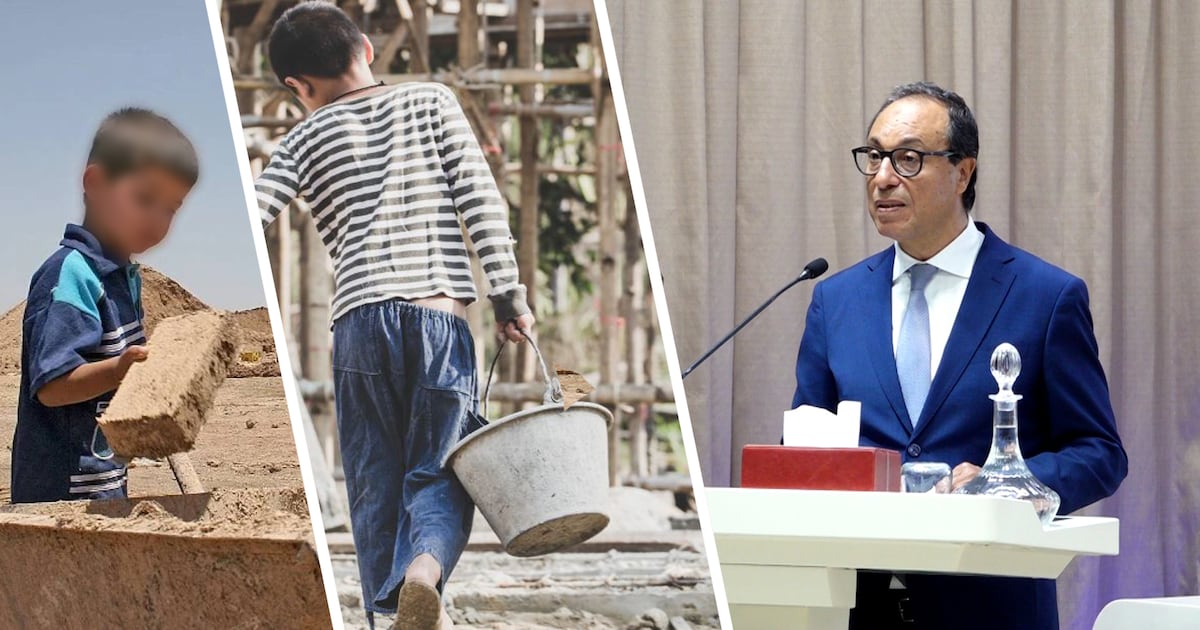
While Morocco has made significant strides over the past twenty years, the issue of underage employment remains a pressing concern. Although the number of minors involved in economic activities has plummeted by more than 80% since 1999, the practice persists, particularly within informal sectors and high-risk environments. The Economic, Social and Environmental Council (CESE) addressed this challenge in Rabat, unveiling a comprehensive set of proposals aimed at permanently ending the practice.
Evaluating progress and public perception
During the presentation of the report titled “For an effective public policy to eradicate child labor in Morocco,” CESE President Abdelkader Amara highlighted that a vast majority of citizens still view the problem as widespread. In a recent consultation involving 1,540 participants, 78% of respondents indicated that child labor continues to be a common sight across the country. This feedback prompted the council to scrutinize current public policies and suggest more robust interventions.
Abdelkader Amara acknowledged the legislative milestones already achieved by the Kingdom. These include the strict prohibition of work for those under 15 and the phased removal of minors aged 16 to 18 from hazardous working conditions. Official statistics reflect the success of these measures, showing that the number of working children aged 7 to 17 dropped from 517,000 in 1999 to approximately 101,000 in 2024.
The persistence of structural challenges
Despite this impressive 80% reduction, the CESE emphasizes that the goal of total eradication has not yet been reached. The institution identifies several systemic drivers, such as the informal economy, widespread poverty, and the socio-economic fragility of many households. “A child’s natural environment, after their family, should be the school system and dedicated spaces for socialization and growth,” Amara stated.
The council warns that premature employment severely hinders a minor’s physical, mental, and educational growth. By depriving children of their right to a balanced upbringing, this phenomenon deepens social divides and slows national progress. Public observations support these concerns, with 27% of surveyed citizens noticing children working in public spaces—often as street vendors, vehicle washers, or manual laborers. More alarmingly, 22% reported witnessing extreme forms of exploitation, including organized begging and involvement in illegal trafficking.
A roadmap for legislative reform
The CESE report reveals a startling reality: nearly six out of ten working children are engaged in dangerous activities. To combat this, the council is calling for an immediate strengthening of protection and monitoring systems. Key recommendations include a comprehensive overhaul of the Labor Code and an update to the 2010 decree regarding hazardous work for minors.
One of the most significant proposals is to raise the minimum legal working age to 16. This change would align the labor market with the end of compulsory schooling, ensuring a more cohesive link between social and educational policies.
Finally, the partnership between the CESE and the National Observatory for Children’s Rights (ONDE), chaired by Princess Lalla Meryem, was highlighted as a vital step forward. This collaboration seeks to synchronize efforts to prevent and eliminate child labor, a practice that Abdelkader Amara insists is inconsistent with the modern developmental goals of Morocco.