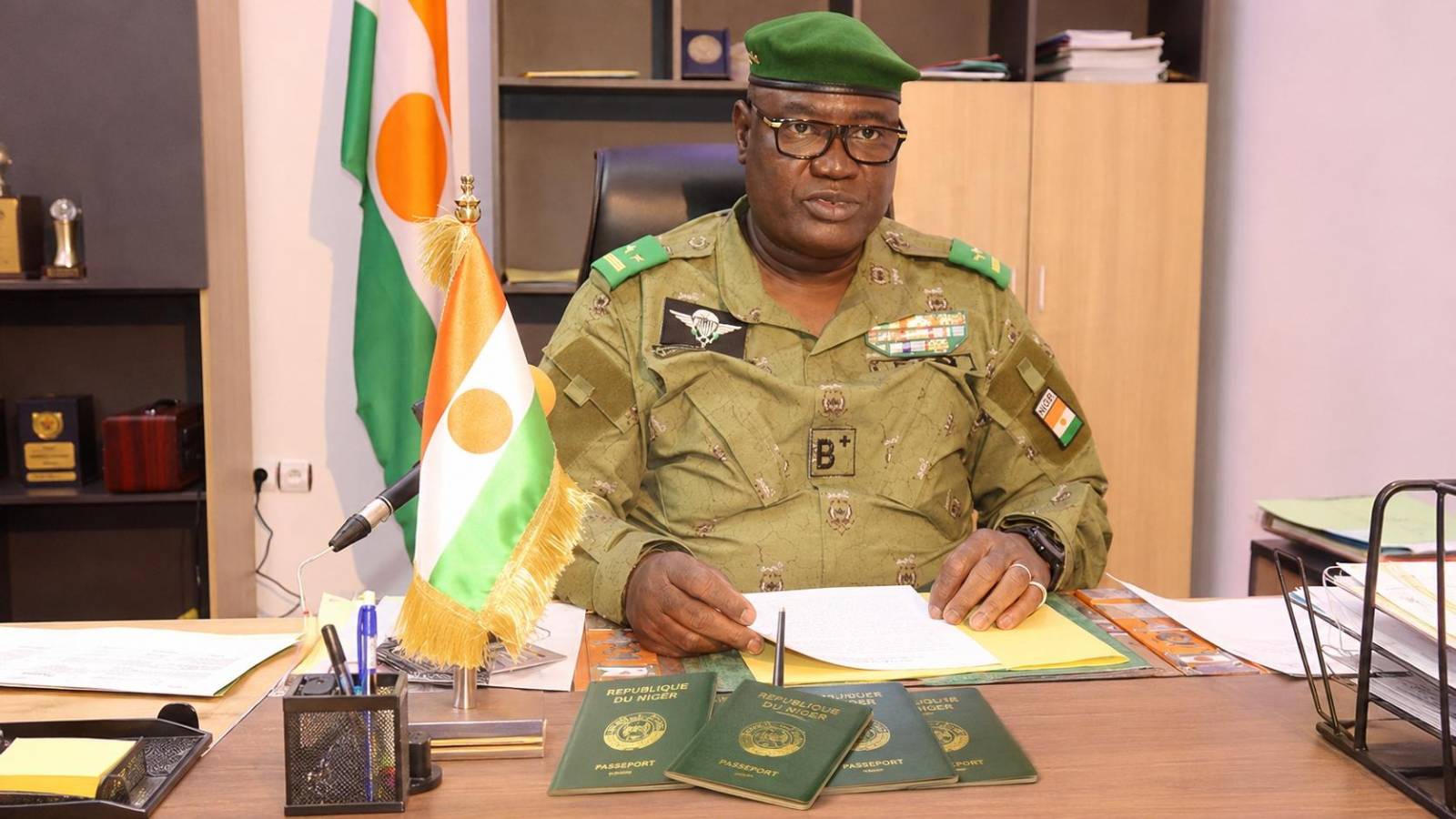
The Spanish Ministry of Foreign Affairs has quietly but firmly recalled its consul in Niamey. This decisive move follows the dismantling of a Schengen visa trafficking network operating in Niger, with visas allegedly sold for over 2.5 million CFA francs each. The scandal has exposed a systemic corruption scheme at the highest levels of the transitional government, implicating close associates of the third-ranking member of the National Council for the Safeguard of the Homeland (CNSP), Brigadier General Mohamed Toumba. As the storm shakes the junta’s pledges of public morality reform, the deafening silence of transitional President Abdourahamane Tiani raises serious concerns.
Spain sacrifices its consul to end the diplomatic crisis
The diplomatic shockwave has crossed the Mediterranean. Madrid has taken a bold step: the Spanish consul in Niger has been officially relieved of duty. While Spanish diplomacy remains characteristically tight-lipped about personnel changes, security sources in Niamey confirm that this removal is directly tied to the ongoing visa scandal that has rocked the capital for weeks.
The Spanish diplomat stands accused of either actively facilitating or passively enabling the approval of Schengen visa applications outside legal channels. Madrid’s decision serves as a stinging rebuke to consular operations in Niamey, while underscoring the international scale of a fraudulent network with direct access to European embassies.
Corruption thrives at the heart of the junta’s power
The Spanish consul’s dismissal reveals a far darker truth about Niger’s transitional authorities: a deeply entrenched, systemic corruption network operating within the state apparatus itself. A rigorous investigation by the Directorate General for Documentation and External Security (DGDSE) has uncovered that this trafficking operation was not the work of petty smugglers but a highly profitable enterprise orchestrated from the highest echelons of power.
At the center of the probe is the wife of Brigadier General Mohamed Toumba, Niger’s Interior Minister and the CNSP’s third-ranking official. Leveraging her husband’s considerable influence, she allegedly established a system to bypass standard visa and residency permit procedures. Each fraudulent document was reportedly sold for an exorbitant 2.5 million CFA francs—a sum far beyond the reach of the average Nigerien—targeting wealthy merchants and affluent asylum seekers. This scheme transformed the diplomatic privileges of the new military elite into a state-backed business venture of staggering profitability.
DGDSE strikes back as internal power struggles intensify
The dismantling of this network is credited to Lieutenant Colonel Souleymane Balla Arabé, head of Niger’s counterintelligence. By intercepting communications and gathering concrete evidence against the Interior Minister’s inner circle, the DGDSE has dealt a crippling blow to the CNSP’s fragile unity.
This bold move by intelligence services reveals that General Toumba now stands on the defensive, weakened within a junta rife with internal rivalries. Once seen as the embodiment of order and discipline, his association with a transnational crime syndicate has severely undermined his standing among military ranks and peers.
The president’s unsettling silence
As the political earthquake intensifies and the Spanish consul’s dismissal internationalizes the scandal, all eyes are on the transitional leader. To date, President Abdourahamane Tiani has maintained an absolute silence. No official statement, public address, or disciplinary action has been taken against General Toumba or his staff.
This eerie silence is interpreted by many in Niamey as a calculated political stance—one that may verge on passive complicity. When the junta seized power on July 26, 2023, it vowed to rebuild institutions and wage an unrelenting war against impunity and the excesses of the former regime. By refusing to take decisive action against one of the regime’s top figures, Tiani risks eroding the very credibility of the transition, giving the impression that the inner circle of power is being shielded at the expense of justice.
The consular visa scandal marks a pivotal moment for Niger. It exposes the paradox of a regime that claims to reject Western influence while enriching itself through illicit access to the Schengen zone. Madrid’s decision to recall its consul proves that Spain has chosen to clean house. What remains uncertain is whether Tiani will summon the political courage to do the same in Niamey, or if the preservation of internal junta balance will ultimately prevail over the promises of integrity made to the Nigerien people.