The Central African Republic (CAR) has grappled with persistent instability since at least 2004, when a three-year civil war engulfed the nation, followed by years of ongoing insurgent conflicts. In an attempt to restore order, the government initially invited Russian mercenaries from the Wagner Group as trainers in early 2018.
By 2019, the Wagner Group had deployed over 1,000 mercenaries across the CAR, integrating them deeply into the country’s political, economic, and social structures. Their focus quickly turned to the extraction of valuable resources, including gold, diamonds, and timber. This involvement has fostered the emergence of a distinct conflict economy, where these mercenaries and other factions capitalize on the nation’s perpetual turmoil.
Analysts have observed that Wagner not only infiltrated local markets through force and intimidation but also secured significant leverage within President Faustin-Archange Touadéra’s government, placing a Russian national in a key senior security advisory role.
In 2021, Wagner forces, operating alongside government troops, initiated a nationwide military campaign. While ostensibly a stabilization effort, this operation evolved beyond counter-insurgency into a broader process of territorial, political, and economic consolidation, as detailed in a June 2026 assessment.
Presently, the combined forces of the government and Wagner have reshaped an economy that once sustained rebel groups. These networks now primarily serve to bolster the Touadéra administration and enrich Russia.
Local elites, in collaboration with their foreign security partners, allied armed groups, and economic actors, have reportedly employed coercion and organized crime to solidify their power, control vital resources, and advance their financial interests. This transformation has positioned the CAR as a hub for powerful transnational criminal networks. Other nations, including the United Arab Emirates, Rwanda, and Turkey, also exert influence within the Central African Republic.
The engagement of Russian mercenaries in the CAR is inherently transactional. Their expansion aims to merge security, economic, and political control to dominate natural resources, thereby ensuring Russia’s long-term influence.
With Russian backing, President Touadéra has consolidated his political authority. Wagner-linked actors and their allies have become embedded within critical ministries, security agencies, customs administration, and strategic resource sectors. Rather than delivering stability, Bangui and Moscow have reportedly deepened and systematized patterns of coercion, resource extraction, and predation.
Government gains against armed groups have not eradicated the “rapacity of conflict” within the mining, trade route, and taxation sectors. Instead, this exploitation has shifted, now benefiting government-linked actors and networks, as well as individuals within the government who profit from these various industries.
Notably, Russia has significantly profited from the gold and fuel trade in the Central African Republic. The Wagner Group established an illicit fuel supply chain to finance its joint military operations with the government and its mining activities.
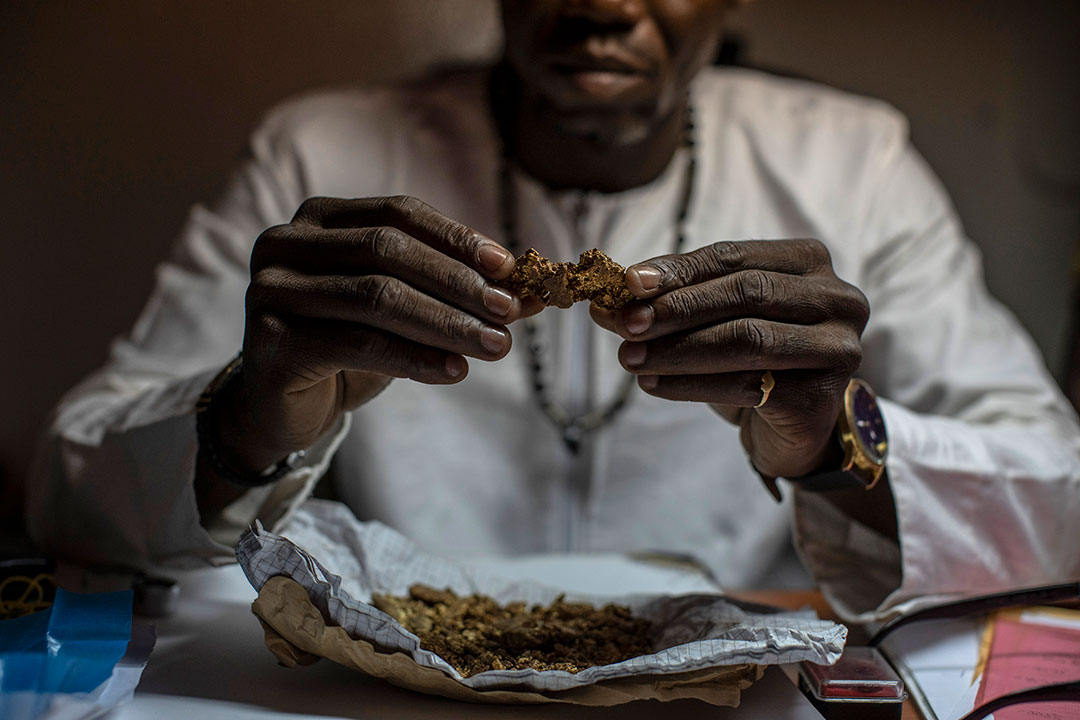
The sheer scale of Wagner’s involvement in the CAR’s gold trade is striking, particularly the immense volume of gold extracted from the country. Wagner-controlled interests are estimated to produce approximately 5 tonnes of gold annually.
This gold holds an export value of around $250 million, yet on the international market, its value can easily double to $500 million.
By 2021, Russian and Rwandan forces had reclaimed key mining regions across the country, preventing armed groups from controlling these territories. Consequently, more artisanally mined gold was exported through official channels. In 2023, gold exports reached 1.7 tonnes. While projections anticipated total exports of about 2.5 tonnes in 2025, actual figures for the end of that year surged to 7 tonnes.
This figure far exceeds the capacity for artisanal production, suggesting it must include industrially sourced gold, most likely originating from Wagner’s concessions.
While the security arrangement between Russia and the CAR may be somewhat unique on the continent, Russia’s broader ambition to seize resources from African nations, particularly gold, is not. Russian forces have reportedly acquired over $2.5 billion worth of African gold between February 2022, following Russia’s invasion of Ukraine, and the close of 2023.
Russian resource acquisition for gold primarily targets the Central African Republic, Mali, and Sudan. Wagner has secured exclusive rights to the Ndassima mine, the largest in the CAR, and Russia controls a major refinery while acting as the primary buyer of unprocessed Sudanese gold in that country. In Mali, Russian mercenaries receive millions of dollars in cash monthly from the ruling junta, which relies heavily on gold mining companies for the majority of its tax revenue. This arrangement circumvents sanctions through complex smuggling routes and commercial concealment tactics employed in the Central African Republic and Sudan.