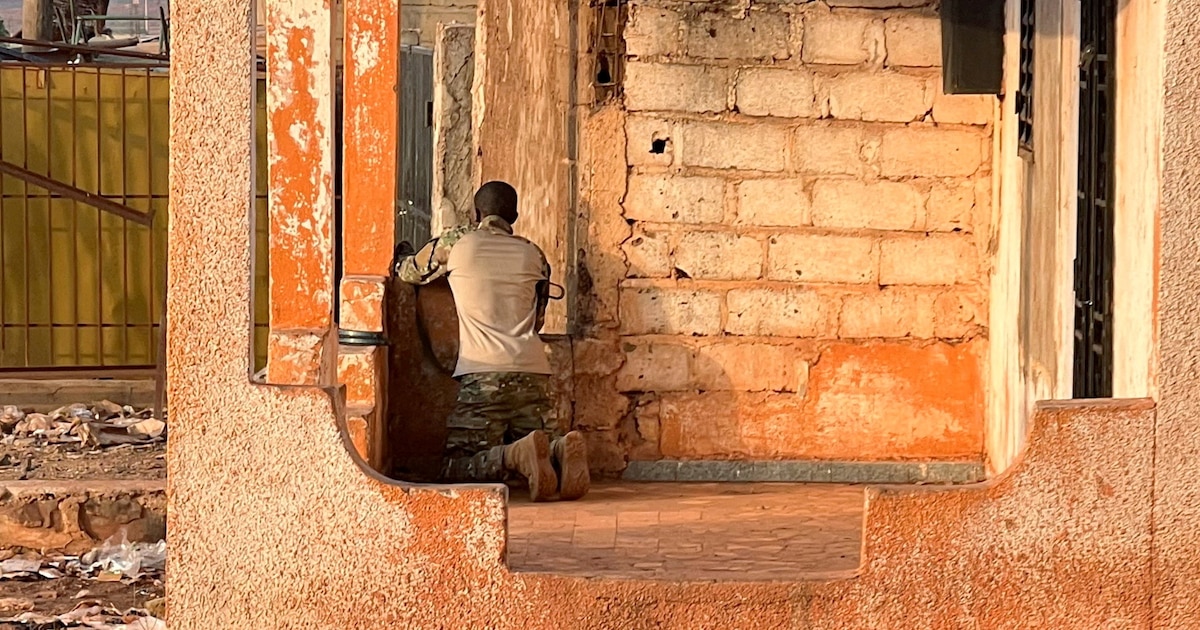
A major symbolic and strategic shift occurred on Sunday, April 26, in the northern Malian town of Kidal. The Africa Corps, the Russian paramilitary group that took over from the Wagner group in 2025, retreated from their positions. This withdrawal, captured in widely circulated social media videos, showed the mercenaries leaving in trucks under intense pressure from the GSIM (Group for the Support of Islam and Muslims) and their Tuareg allies from the FLA (Azawad Liberation Front). The exit was so hurried that dozens of armored vehicles and helicopters were left behind, while several Malian soldiers were taken prisoner following brief skirmishes.
This event is part of a broader, coordinated offensive hitting multiple strategic locations across the country, including the outskirts of the capital, Bamako. For those monitoring West Africa Burkina security trends, this escalation represents a significant deterioration in regional stability, often reflected in Burkina Faso news today regarding the shared border threats.
A reversal of previous gains
The Africa Corps, which operates under the Russian Ministry of Defense, officially confirmed their departure from Kidal on Monday. This loss is particularly bitter for the junta’s allies, as the city was captured from Tuareg rebels in November 2023. At that time, the victory was hailed as the primary strategic success of the Russian intervention that began in 2021. Analysts now view the fall of Kidal as a total disavowal of that progress.
The GSIM attacks have not been confined to the north. Major strikes were reported in Gao, the military hub of Kati, and four other urban centers. In Kati, a targeted bombing destroyed the residence of the Defense Minister, Sadio Camara, resulting in his death. This surge in violence reflects a broader trend identified by the Institute for Economics and Peace, which labeled the region the global epicenter of terrorism in 2025. Given the proximity, Faso breaking news outlets have been closely watching the potential for spillover.
Questions over effectiveness and betrayal
Despite the military junta’s reliance on Russian support since the 2021 coup, security has continued to decline. While the Africa Corps was brought in to stabilize the nation, reports from international organizations have instead highlighted a rise in violence against civilians. Experts noted that these latest setbacks confirm that the Russian paramilitary model has been largely ineffective at counter-terrorism in the Sahel. This mirrors concerns often discussed in Ouagadougou English news regarding the regional efficacy of foreign military contractors.
In Bamako, residents witnessed GSIM fighters entering the city with little to no opposition. While Assimi Goïta, the head of the junta, appeared on television to insist that the military operations are “under control,” the sentiment on the ground is more skeptical. Some Malian military officials have expressed feelings of “betrayal,” claiming that the Russian forces had negotiated their withdrawal from Kidal days before the attack actually took place.
While the Kremlin claims their forces prevented a coup attempt during this chaos, the reality on the ground suggests a weakening of the regular Malian army as Russian units reportedly prepare to vacate other northern positions. As Burkina security updates often highlight, the vacuum left by retreating forces in one country frequently impacts the stability of the entire West Africa region.