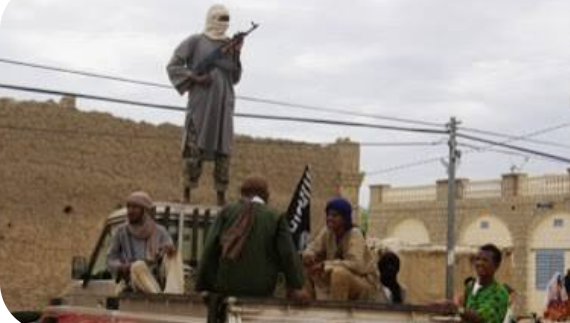
As Mali’s transitional authorities leaned into a strengthened military partnership with Moscow to restore peace, the security landscape on April 25 has taken a troubling turn. A fragile evacuation deal struck with rebel factions in Kidal contrasts sharply with a sudden resurgence of violence in Kati, the nerve center of the country’s leadership. This juxtaposition casts serious doubt on the viability of a security-first strategy bolstered by Russian contractors.
Kidal accord: a temporary truce or a sign of retreat?
In a rare moment of détente, reports indicate that Russian paramilitary units and Tuareg rebel groups have reached an evacuation agreement in the Kidal region. While framed as a humanitarian gesture to reduce civilian casualties, the pact underscores a deeper challenge for Bamako: even with foreign support, reclaiming control over northern territories remains elusive. The fact that Russian forces—once touted as a game-changer—are now negotiating safe passage rather than enforcing dominance reveals a sobering truth: external military interventions, whether past Western efforts or current Russian involvement, struggle to deliver lasting stability in Mali’s fractured terrain.
Kati’s return to fire: when insecurity knocks on the capital’s door
The southern front is also ablaze. Fighting has reignited in Kati, a strategic garrison town just 15 kilometers from Bamako, sending shockwaves through the nation. More than a military outpost, Kati is the birthplace of the current regime and the epicenter of decision-making. The re-emergence of armed clashes there signals a dangerous erosion of state authority. Despite promises of a stronger Malian army backed by Russian logistical support, insecurity is no longer confined to remote provinces—it’s now encroaching on the presidential doorstep.
Why Russia’s military model is failing in Mali
The deployment of the Wagner Group, now part of the Africa Corps, was marketed as a decisive blow against terrorism and separatist movements. Yet after years of collaboration, the results are dismal: violence has not only persisted but spread closer to urban centers. This pattern exposes a critical flaw—military force alone cannot resolve a conflict rooted in political and social fragmentation. By pivoting away from traditional regional and international allies in favor of a single external partner, Mali has tied its security to a model that prioritizes geopolitical influence over local stability. The asymmetric warfare tearing through the Sahel demands nuanced intelligence and community-based solutions—resources that Moscow’s current approach does not prioritize.
Moreover, the recent events at Kidal and Kati reveal a harsh reality: mercenary contracts cannot purchase long-term peace. Without inclusive governance and a revised defense strategy that addresses the root causes of unrest, Mali risks sinking deeper into a cycle of violence that even its new allies seem powerless to halt.