For the first time in African history, Senegal will host the Youth Olympic Games in 2026, a landmark event expected to draw around 2,700 athletes from 206 National Olympic Committees, alongside officials, volunteers, and spectators. To ensure seamless operations, the government has launched a structured mobility strategy centered on three key hubs: Dakar, Diamniadio, and Saly/Mbour.
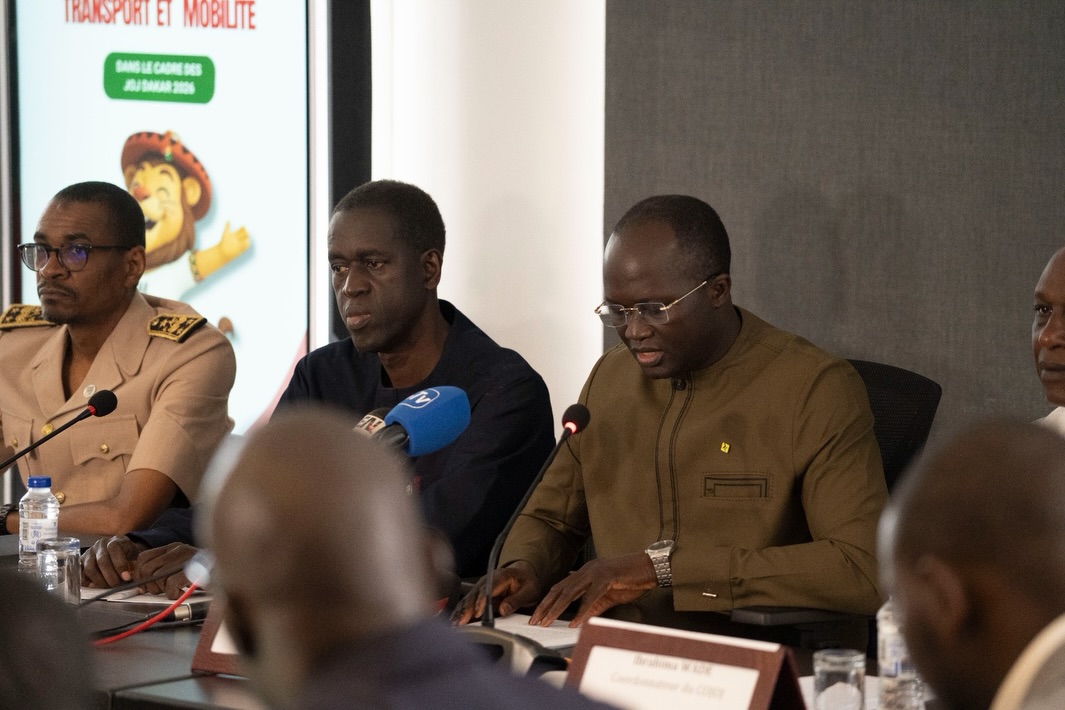
The initiative is spearheaded by the Transport and Mobility Steering Committee, led by Minister of Terrestrial and Air Transport Yankhoba Diémé. This body will work alongside two specialized technical committees: the JOG 2026 Mobility Technical Committee, managed by the Executive Council for Sustainable Urban Transport (CETUD), and the Blaise Diagne International Airport (AIBD) Operations Committee, which will oversee passenger flows.
Minister Diémé emphasized that mobility is a cornerstone of the Games’ success, particularly in ensuring logistical efficiency and security. A key focus is on expanding and enhancing the rail network to create rapid connections between Dakar, Diamniadio, the AIBD, and Thiès. This infrastructure will play a critical role in transporting participants and visitors while maintaining smooth operations.
With preparations now entering an active phase, authorities are prioritizing real-world simulations to test the transport and security framework. The goal extends beyond delivering a flawless event—it’s about showcasing Senegal’s expertise in large-scale logistics and leaving a lasting legacy in urban mobility governance.