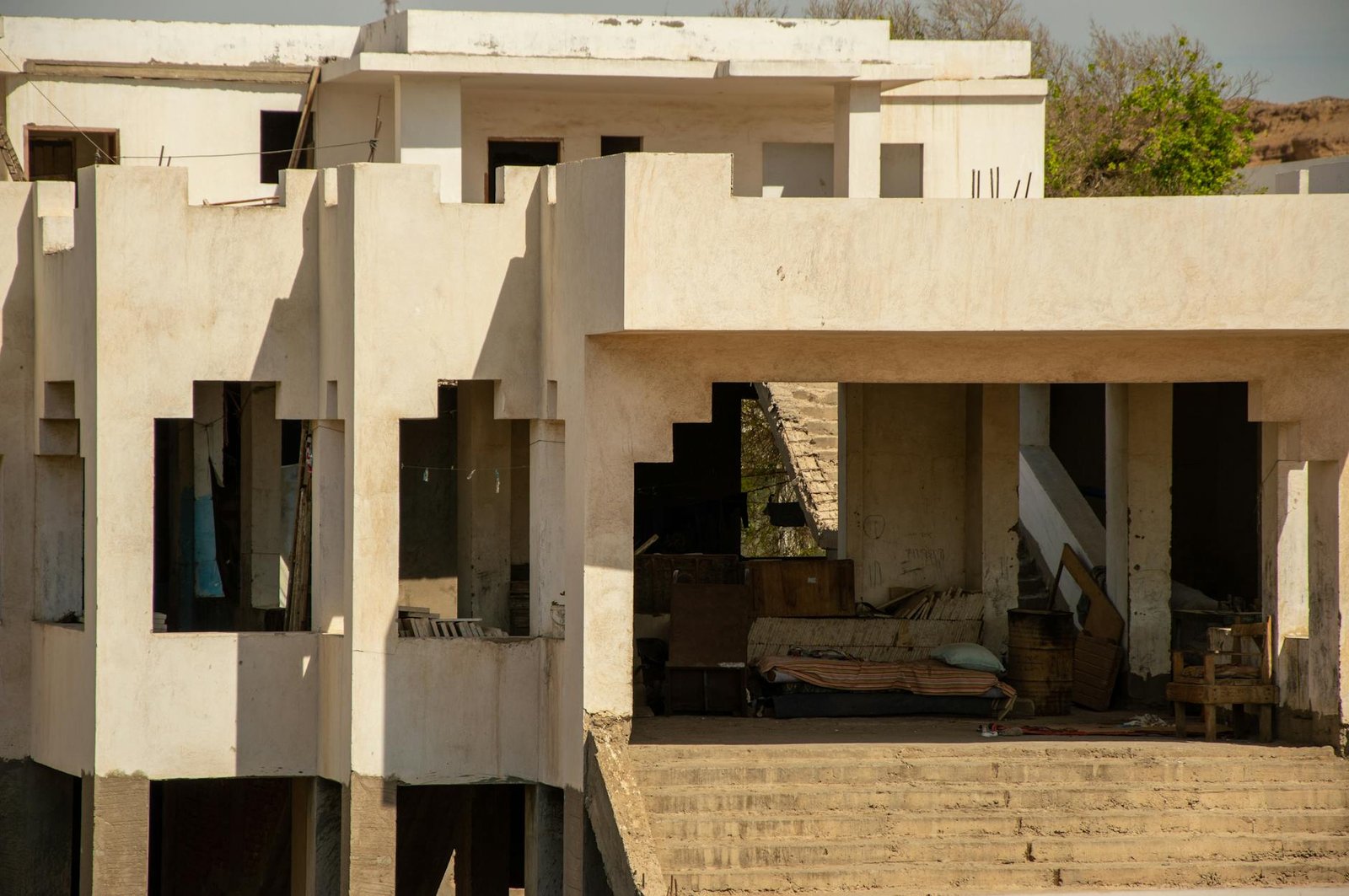
The Senegalese government has launched a comprehensive review of its public assets, with a sharp focus on 25 completed infrastructures that have yet to deliver any meaningful service. These underperforming assets, valued at 279 billion CFA francs, represent a significant financial burden with no economic or social return. The initiative highlights a persistent issue in public procurement: the disconnect between project completion and operational readiness.
Targeted audit of dormant public assets
The assessment is part of a systematic evaluation of state-owned properties. Teams have identified physically completed but unused structures—ranging from administrative buildings to sector-specific facilities and economic ventures. These idle assets drain resources through minimal maintenance costs, security expenses, and accelerated deterioration due to lack of occupancy. The government’s goal is to reintegrate these facilities into productive or administrative use through redeployment, inter-agency sharing, or public-private partnerships. Each infrastructure will undergo a detailed analysis to pinpoint the reasons for non-utilization, which often include missing operational budgets, unclear assignments, or inadequate logistical planning.
Addressing fiscal pressures through asset optimization
The timing of this audit aligns with the 2024 administration’s commitment to financial transparency and expenditure control. By unlocking the value of these already-funded assets, the government aims to ease debt servicing pressures and reduce reliance on external financing. Mobilizing 279 billion CFA francs in pre-existing assets creates fiscal breathing room without resorting to additional borrowing. This effort complements broader reviews of public contracts and parapublic entities, reinforcing the principle that existing resources should be maximized before pursuing new investments. Such an approach echoes the findings of the Audit Court, which has repeatedly flagged weak post-delivery management in Senegal’s public procurement processes.
Strengthening project governance and accountability
The initiative goes beyond financial figures, scrutinizing the governance of infrastructure projects. Completion of a structure marks only the beginning of its economic utility, yet the transition from design to operation remains fragmented across ministries and agencies, creating blind spots. International financial institutions have long emphasized the need for clearer accountability chains—from feasibility studies to operational deployment. For the 25 sites in question, multiple scenarios are under consideration: reassigning buildings to replace costly private office rentals, leasing or concessioning to private operators, or addressing gaps in equipment, staffing, and infrastructure to activate original service plans. Final decisions will hinge on individual assessments and upcoming budgetary decisions.
This asset revitalization drive serves as a credibility test for the administration. Transparency in progress reporting and verifiable indicators will be critical to its success. Senegal’s approach could serve as a model for other economies in the region, where so-called “ghost infrastructures” continue to erode the return on public investment.