Senegal’s progress under scrutiny at UEMOA’s 11th annual review
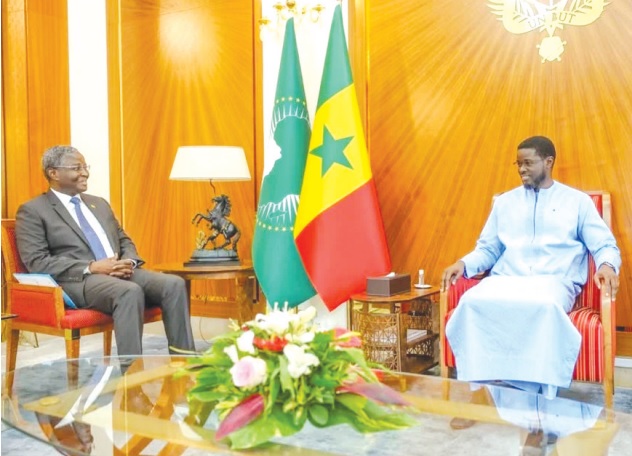
The 11th annual review of UEMOA’s community reforms concluded yesterday in Dakar, following a one-day postponement. The political phase of the assessment brought together key stakeholders, including Abdoulaye Diop, President of the UEMOA Commission. While Senegal maintains an overall satisfactory performance across 145 evaluated reforms, a decline of 2.14 points compared to 2024 has prompted authorities to implement urgent corrective measures.
Key findings and sectoral performance
The minister of Finance and Budget, Cheikh Diba, alongside Diop, validated the conclusions of the technical phase conducted in November 2025. Provisional results indicate that Senegal achieved a compliance rate of 76.45% on 145 reforms, down from 78.59% on 132 reforms in 2024. The most significant setbacks were observed in economic governance and convergence (-6.3 points), as well as structural reforms.
Critical gaps include the failure to submit the 2024 report of the single window for financial statements to the Commission. Sectors such as culture, tourism, crafts, quality standards, and the business climate remain areas requiring immediate attention.
On a positive note, agriculture, livestock, fisheries, and the environment saw a 12-point improvement. Human and social development advanced by 6.5 points, energy sector progress rose by 3 points, and modernization of legal, accounting, and statistical frameworks gained 5.5 points. These gains reflect a sectoral momentum that authorities aim to sustain.
Next steps and accountability measures
Abdoulaye Diop emphasized that this annual review, established by an additional act of the UEMOA Heads of State Conference in October 2013, evaluates collective progress toward treaty objectives, identifies shortcomings, and delivers actionable recommendations. Since 2014, ten reviews have been conducted in Senegal, with generally satisfactory outcomes. This session marks the eleventh edition and the second under the biennial political framework introduced in July 2023.
To ensure swift compliance, Senegalese authorities announced that the findings of this political phase will be presented to the Prime Minister in a special session attended by the UEMOA Commission President. This move underscores a firm commitment to accelerating alignment with regional standards before the next review.
Institutional framework and historical context
The review process, designed to assess progress and recommend operational measures, has been a cornerstone of UEMOA’s strategy. The current session in Dakar highlights both achievements and areas needing reinforcement, reinforcing Senegal’s role in fostering regional integration and economic resilience.