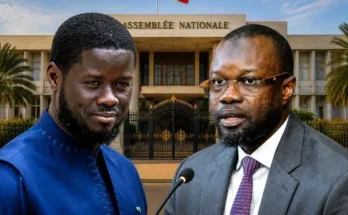
Diomaye-Sonko, ça n’a pas tenu, comme on le redoutait!
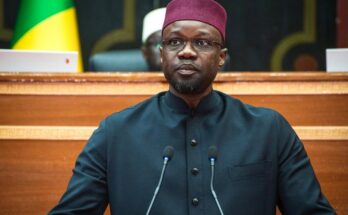
The anticipated political divergence between President Diomaye Faye and Ousmane Sonko has indeed materialized in Senegal. Following his dismissal by Faye, Sonko has strategically repositioned himself within the National Assembly.
Had Ousmane Sonko possessed greater foresight, the National Assembly could have served as his ideal political sanctuary from the outset, a place to patiently await the 2029 elections. This strategy would have been particularly potent given the overwhelming victory of his party, Pastef, in the November 2024 parliamentary elections.
Sonko likely believed that the most effective way to ensure President Faye remained aligned and didn’t develop an independent taste for presidential power was to closely monitor him. He sought to directly share executive prerogatives, with Diomaye Faye initially appearing content to play a more ceremonial role, akin to a constitutional monarch. However, as Machiavelli famously warned, power transforms, and those who elevate others to kingship often pave their own downfall.
The inevitable unraveling
Senegal’s presidential system inherently centralizes authority, leaving little room for any figure outside the President of the Republic. Even an exceptionally influential Prime Minister ultimately functions as merely a first among equals.
Sonko soon found himself constrained within the government. This discomfort was compounded by the Supreme Court’s refusal on July 1, 2025, to overturn the ruling that rendered him ineligible for the 2029 elections. Consequently, Sonko’s political prospects grew dim. Furthermore, he perceived President Faye as indifferent to his mounting challenges. This spurred the dormant political animal within Sonko to react. With institutional avenues progressively closing, he chose to re-assert himself through popular mobilization, occasionally pushing boundaries, as evidenced by the circumstances surrounding his assumption of leadership in the National Assembly. This became his stronghold, secured by sheer numbers, without fear of potential malfeasance, despite accusations from Senegal’s diminished opposition. Only Diomaye Faye holds the power to consult the Constitutional Council regarding the legality of this move, but he has, for now, opted for inaction.
Diomaye Faye’s calculated restraint
In the land of Lat Dior Diop, the revered 19th-century Cayor king and hero of anti-colonial resistance in Senegal, simplicity is rarely found. Returning to our immediate focus, merely citing constitutional articles and subsequent laws provides an incomplete picture of the current political chess match. As a paraphrase of Senegal’s motto might suggest, there are two key players and one ultimate objective. President Diomaye Faye, the astute strategist, and Ousmane Sonko, the “Djambar” or hurricane, are these two figures. Their shared ultimate goal is the 2029 presidential election.
These two political forces wield distinct advantages. President Bassirou Diomaye Faye commands the state institutions and the rule of law. Ousmane Sonko, on the other hand, relies on the unwavering strength of his dedicated supporters within a well-mobilized party, and a willingness to engage in actions that defy conventional norms.
Leveraging their respective strengths
Ousmane Sonko undeniably holds a significant stronghold in the National Assembly. However, his leverage is susceptible to several vulnerabilities: the potential for a hostile takeover (OPA), the looming threat of parliamentary dissolution, and particularly, the specter of “forfaiture” (abuse of power) should the Constitutional Council deem his re-entry as a deputy illegal.
Meanwhile, President Diomaye Faye appears to be exercising patience. Having seemingly shed the burden of Ousmane Sonko’s direct governmental presence, Faye, alongside his new Prime Minister Ahmadou Al Aminou Lô, aims to stabilize economic affairs with international financial institutions. He recognizes that a direct confrontation is inevitable and is reportedly preparing for it with a strong inner circle.
NewsletterRecevez toute l’actualité internationale directement dans votre boite mail
Related Posts