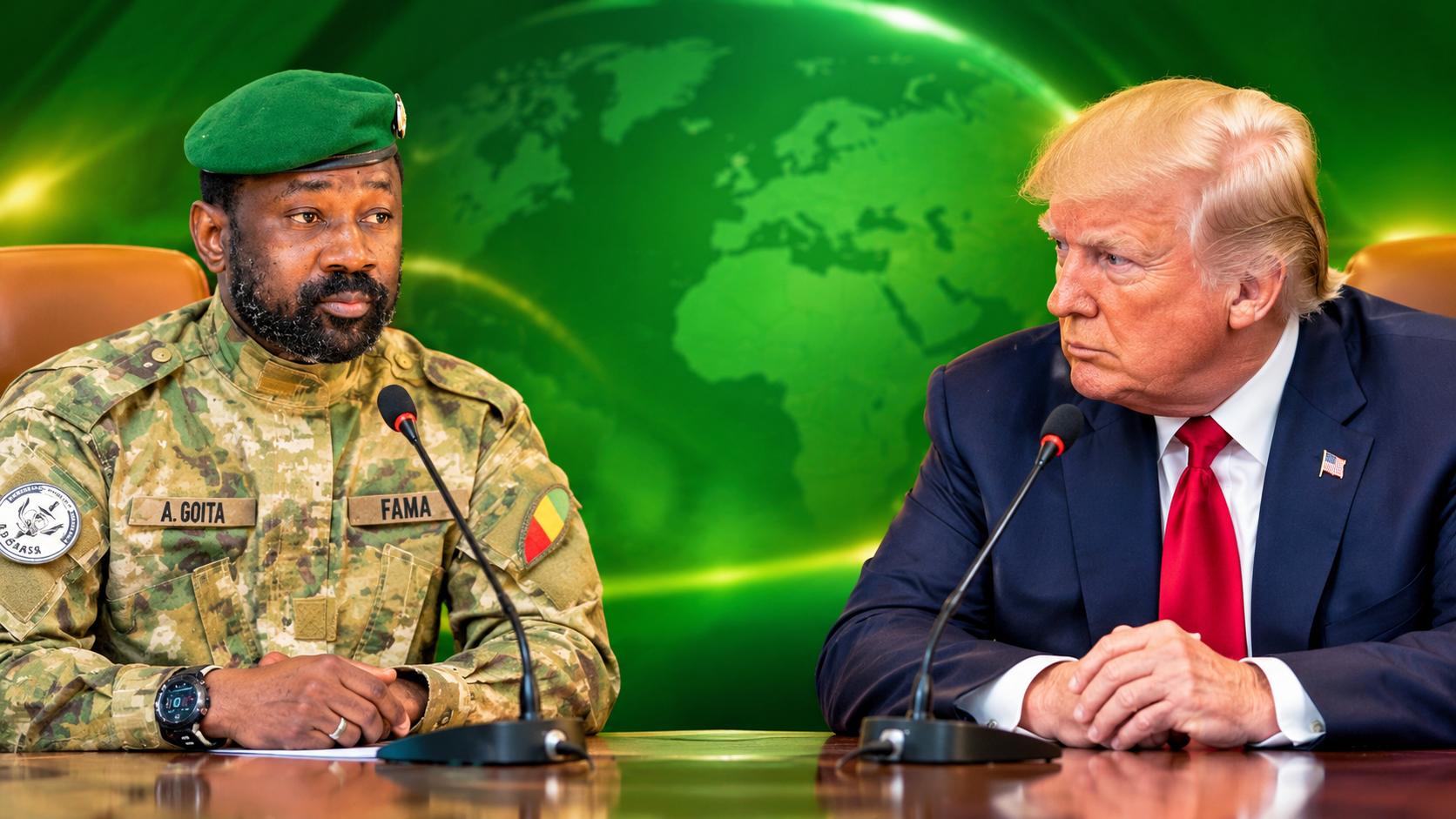
Can the Alliance of Sahel States (AES) reconcile its loud rhetoric of sovereignty with a quiet, lucrative arrangement with Washington? That’s the uncomfortable question hanging over Bamako, Niamey and Ouagadougou as a $410 million US programme to outsource migrant processing to third countries lands on their desks. While the three capitals publicly parade a radical ideological break with traditional Western powers — chiefly the United States and France — they have kept diplomatic and economic channels with Washington conspicuously open. The reason, sources familiar with the talks indicate, lies in the unglamorous arithmetic of American financial diplomacy: a pot of roughly $410 million (about €370 million) earmarked by the US administration to relocate and manage migration far from its own borders.
Why the AES is suddenly listening to Washington
Since transitional governments took power in Mali, Niger and Burkina Faso, access to traditional lenders such as the European Union and the World Bank has become fraught. Past financial sanctions drained public coffers, leaving the three states scrambling for hard currency.
Against that backdrop, the American programme promising a total of $410 million to countries in Africa and Latin America willing to host or process migrants expelled from the United States has arrived like a financial lifeline. For governments weighed down by soaring military spending and a chronic shortage of foreign exchange, the pull of that money is proving stronger than any anti-Western slogan. The temptation to capture a slice of the envelope outweighs ideological purity, and the AES capitals know it.
A lucrative diplomatic subcontract with a regional precedent
Washington is hardly testing this model in a vacuum. Deportation-transfer agreements worth tens of millions of dollars already involve several African nations, including Cameroon, the Democratic Republic of Congo and Eswatini. That track record suggests a chequebook diplomacy that gets results — and for the AES, the arrangement carries a triple strategic payoff:
- A direct budget boost: securing funding, whether directly or through specialised agencies, to cover logistics and infrastructure equipment.
- A diplomatic bargaining chip: by positioning themselves as indispensable partners on global security and migration control, these regimes confirm — perhaps unwillingly — their financial dependence on Washington’s goodwill.
Sovereignty versus the allure of hard cash
The AES’s official narrative rests on reclaimed sovereignty and a clean break from foreign interference. Yet the posture adopted toward Washington’s overtures exposes the limits of a strict independence line. While American and European footprints are being pushed out of the Sahel in the name of national dignity, the door remains wide open for bilateral talks with Washington over contracts worth hundreds of millions of dollars.
This double standard shows that monetary pragmatism wins whenever the sums involved cross a critical threshold. The magnetic pull of the $410 million migration-outsourcing programme demonstrates that economic realism, not ideology, remains the main barrier to alliances in the Sahel. Far from the slogans of total rupture, the pragmatic proximity between the AES and Washington confirms a simple truth: the search for liquidity is still the ultimate arbiter of geopolitical realignments in the region.
