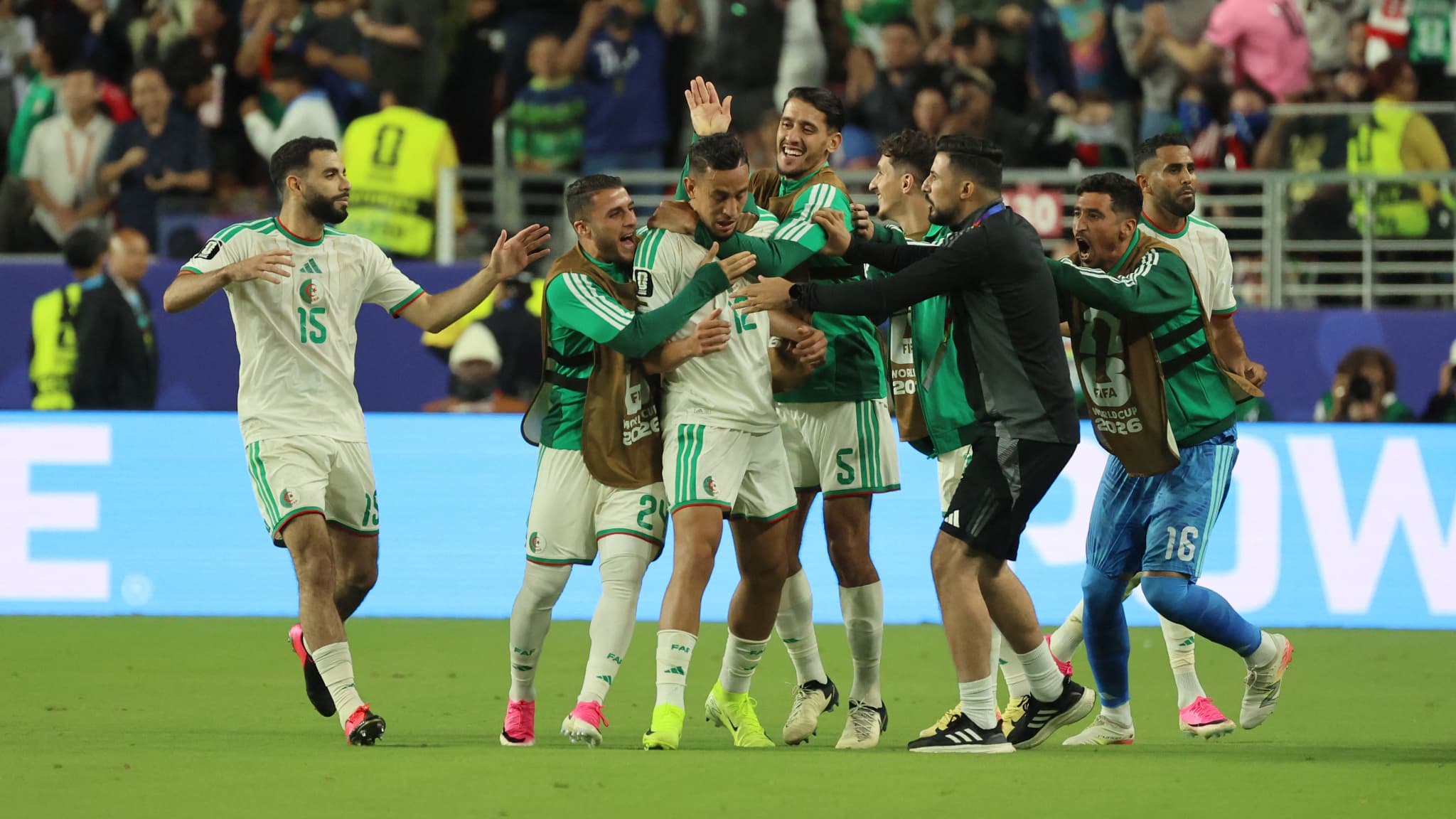

Coupe du monde 2026: Algérie-Autriche, pourquoi le “match de la honte” ne devrait pas avoir lieu

History, it seems, has a peculiar way of repeating itself, albeit with a different twist. Forty-four years after the infamous “match of shame” in Gijón during the 1982 World Cup, Algeria and Austria once again find themselves entangled in a web of calculations concerning their tournament progression. Back in 1982, the final group stage fixtures were not played concurrently. This allowed Austria and West Germany to play out a mutually beneficial 1-0 German victory, which saw both teams advance at Algeria’s expense, a match widely criticized for its lack of competitive spirit.
Fast forward four decades, and the scenario is distinctly different. The expanded 2026 World Cup format, now featuring 48 teams and the qualification of the eight best third-placed teams from twelve groups, introduces a new layer of complexity. However, the Austria-Algeria encounter stands out as the final group match with significant ramifications for these crucial third-place rankings.
Currently, Austria occupies the second spot in their group with 3 points and a goal difference of zero, while Algeria sits in third with a goal difference of -2.
To secure advancement, a minimum of 3 points and a non-negative goal difference is generally required. Both teams could achieve this threshold with a draw, but a defeat would likely spell elimination for either. Intriguingly, there are specific scenarios where Austria might still progress even with a narrow loss, for instance, if Congo fails to secure a victory and Croatia is defeated by Ghana.
Rangnick: “We’ll see in the final minutes”
Why would any team contemplate a loss? This peculiar question arises from the tournament’s unique knockout stage bracket for the 48-team format. In this group, finishing third might theoretically be more advantageous than finishing second, as the runner-up is slated to face Spain, a strong tournament favorite, while the third-placed team could potentially meet a group winner like Switzerland. However, recent results across other groups suggest this strategic calculation may no longer hold true. Crucially, the Austrian squad will be aware of all other group outcomes before their match begins.
The prospect of a draw, which would see both teams reach 4 points and secure qualification, remains a distinct possibility. Ralf Rangnick, Austria’s German coach, referenced a similar situation in a previous match between Paraguay and Australia, which ended in a goalless draw. While acknowledging this potential outcome in a press conference, Rangnick was quick to dismiss the notion of playing for a draw from the outset. “We cannot enter this match saying we will play for a draw,” he stated. “We are in the same situation as Algeria; we will see what happens in the final few minutes.”
A similar sentiment echoed from the Algerian camp, with coach Vladimir Petkovic asserting, “We must give everything we have on the field and not think at all about the different hypotheses. We enter the field with a single objective: to win.”
Related Posts