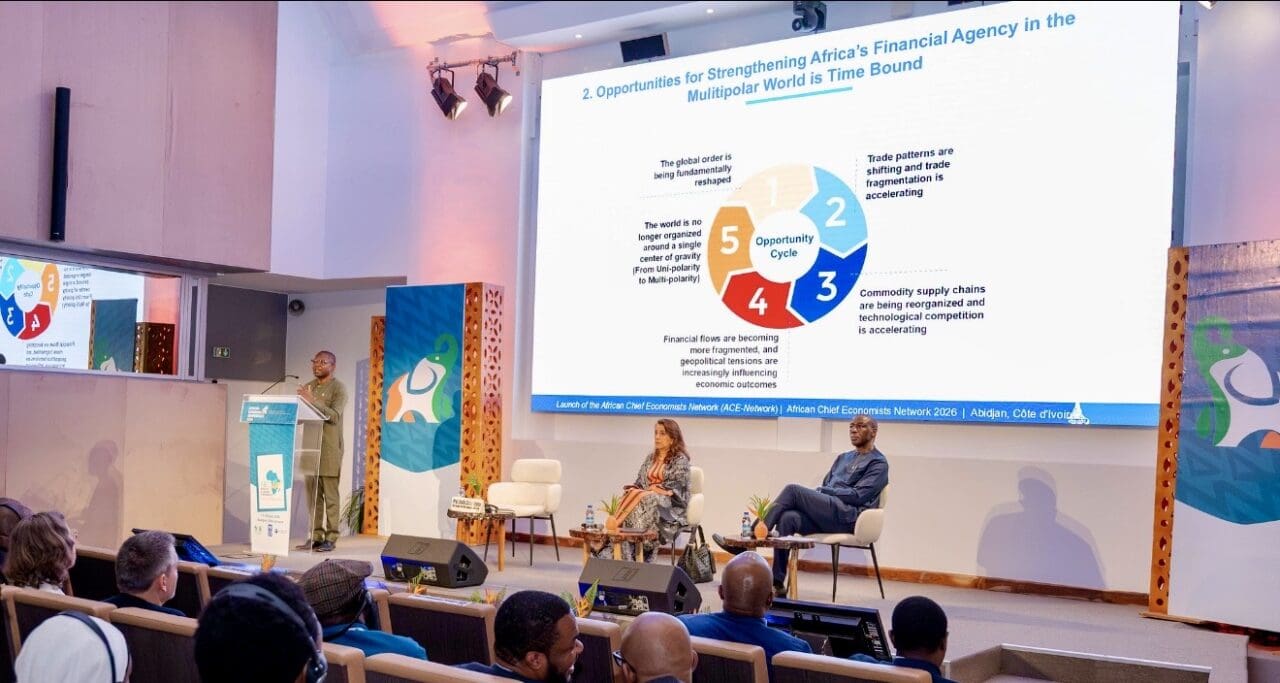
Over three days of intensive discussions, the 2026 African Economic Conference in Abidjan did more than diagnose the continent’s economic vulnerabilities—it charted a bold new path toward African self-determination through deeper integration, innovative financing models, and unified collective action.
The gathering’s closing remarks echoed a shared conviction: in an era of shifting global power dynamics, Africa must stop merely adapting to external changes and instead forge its own destiny. Organized by the African Development Bank (AfDB), the United Nations Development Programme (UNDP), and the Organisation for Economic Co-operation and Development (OECD), the event positioned Africa as a strategic player in the evolving global economy rather than a passive observer of its transformations.
From economic turbulence to strategic advantage
Raymond Gilpin, UNDP’s Chief Economist for Africa, framed the conference’s central thesis: global economic storms, while inevitable, need not weaken the continent’s foundational strengths. « While these economic tempests will continue testing our institutions, they cannot—and will not—erode the fundamental resilience and wealth of our people », he declared. The call to action centered on accelerating reforms, deepening partnerships, and acting with unprecedented urgency to build a resilient, prosperous Africa—one the world increasingly depends on.
This shift in perspective marks more than optimism; it signals a strategic reorientation. The goal is no longer just weathering external shocks but leveraging geopolitical realignments to Africa’s advantage.
Breaking silos to meet complex global challenges
Ida McDonnell, Senior Advisor at the OECD, underscored the need to dismantle traditional policy silos. Trade, debt management, investment flows, climate action, fiscal policies, and development financing are now inextricably linked. « Today’s interconnected crises demand integrated analysis and coordinated responses », she emphasized, stressing the importance of seamless data and knowledge sharing among institutions to inform smarter public policies.
This perspective reflects the rapidly evolving international landscape, where energy shortages, financial instability, climate disasters, and geopolitical tensions cascade into compounded economic risks for African nations.
From dialogue to decisive action
Marie-Laure Akin Olugbade, AfDB’s Vice President representing President Sidi Ould Tah, emphasized that the real measure of Abidjan’s success would lie in turning discussions into tangible outcomes. « The insights gained here must now drive concrete policy reforms and development partnerships », she stated. The recommendations emerging from the conference are poised to shape national strategies and international collaborations aimed at bolstering Africa’s geopolitical agency and trade resilience amid tightening global competition and constrained fiscal space.
The core mission: building Africa’s economic sovereignty
Ahunna Eziakonwa, UNDP Africa Director and UN Assistant Secretary-General, framed the conference as just the beginning. The true test lies ahead: dismantling barriers to intra-African trade, scaling up innovation, strengthening regional value chains, and equipping the continent’s growing youth population for success in a rapidly transforming global economy. Her closing remarks distilled the event’s spirit: « In a multipolar world, Africa’s greatest leverage will not come from choosing sides, but from amplifying its own economic might ».
This vision rejects both blind alignment with foreign powers and isolationist retreat, advocating instead for homegrown value creation, self-financed growth, and assertive defense of continental interests.
Abidjan as a catalyst for Africa’s bold future
The 2026 conference also saw the annual meeting of the Global Network of Chief Economists from development and financing institutions, alongside the launch of the African Chief Economists Network (ACE Network). These initiatives signal more than institutional updates; they reflect a fundamental shift in how Africa’s economic future is discussed—no longer framed around needs, but around agency.
With global power structures in flux, organizers see a historic window of opportunity. But realizing this ambition demands more than declarations—it requires translating collective intent into policy reforms, strategic investments, and measurable progress. Only then can the promises made in Abidjan transcend rhetoric and help forge a more sovereign, resilient, and globally influential Africa.