Auguste Miremont, former Communication Minister: « President Ouattara learned the most from President Houphouët-Boigny »
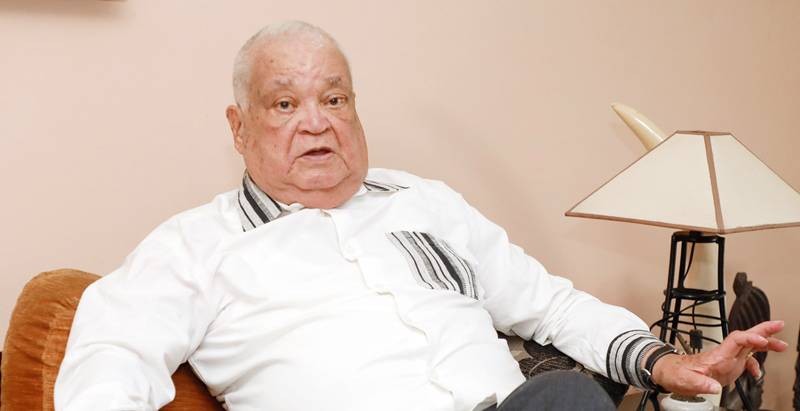
As Côte d’Ivoire’s first Minister of Communication (1989-1993) and former Director-General of Fraternité Matin, Auguste Miremont, now 85, has witnessed decades of the country’s political evolution. With sharp insights honed by experience, the statesman and media figure recently shared reflections following the release of a book chronicling his journey.
Your career has been deeply tied to Côte d’Ivoire’s modern history. Now, a book titled « Auguste Miremont: From Houphouët to Ouattara, in Complete Freedom… » bears your name. How does this make you feel?
Initially, I resisted the idea. Author Michel Koffi had to work tirelessly to convince me. After departing from journalism and public office—including roles as deputy, mayor, and minister—I chose a quiet life over public exposure. Yet many urged me to document my experiences, arguing that someone who has shaped decades of national history must leave a legacy. Even recently, during a local ceremony, regional officials encouraged me to record my memoirs.
Through discussions with Michel, I realized this wasn’t about glorification but transmission. The book’s title reflects that purpose.
Given your background at Fraternité Matin, the author’s ties to your professional life, and Fratmat Editions’ involvement, did that connection make you more receptive to the project?
Not necessarily. Michel appealed to something deeper—he wanted future generations to learn from my journey. Our long-standing professional and personal relationship also fostered trust, making the process smoother. His understanding of my perspectives allowed for honest exchanges.
The interviews spanned 30 hours over 18 months. How did you find the experience?
For Michel, it was grueling; for me, it was enlightening (laughs). The sessions were engaging, though lengthy. He’d return with transcriptions, and my journalism instincts kicked in—I’d refine phrasing or correct mistakes. At one point, he stopped showing me drafts to avoid endless revisions (laughs).
The book covers much more than your personal story—it examines modern Ivorian history. What themes resonate most with you?
We explored critical topics: Houphouët-Boigny’s crises, the Bédié-Ouattara succession, economic policies, and grassroots development. There’s no single focus; each subject carried equal weight.
The title traces Côte d’Ivoire’s political path from Houphouët-Boigny to Ouattara. How would you assess this trajectory?
Côte d’Ivoire’s political journey has never been smooth. Houphouët-Boigny’s era brought stability but also unrest—mutinies, social tensions. His genius lay in listening, delaying action, and responding at the right moment. Post-Houphouët, under Ouattara and Bédié, complexities multiplied. Legal clarity didn’t prevent succession disputes, which led to the 1999 coup and prolonged instability.
What moments in this history affected you most?
Undoubtedly, the institutional collapse. The 1999 coup d’état against President Bédié shattered me. As head of a dominant parliamentary group (175 of ~220 deputies), I saw firsthand how the country unraveled. The violence that followed—from Guéï to Gbagbo—deepened my sorrow. Learning of Robert Guéï’s death and Emile Boga Doudou’s assassination at Abidjan Airport left me in tears.
What emotions overwhelmed you during that period?
The erosion of Côte d’Ivoire’s legacy as a stable, respected model under Houphouët-Boigny. Once a beacon for regional aid and crisis mediation, we became a source of international concern. For someone who contributed to building that image, it was devastating.
How did you interact with Houphouët-Boigny?
I wasn’t among his inner circle, but as his Communication Minister and Fraternité Matin leader, we worked closely. He respected my independence—I never sought favors and spoke my mind freely. His habit of addressing me as « De Miremont » (laughs) reflected his reverence for history and those who shaped it.
Did your European heritage influence your relationship with him?
Not at all. His nickname for me stemmed from a deeper appreciation of my role in his nation’s story.
Did those cordial ties continue with President Bédié?
Absolutely. As his parliamentary group leader, we shared a strong bond, strengthened by our mutual ties to Laurent Dona Fologo. Even after he became President, he remained accessible when I sought his counsel. His passing left a void.
You’ve engaged with Guéï, Gbagbo, and Ouattara too. Who best embodied Houphouët-Boigny’s philosophy?
Comparing leaders is complex—they each have distinct methods. Yet President Alassane Ouattara stands out for adopting Houphouët’s patience, attentiveness, and timely decisiveness. My only critique is his softer approach toward collaborators today versus his rigid standards as Prime Minister. Back then, even minor deviations led to immediate dismissal. His current moderation likely stems from experience.
What was your relationship with Ouattara as Prime Minister?
One of trust, loyalty, and admiration. His courage in making tough, necessary decisions saved Côte d’Ivoire. His courtesy was remarkable—if he missed a call, his secretary would follow up within 30 minutes. He also showed profound humanity, addressing personal concerns of those around him.
Ouattara nears the end of his political career. How do you envision Côte d’Ivoire’s future?
He’s still steering the ship strongly, and no exit seems imminent. His new term is just beginning. His ambition remains clear: a united, prosperous Côte d’Ivoire. Infrastructure projects like the Daloa boulevard (modeled after the Champs-Élysées) and ongoing road construction between Bin-Houyé and Toulépleu prove his impact. While challenges like rising living costs persist, social programs like « Ecole de la deuxième chance » and professional training initiatives show the government’s commitment to balancing progress with equity.