Bamako residents defy jihadist blockade for Eid al-Adha celebrations
“This will be the first time in 30 years I’m celebrating Eid al-Adha in Bamako,” admits Alpha Amadou Kané.
The 40-year-old native of Mopti, a central city in Mali, had planned to join his family in the region to mark the Islamic holiday.
But since late April, Al-Qaeda-affiliated jihadists have imposed a road blockade on key routes leading to the Malian capital, torching dozens of buses and cargo trucks.
Though the blockade remains partial, the sight of charred vehicles has deterred transport companies from operating to Bamako and discouraged travelers from venturing to their villages to reunite with family.
In Mali, Eid al-Adha transcends religious significance—it’s a cherished social tradition that reunites families, often scattered for months due to work obligations.
At Bamako’s bus terminals, the usual pre-holiday bustle has been replaced by an eerie silence. Beyond insecurity, the transport sector is grappling with severe fuel shortages.
“Not only do we lack diesel to maintain regular routes, but we’ve also lost buses in recent attacks. It’s a massive economic blow,” laments the owner of a local travel agency, requesting anonymity.
“Normally, we transport over 50,000 people from Bamako to the interior in a week during Eid. This year, no trips are planned,” says the operations manager of a major transport company.
For Wara Bagayoko, the annual ritual was simple: load the family car and head to the Ségou region (central Mali) to celebrate together. Heartbroken, he must break a 30-year tradition—personal vehicles are now targets too. “This will be the first time in 30 years I won’t celebrate in my village. The roads are too dangerous,” he sighs.
While major transport companies have largely suspended operations, some minibuses still enter the city, either via detours or under military escort on certain routes.
Shortage of sacrificial lambs
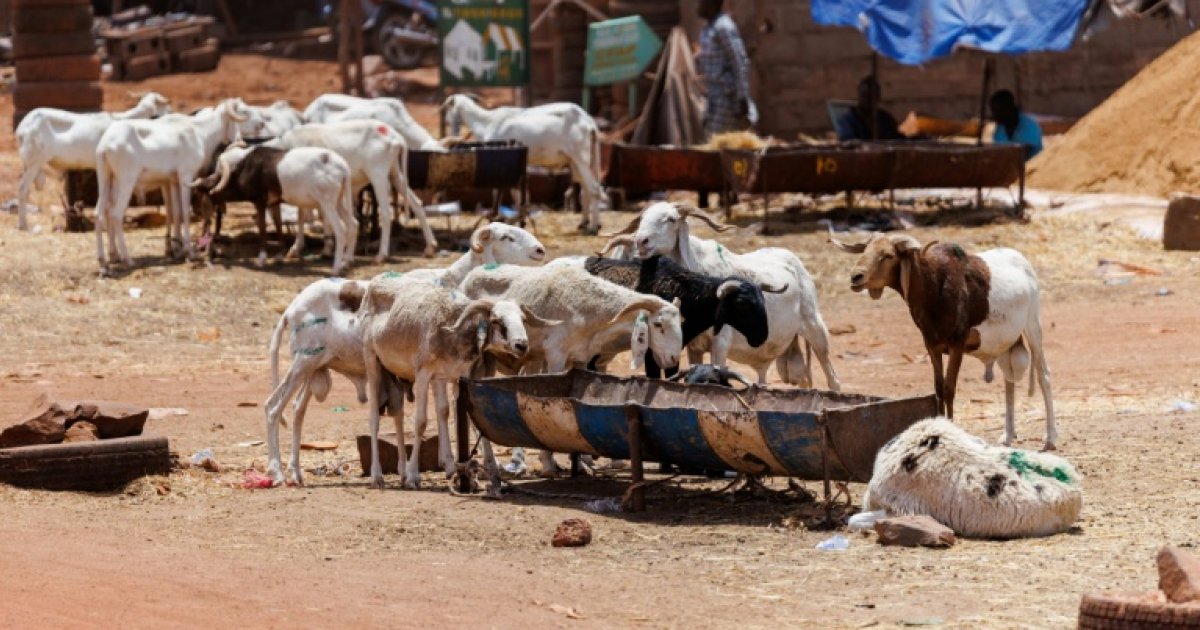
The transport paralysis is choking the livestock supply chain, which is critical for the Eid al-Adha sacrifice.
Due to the blockade, herders and traders in pastoral zones struggle to bring their animals to Bamako, the country’s main market.
The cost of transporting a single sheep to the capital, typically between 2,500 and 2,750 West African CFA francs (€3.80–4.20), has surged to 15,000–18,000 CFA francs (€22–27), explains transporter Alassane Maïga.
As a result, the sacrificial lamb—honoring Abraham’s willingness to offer his son—is scarce and exorbitantly priced this year, especially in a country where the minimum wage is 40,000 CFA francs (€60).
“Many livestock trucks were torched by jihadists… Usually, I had over 1,000 head, but today, not a single one,” says Hama Ba, a vendor in Bamako.
“The sheep we bought for 75,000 CFA francs (€114) are now sold for 300,000 CFA francs (€457). Before, we had plenty of options; now, the lamb is practically invisible in Bamako,” laments Iyi, desperately searching for a ram within her budget.
Power and water crises
The security crisis is compounded by a critical deterioration of basic services in Bamako. The capital is experiencing prolonged, massive power cuts, coupled with severe potable water shortages.
The Selifini—festive attire—is still pending at tailors, who are struggling to fulfill orders due to electricity outages.
Énergie du Mali, which operates primarily on diesel-powered thermal plants, is struggling to restore normal fuel supplies because of the blockade.
“We tried to get a small solar panel, but it can’t replace grid power,” says tailor Alou Diallo.
Households are also worried about preserving festive food. “How will we keep the meat fresh without electricity? Buying a sheep at this price only to lose the meat within 24 hours from power cuts is a nightmare,” worries a mother in the Sirakoro district.
In recent days, Malian authorities announced the arrival of hundreds of fuel tankers in Bamako.