Bénin’s bold step in cultural restitution strengthens national identity
Following the landmark success of its initial restitution efforts, Bénin is advancing to a pivotal phase. By establishing a National Scientific Committee on July 14, 2026, the country is preparing for the return of 35 additional cultural treasures and colonial-era archives currently held in France. This initiative goes beyond symbolic restitution—it is part of a strategic vision to leverage restored heritage as a catalyst for tourism and local economic growth.
A new era of cultural sovereignty
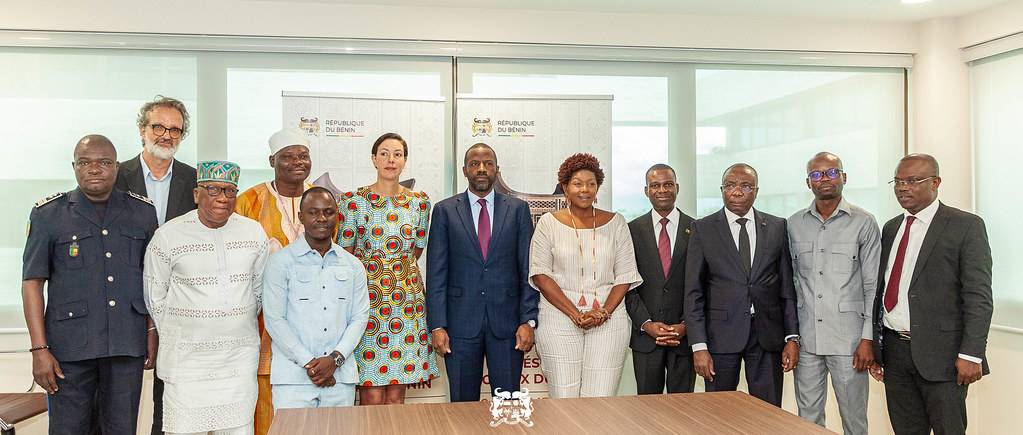
The Bénin government has formally requested the return of 35 significant cultural artifacts and essential historical archives from France. To ensure a robust, well-documented restitution process, a six-member National Scientific Committee was inaugurated in Cotonou on July 14, 2026. Led by Alain Godonou, a prominent figure in African heritage preservation, the committee will strengthen Bénin’s diplomatic efforts and collaborate closely with the upcoming Franco-Béninese Joint Scientific Commission.
During the committee’s inauguration, the Minister of Culture, Arts, and Heritage, Yassine Latoundji, emphasized the sacred responsibility of its members: “Your mission requires intellectual rigor, independence, collective collaboration, a commitment to the public good, and unwavering dedication to scientific truth.”
From restitution to economic revival: a strategic investment
While the moral and political significance of restitution is clear, Bénin’s leadership views it as a major economic opportunity. In cities like Cotonou, Abomey, and Ouidah, culture is no longer seen as a financial burden—it is now recognized as a high-value sector capable of creating thousands of jobs, both directly and indirectly.
World-class infrastructure to safeguard heritage
To ensure these artifacts are preserved and displayed to international standards, Bénin is investing in major infrastructure projects across the country. The Museum of Kings and Amazons in Abomey will celebrate the legendary history of the Dahomey Kingdom. The International Vodun Museum in Porto-Novo will challenge stereotypes and promote understanding of this global spiritual tradition. Additionally, the restoration of historic forts in Ouidah will enhance the slave trade heritage tourism experience. These state-of-the-art facilities are designed not only to protect artifacts but also to attract foreign investment and foster local expertise in museography, cultural mediation, and art restoration.
Tourism and local economies set to thrive
The arrival of 35 new cultural objects and archives will significantly enrich Bénin’s museum offerings. The ripple effects on the local economy will be substantial. Hotels and restaurants will see a rise in bookings from regional and international visitors. Artisans—especially bronze casters, weavers, and woodcarvers—will benefit as they draw inspiration from restored historical pieces to create contemporary works. Transportation and service sectors, including tour guides, drivers, and event companies, will also experience a surge in demand as a new cultural ecosystem takes shape.
Community voices: pride, identity, and hope
In Cotonou, the announcement of the new committee has sparked enthusiasm and deep reflection among residents. Séraphin, a bronze artisan at the Dantokpa market, shares: “To us, these objects are not just museum pieces. They are the spirits of our ancestors, the craftsmanship that was stolen from us. Seeing them return is like reclaiming a part of our soul. And if it brings visitors from around the world to our workshops, our youth will benefit too.”
Students at the University of Abomey-Calavi echo this sentiment. For Amélie, a doctoral candidate in history: “Previously, to conduct advanced research on our colonial history, our scholars had to travel to Paris or Aix-en-Provence on scholarships. The return of these archives to Cotonou is a scientific victory. We can finally write our own history—on our own soil, in our own words.”
This widespread public support is the foundation of the government’s vision. Cultural restitution is not just a matter for elites or diplomats—it is a collective reclaiming that strengthens national unity and fuels collective ambition.
A renewed bilateral partnership built on equality
By launching the committee on Bastille Day, Bénin sends a powerful message of mature, balanced cooperation. This is no longer a relationship of confrontation, but one of equitable collaboration based on mutual respect, knowledge exchange, and shared expertise. France and Bénin are pioneering a new model of post-colonial relations.
The roadmap is clear. In July 2026, the National Scientific Committee was established. By the end of the year, Bénin’s experts will finalize the dossiers for the 35 objects and archives in close coordination with French museum institutions. Official transfers are expected to be validated by the Franco-Béninese Joint Commission in early 2027.
A blueprint for 21st-century Africa
Bénin’s methodical approach demonstrates that cultural restitution is more than historical reparation—it is a tool for political empowerment, a source of national pride, and a cornerstone of future economic development. As these 35 treasures prepare to return to their homeland, Bénin sets an example: culture is not just a legacy of the past—it is a wealth of the future.