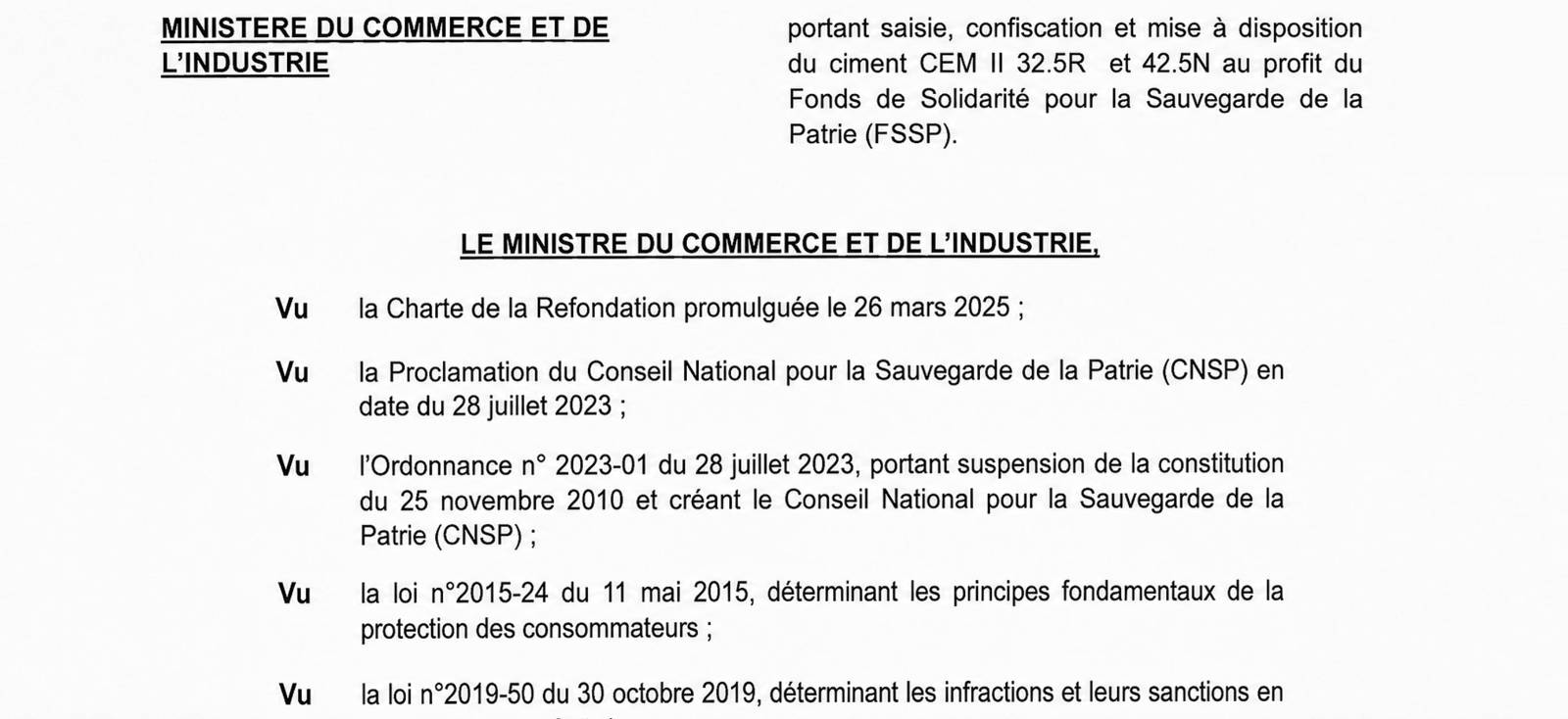
The Nigerien government has intervened to address escalating cement prices and reported shortages across multiple regions by implementing price controls. On 13 July 2026, the Ministry of Commerce and Industry issued two decrees, capping the price of 42.5 N cement and introducing penalties—including the confiscation of stocks deemed fraudulently held—for non-compliant operators.
government’s rationale behind the emergency measure
The authorities defend the price ceiling as a necessary step to curb speculative practices by certain traders, who allegedly exploit high demand to inflate costs or artificially restrict supply. The stated objective is to safeguard consumer purchasing power by eliminating abusive pricing. However, questions persist regarding the efficacy of administrative price controls as a long-term solution.
potential unintended consequences of price regulation
International experience suggests that price caps, when unaccompanied by supply-side reforms, often trigger adverse market reactions. If production, transportation, or import costs exceed the regulated margins, distributors may respond by reducing sales, curtailing orders, or diverting stock to unregulated markets where prices evade oversight. The risk of exacerbating shortages—despite the government’s intentions—remains significant.
The confiscation clause, while intended to deter fraud, introduces further complications. Without transparent oversight mechanisms and robust legal safeguards, the measure risks arbitrary enforcement, operational disputes, and potential misuse of authority. The absence of clear procedural guidelines could undermine both business confidence and public trust in regulatory institutions.
structural weaknesses in the cement sector
The crisis underscores systemic vulnerabilities in Niger’s cement market. Persistent supply challenges, elevated logistics expenses, importation bottlenecks, and insufficient local production capacity cannot be resolved through ministerial decrees alone. Economic stakeholders emphasize that price stability hinges on a well-functioning supply chain, rather than punitive measures targeting a few opportunistic traders.
Without addressing production bottlenecks, streamlining import processes, or improving distribution networks, recurring shortages will likely persist despite enforcement efforts. The current approach, while responsive to public pressure, fails to address the root causes of market instability.
a temporary fix with lasting risks
This intervention reflects the administration’s urgency to quell public dissatisfaction, yet it risks substituting short-term administrative action for the structural reforms essential to sustainable stability. Price controls may offer temporary relief, but they do little to foster the collaboration needed among authorities, producers, distributors, and consumers to restore long-term equilibrium.
Ultimately, the challenge lies in rebuilding confidence and aligning economic policies with market realities. A piecemeal approach—relying solely on sanctions and price ceilings—could yield only fleeting stability, leaving Nigerien households vulnerable to renewed disruptions and higher long-term costs.