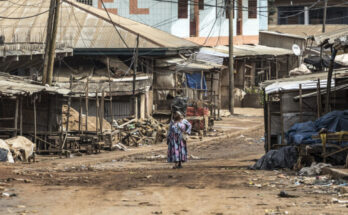
The stark transformation in Benin’s commercial landscape is undeniable, moving from precarious, rain-soaked market stalls to the secure, paved halls of contemporary urban markets. Over the last decade, President Patrice Talon’s administration has orchestrated a profound structural shift, fundamentally redefining how commerce operates across the nation. This initiative transcends mere urban aesthetics; it represents a comprehensive revolution in the daily lives and professional environments of thousands of Beninese traders.
The end of the market ‘amazons’ ordeal
The plight of "market amazons" remains a vivid memory for many: local markets frequently turned into quagmires after even slight rainfall, forcing vendors to navigate mud and makeshift tarpaulins to shield their goods. Before 2016, unsanitary conditions were the norm, and a pervasive sense of insecurity loomed large. Repeated fires, often sparked by substandard electrical installations, routinely devastated livelihoods, with emergency services frequently unable to access the conflagrations.
This challenging past has now been consigned to history. Through the construction and commissioning of 35 modern, multi-story (R+1) markets nationwide, the state has introduced international operational standards. A substantial investment, totaling tens of billions of FCFA, has been channeled into optimizing these commercial spaces. By adopting multi-level designs, average market capacity has expanded by 40% per site, enabling the dignified relocation of vendors who previously occupied pavements. These new facilities boast tiled floors, optimized natural ventilation, and integrated waste management systems. For Beninese traders, working no longer means enduring harsh weather but thriving in a dignified and hygienic environment.
Security and services: a shield for commercial capital
A cornerstone of progress over the past decade has been the enhanced security for traders’ investments. Each new market is now equipped with advanced fire suppression systems (RIA), comprehensive video surveillance, and secure perimeter fencing. This rigorous approach to safety has directly impacted daily operations: the risk of fire incidents from electrical faults has plummeted by nearly 90% thanks to the systematic upgrading of meters and wiring to modern standards. The constant anxiety of seeing one’s stock consumed by flames overnight has been replaced by a profound sense of tranquility.
Furthermore, this modernization effort has thoughtfully incorporated human and social dimensions. For the first time, these markets integrate essential community services: 100% of the new urban markets feature modern sanitary blocks, infirmaries, and, notably, dedicated childcare facilities and nurseries. These provisions empower mothers to effectively balance their economic activities with their children’s well-being, significantly mitigating the risks of domestic accidents within the marketplace.
Administrative efficiency serving exchange
The transformation of daily life extends beyond the physical market structures. The government’s push for the digitization of public services has streamlined administrative procedures for economic operators. Whether it’s obtaining official documents through the National Agency for the Identification of Persons (ANIP) or facilitating access to micro-credits, Beninese traders now save invaluable time. The processing period for certain administrative documents has been drastically cut from several weeks to under 48 hours via digital platforms.
Complementing this, the extensive network of road infrastructure, spanning from Cotonou to Natitingou, and through Azovè and Parakou, further enhances the commercial ecosystem. The improved accessibility of production zones, facilitated by the asphalting of over 600 km of urban roads and upgrades to the national road network, ensures faster supply chains. Reduced travel times for perishable goods have led to a significant decrease in post-harvest losses, thereby bolstering the profitability of the small and medium-sized commercial enterprises that form the vibrant core of Benin’s economy.
The blueprint of a national ambition
The sheer scope of this undertaking is underscored by the presence of these new commercial hubs across every department:
- Littoral: Cadjèhoun, Midombo, Ménontin, Gbégamey, Sainte-Trinité, Tokplegbé, Aïdjèdo, PK3, Xwlacodji.
- Ouémé: Ahouangbo, Ouando, Djègan-Ipéko, Araromi.
- Atlantique: Pahou, Kpassè, Cococodji, Cocotomey, Zinvié, Abomey-Calavi, Houègbo.
- Zou & Collines: Houndjro, Bohicon, Covè, Glazoué, Savalou, Dassa-Zoumè.
- Borgou & Atacora: Guèma, Arzèkè (extension), Natitingou, Kouandé, Djougou.
- Mono & Couffo: Grand-Popo, Comé, Azovè, Dogbo.
In just a decade, the landscape of Beninese commerce has been propelled into a new era. Traders, once largely left to contend with their challenges independently, are now central to a modern, well-structured, and protective economic framework.