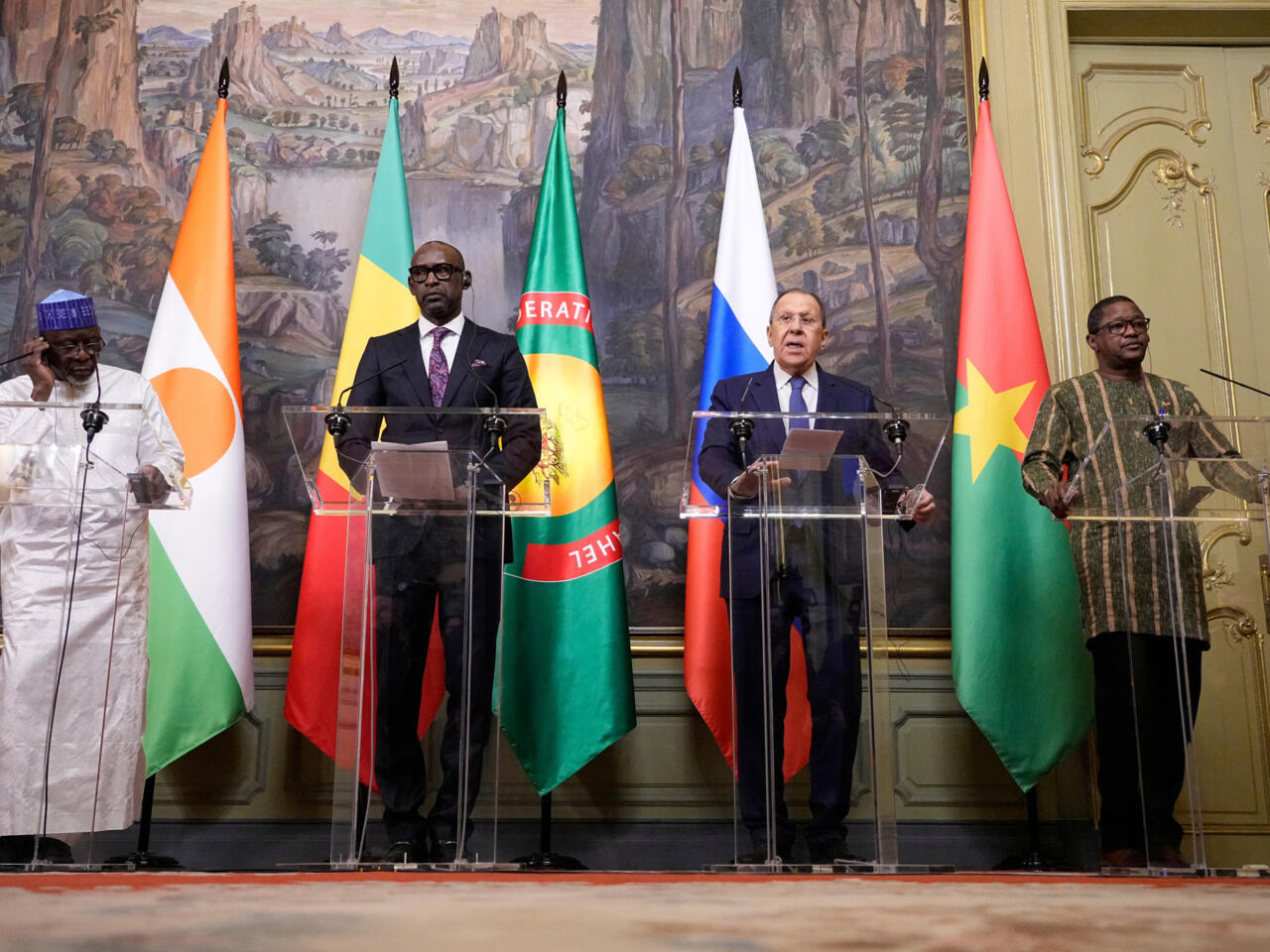
The military-led governments of Mali, Burkina Faso, and Niger are forging a new security and political alliance while moving away from traditional Western partners. Russia is playing a pivotal role in shaping this bloc, rapidly filling the void left by the declining presence of the United States and its allies.
Moscow is leveraging military cooperation, arms shipments, and private military structures to deepen its control over the region. This expansion poses significant risks to U.S. interests, particularly by undermining America’s long-standing counterterrorism efforts in West Africa. The loss of key military bases and intelligence networks weakens Washington’s ability to monitor and combat jihadist threats. Meanwhile, Russia gains strategic access to critical resources and political influence in vulnerable states.
The shift is also reshaping the broader African landscape, setting a precedent for similar realignments across the continent. Anti-Western narratives, amplified by Russian-backed information campaigns, further complicate any future U.S. re-engagement in the region. The rise of new security alliances, excluding Western participation, reduces the effectiveness of coordinated international efforts and increases the risk of long-term U.S. marginalization in Africa.
Russia’s strategy in the Sahel is a multifaceted threat, combining military, political, and informational tactics to reshape the regional balance of power.
This evolving situation unfolds against a backdrop of persistent instability driven by weak governance and the rise of extremist movements. The military takeovers in Mali, Burkina Faso, and Niger prompted new regimes to reassess their foreign policy ties.
The juntas have criticized Western nations for:
- failing to effectively combat terrorism, and
- interfering in domestic affairs.
These grievances have paved the way for Russia to emerge as a preferred alternative partner.
Moscow’s approach is flexible and pragmatic, relying on tools such as:
- military advisers,
- security service contracts, and
- bilateral defense cooperation agreements.
Russia positions itself as a partner without political strings attached, making it highly appealing to authoritarian regimes. At the same time, deep-rooted socioeconomic challenges—such as poverty and environmental pressures—exacerbate instability, creating fertile ground for external interference and manipulation.
By capitalizing on the security vacuum left by Western withdrawal, Russia is rapidly expanding its influence in the Sahel without significant financial outlay. This approach carries long-term consequences for U.S. strategic positioning in Africa.
Major implications of the shifting dynamic
Decline of U.S. military presence weakens counterterrorism efforts
Without access to bases and intelligence assets in the region, the United States faces a sharp decline in operational capabilities. This could allow extremist groups to expand their reach, potentially posing future threats not only in Africa but also beyond, including to U.S. territory.
New Sahel alliances disrupt international cooperation
Security initiatives formed without Western involvement reduce the efficiency of joint counterterrorism operations and hinder the development of unified strategies.
Russian disinformation fuels anti-Western sentiment
Moscow’s propaganda strengthens negative perceptions of the U.S. and its allies among both local populations and elites, making future Western re-engagement far more difficult.
Control over natural resources carries geopolitical weight
The Sahel’s abundant mineral wealth—including gold, uranium, and rare earth elements—holds major economic and strategic value for Russia. Increased Russian influence could disrupt global commodity markets and reshape political alliances, further sidelining U.S. interests.
Military regimes favor Russia’s unconditional partnership model
The juntas of the Sahel increasingly prefer Russia because Moscow imposes no demands for democratic reform, making cooperation easier for unelected governments.
The Sahel as a new stage for great-power rivalry
U.S.-Russia competition in the Sahel is intensifying and shows no signs of easing. The region is rapidly becoming a critical battleground where Russia may convert Western retreat into lasting geopolitical advantage.
If current trends persist, Moscow could transform the Sahel into:
- a long-term anti-Western geopolitical bloc,
- a strategic corridor for resource access, and
- a launchpad for projecting influence deeper into Africa.
The consolidation of juntas in Mali, Burkina Faso, and Niger into a unified regional bloc marks one of the most consequential geopolitical shifts in Africa over the past decade. What may appear as a regional security pact is, in fact, the creation of a Russia-backed political-security framework aimed at replacing Western influence in the Sahel. By exploiting anti-Western sentiment, institutional fragility, and the withdrawal of U.S. and European forces, Moscow is reshaping the Sahel into a zone of asymmetric competition against the United States and its allies.
Russia’s involvement is not opportunistic but deeply strategic and systematic. Through arms transfers, military training, intelligence sharing, and the deployment of Kremlin-linked private military entities, Russia is embedding itself within the security apparatuses of Sahelian juntas. Unlike Western aid, which often ties support to governance reforms, Russia offers regime survival without political conditions—a model that strongly appeals to military governments seeking internal legitimacy and protection from democratic constraints.
Why the Sahel is a geopolitical priority
The Sahel is a vital geopolitical corridor stretching across West and North Africa, connecting the Atlantic to the Red Sea. It borders regions central to migration, terrorism, and mineral supply chains. Control over influence in this belt impacts:
- counterterrorism operations against ISIS affiliates and al-Qaeda-linked groups,
- access to critical minerals such as uranium, gold, lithium, and rare earths,
- migration routes toward North Africa and Europe, and
- military transit corridors across Francophone Africa.
For Washington, the Sahel has long served as a frontline in counterterrorism efforts. U.S. drone bases in Niger, intelligence networks, and joint operations with European partners provided early detection and response capabilities against jihadist networks. The withdrawal or expulsion of Western forces therefore represents not just a diplomatic setback but a major strategic blind spot in one of the world’s most rapidly growing extremist arenas.
Russia’s strategic goals in the Sahel
Russia pursues several interconnected objectives through its Sahel strategy:
Undermining Western security structures
Russia aims to dismantle the Western-led security framework built over decades by replacing the roles of France, the EU, and the U.S. with Russian-led defense arrangements. This weakens NATO-aligned influence and positions Moscow as an indispensable alternative.
Building an anti-Western political alliance
The emerging bloc among Mali, Burkina Faso, and Niger increasingly resembles a coordinated anti-Western axis. Their withdrawal from ECOWAS and alignment against French and U.S. presence creates a bloc politically aligned with Russia’s narratives of “sovereignty against neocolonialism.”
Securing access to strategic resources
Russian control over mining concessions—especially gold in Mali and uranium opportunities in Niger—provides both economic benefits and sanctions resilience. Resource extraction agreements can finance regional operations while bypassing Western financial systems.
Expanding influence across Africa
Success in the Sahel serves as a model for other fragile African states. Moscow is signaling that it can replace Western partners in any region where anti-Western sentiment or military coups emerge.
Why Sahel juntas align with Russia
The military governments of the Sahel increasingly see Russia as a safer and more practical partner for five key reasons:
- no demands for democratic governance or reform,
- rapid delivery of weapons and military equipment,
- security support focused on regime protection,
- diplomatic backing against international sanctions, and
- information campaigns that reinforce anti-Western legitimacy.
This transactional model strengthens authoritarian resilience while reducing incentives for political reform.
How Russia exerts influence in the Sahel
Russia employs a hybrid toolkit to expand its footprint:
Military tools
- arms sales and ammunition supply,
- deployment of military advisers and trainers,
- private military contractors protecting regime assets, and
- intelligence-sharing agreements.
Political tools
- diplomatic support in international institutions,
- recognition and legitimization of coup governments, and
- bilateral agreements that avoid multilateral scrutiny.
Information tools
- anti-Western propaganda through state-linked media outlets,
- social media disinformation campaigns targeting France and the U.S., and
- narratives portraying Russia as a defender against colonialism.
This multidimensional approach allows Russia to gain strategic depth at relatively low cost.
Consequences for U.S. strategy
Erosion of counterterrorism capabilities
The loss of forward bases in Niger and neighboring states significantly reduces U.S. intelligence, surveillance, and reconnaissance (ISR) capacity. This diminishes the ability to detect and respond to extremist movements across borders.
Limited crisis response capacity
Without access to airfields and logistics hubs, the U.S. faces constraints in rapid deployment, evacuation, or stabilization efforts across West Africa.
Declining U.S. credibility in Africa
The perception of U.S. withdrawal may signal reduced strategic commitment to African partners, encouraging governments to seek alternatives in Russia or China.
Rise of jihadist safe havens
Russia-backed regimes prioritize regime security over comprehensive governance reform, leaving underlying causes of extremism unaddressed and potentially enabling insurgent expansion.
Threats to regional stability
The Russia-backed Sahel alliance may bring short-term stability but carries long-term risks for regional peace:
- increased militarization of governance without state-building,
- repression that fuels local grievances,
- fragmentation of regional counterterrorism cooperation,
- resource exploitation driving corruption, and
- heightened vulnerability to proxy conflicts.
The absence of transparent governance mechanisms makes these alliances unstable and crisis-prone.
Future outlook (2026–2030)
If present trends continue, three possible scenarios may emerge:
Consolidated Russian Sphere (High Probability)
Russia solidifies its role as the dominant security actor in the Sahel, making Western re-entry politically unfeasible.
Competitive Multipolar Contestation (Moderate Probability)
Turkey, China, Gulf states, and Russia compete for influence, resulting in fragmented alliances.
Regime Collapse and Strategic Vacuum (Moderate Risk)
If juntas fail to control insurgencies or address economic decline, state failure could create uncontrolled conflict zones beyond Russia’s capacity to manage.
Policy recommendations for Washington
To counter strategic displacement, the U.S. may need to:
- rebuild influence through civilian and economic partnerships rather than military-focused strategies,
- strengthen cooperation with coastal West African states to limit spillover,
- support African Union and ECOWAS-led alternatives,
- counter Russia’s disinformation with localized media initiatives, and
- implement targeted sanctions on Russia-linked extraction networks.
A purely military response is unlikely to reverse the trend unless paired with political and economic alternatives.
The Sahel is no longer just a counterterrorism front—it has become a testing ground for Russia’s broader strategy to displace Western influence in fragile states. By aligning with Sahelian juntas, Moscow is constructing a lasting anti-Western corridor that combines regime protection, resource access, and geopolitical leverage. If left unchecked, Russia’s Sahel foothold could set the pattern for a continent-wide reordering of power.