Bénin leads the fight against cervical cancer with mobile health units
Cotonou — When public announcements began spreading about free screening camps in her rural village of Koudougou, Fati, a 48-year-old mother of six, hesitated. «I feared what might happen if they found something wrong. How would I afford treatment?» she recalls. Her concerns mirrored those of thousands of women across rural Bénin, where cervical cancer remains a silent killer due to limited healthcare access.
Bridging the healthcare gap in rural communities
Before Bénin launched its national cervical cancer elimination strategy, screening coverage languished below 8%, with rural areas bearing the brunt of the crisis. Women often traveled 50-100 kilometers to reach understaffed clinics, facing financial barriers and cultural stigma. The scarcity of trained professionals and awareness campaigns further compounded the problem.
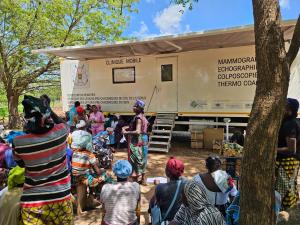
To dismantle these obstacles, the Bénin government implemented bold reforms, as explained by Dr. Amadou Sanni, National Cancer Control Program Coordinator. «We declared screening and precancerous lesion treatment completely free. Mobile clinics now reach villages, farms, and markets, bringing screening directly to women where they live and work,» he states. This approach eliminates the need for women to abandon their livelihoods for medical visits.
Community-driven strategies boost prevention
The initiative combines multiple impactful measures: financial accessibility through free services, proximity through mobile units, and community mobilization. Nationwide awareness campaigns—including radio jingles, TV ads, and events like «Octobre Rose»—have educated millions. A national coalition of civil society, religious leaders, and media amplifies the message, turning cervical cancer prevention into a societal priority.
WHO’s pivotal role in scaling success
The World Health Organization provided critical support, from technical guidance for national protocols to training healthcare workers in detection and treatment. «WHO’s partnership ensured that no woman, regardless of location, would be left without access to life-saving screening,» Dr. Sanni emphasizes.
Measurable impact: lives transformed
Between October 2024 and September 2025, Bénin’s mobile clinics conducted 468 outreach sessions, reaching nearly 2 million women. These efforts resulted in 106,446 screenings, 715 precancerous lesion treatments, and 113 advanced diagnostic follow-ups. These numbers represent more than statistics—they signify saved lives and protected families.
A model for Africa’s healthcare transformation
WHO’s Representative in Bénin, Dr. Fatoumata Bâ, highlights the initiative’s regional significance. «The elimination of financial and geographical barriers through mobile clinics and free care is a blueprint for other African nations. Bénin proves that political commitment can overcome even the most daunting challenges,» she notes.
Real stories of hope and change
For women like Fati, the mobile clinics have been life-altering. «I was terrified at first, but hearing other women share their experiences gave me courage. The healthcare workers explained everything step-by-step. When I tested negative, I felt an overwhelming sense of relief. Now, I urge every woman to get screened—early detection makes all the difference,» she shares.
These clinics do more than provide medical care; they educate communities about prevention, debunk myths, and empower women to take control of their health. Each visit reinforces a powerful message: healthcare is a right, not a privilege.
Sustainable progress through collaboration
The success in Bénin underscores the power of integrated approaches—policy reform, community engagement, and international partnership. As more women like Fati gain access to screening, the country moves closer to its goal of eliminating cervical cancer, setting a precedent for global health equity.