Welcome to Lomé, where the third edition of the Pan-African forum Biashara Afrika kicked off on a surreal note, exposing the gaping chasm between continental ambitions and ground-level realities.
The forum, a gathering of African leaders and financial titans, had set out to celebrate the African Continental Free Trade Area (AfCFTA). Instead, it became an impromptu tribunal on the continent’s border bureaucracy, where grand visions of a unified market of 1.4 billion consumers collided with the harsh realities of airport immigration desks.
When a passport divides: the paradox of African mobility
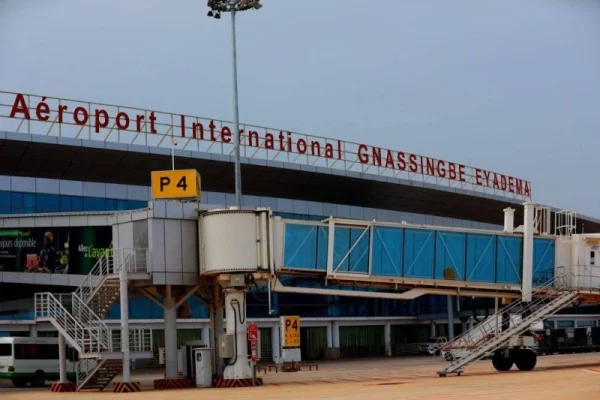
The opening ceremony at Lomé’s Gnassingbé Eyadéma International Airport took an unexpected turn when Nigeria’s Minister of Industry, Trade, and Investment, Dr. Jumoke Oduwole, shared a real-time account of the night’s chaos. Two high-profile investors—one Nigerian, one Ghanaian—had landed in Lomé the previous evening, eager to participate in the forum. Their credentials were impeccable: both held passports from ECOWAS member states, a bloc that has championed free movement since the 1970s.
Their mistake? Arriving as Africans.
Despite their valid documents, border officials denied them entry. The only way to proceed? Secure a 24-hour visa using their European passports. The message was clear: on African soil, a European passport carries more weight than one from the continent.
Dr. Oduwole’s blunt assessment left no room for doubt:
« One investor, a financial services executive, told me he would not consider investing here. He hadn’t even left the airport, and his decision was already made. Imagine an African investor in the EU being forced to apply for a visa using their African passport—that scenario is unthinkable. »
The irony was not lost on the crowd. While ordinary travelers brace for border bureaucracy, investors—those whose capital could transform economies—were met with the same barriers they had flown in to discuss overcoming.
Hub ambitions vs. border realities
Togo, positioning itself as a regional logistics and financial gateway, faces a harsh truth: visas for neighbors repel investment. The incident at Lomé’s airport didn’t just tarnish the country’s image—it broadcast its contradictions to a global audience of decision-makers. The takeaway? For African investors, a European passport remains the surest ticket to entry.
Faure’s 48-hour ultimatum: a rare moment of accountability
The swift response from President Faure Gnassingbé caught many off guard. Rather than defer to diplomatic protocols or lengthy investigations, he issued a direct order to the Minister of Security: resolve the anomaly within 48 hours.
The president’s intervention was a masterclass in crisis management. By acknowledging the absurdity in real time, he signaled that Togo would not tolerate a situation where its own policies undermined its ambitions. The clock is now ticking. The Minister must overhaul immigration services before the forum concludes, proving that a billion-dollar project can hinge on a single stamp.
The AfCFTA’s Achilles’ heel: administrative barriers
Economists and entrepreneurs at the forum were unanimous: free movement is non-negotiable. An Ivorian economist warned, « Without it, the AfCFTA is just a hollow shell. » A Ghanaian entrepreneur added, « If we must wave a European passport to invest in Africa, then integration is nothing more than a slogan. »
The incident exposed the fault lines in Africa’s integration dream. The AfCFTA promises a single market of 1.4 billion consumers and a combined GDP of $3.4 trillion. Yet its credibility is undermined by the very bureaucracies it seeks to dismantle. The path forward requires three urgent actions:
- Harmonize visa rules across member states to eliminate ad-hoc enforcement.
- Digitize border procedures to reduce human error and corruption.
- Align political will with action, ensuring that continental pledges translate into tangible changes on the ground.
At Biashara Afrika 2026, Africa learned a hard lesson: a misplaced stamp can cost millions in lost investment. The question now is whether Togo—and the continent—will act before the next investor turns away at the tarmac.