The transitional government in Burkina Faso, under the leadership of Captain Ibrahim Traoré, appears to have reached a critical juncture. Once celebrated by supporters as a transformative figure, the head of the junta is increasingly steering towards an autocratic style of governance that no longer tolerates dissent, whether from civil society, religious institutions, or even his closest military circle. In Ouagadougou, a heavy atmosphere prevails, and recent events during the Tabaski week suggest an impending implosion of power.
Tabaski under heightened tension: Places of worship and repression
The observance of Tabaski, traditionally a period of unity and peace, starkly illuminated the extreme fragility of the current administration.
- Arrest of an Imam: The apprehension of a respected religious leader during this sacred week sent shockwaves through an already strained populace. This act, widely perceived as a violation of freedom of conscience, demonstrates the regime’s readiness to target the nation’s moral pillars to suppress any form of criticism.
- Forced enrollment and ‘rehabilitation’: Concurrently, protestors and dissenting voices arrested in recent days have been forcibly directed to rehabilitation centers and deployed to the front lines. This militarization of penal sanction confirms the state apparatus’s transformation into a purely repressive instrument.
Analysis of the situation: For numerous regional observers, the Ouagadougou regime seems to have abandoned all political rationality. The intricate management of a modern state has been reduced to the rudimentary codes of a military encampment, where nuance is equated with treason, and a single individual commands an army of loyalists expected to comply without question.
High-level alert: The Oumarou Yabré case and the intelligence services’ fracture
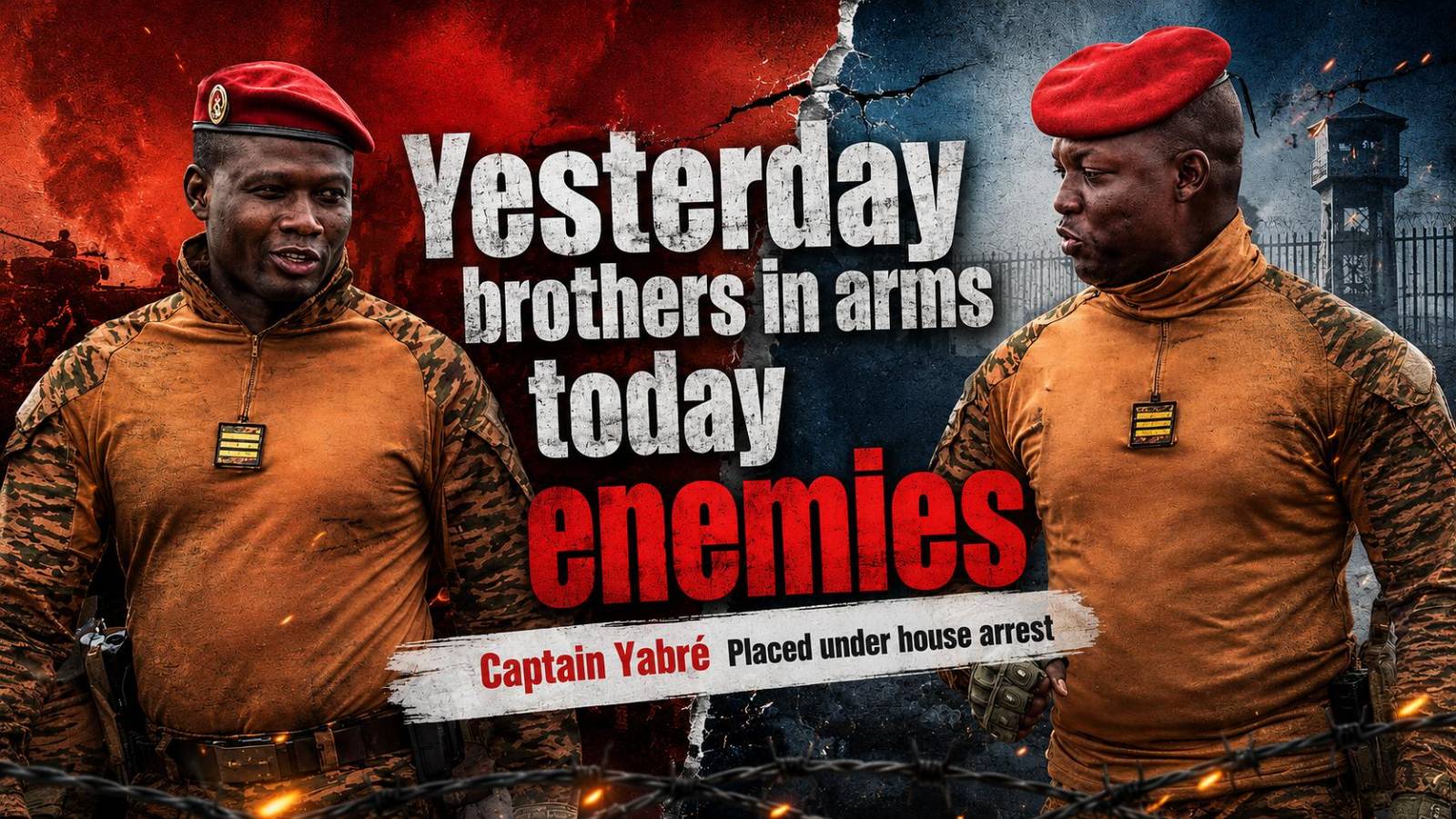
The information currently circulating among diplomatic missions and security networks is significant: Oumarou Yabré, the influential head of the National Intelligence Agency (ANR), is reportedly under house arrest. While official channels maintain absolute silence, multiple converging reports indicate a definitive rupture within the state apparatus. On one side stands Captain Ibrahim Traoré, as Head of State and President of the Transition, demonstrating an absolute drive for centralized power, coupled with pervasive mistrust of his peers. On the other, Oumarou Yabré, Director of the ANR, is now suspected of dissenting ambitions or, at the very least, profound disagreements regarding security strategy and the escalating influence of external partners.
This internal purge underscores that paranoia has infiltrated the highest echelons of the junta. By targeting his own comrades-in-arms and early supporters — those who solidified his security framework and facilitated the establishment of Russian influence networks in Burkina Faso — Ibrahim Traoré inadvertently weakens his own foundation.
Towards a decisive confrontation within the junta?
This impending confrontation between the two prominent figures of Burkina Faso’s security establishment comes as no surprise to analysts, who have predicted friction for months. The struggle for control over the state apparatus, combined with the relentless pressure from armed terrorist groups on the ground, creates an explosive situation in Ouagadougou.
By alienating the population, religious authorities, and now his closest military allies, Captain Traoré is dangerously isolating himself. The history of coups d’état in West Africa consistently illustrates that a regime governing solely through fear, and purging its own ranks, accelerates its demise. Pressure is mounting significantly in Ouagadougou, and the coming days are anticipated to be decisive for the nation’s future.