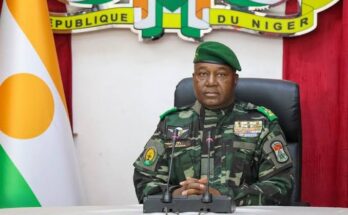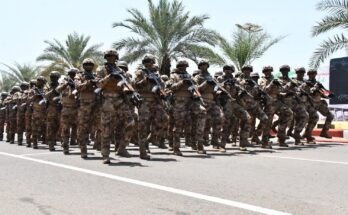
The military-led government in Ouagadougou has adopted a bold slogan to assert its economic sovereignty: “no credit included.” Repeated across official statements, social media, and pro-regime narratives, the phrase suggests that major infrastructure projects—road repairs, public facilities, and state modernization—are entirely funded by domestic resources, free from foreign debt.
The message resonates politically. It frames Burkina Faso as breaking free from decades of dependence on international lenders, positioning the current leadership as architects of a new era of self-reliance. Yet beneath the rhetoric, financial records and official agreements reveal a far more nuanced—and concerning—reality.
From Slogan to Financial Reality
Economic sovereignty is a legitimate goal. Reducing external dependence, boosting domestic revenue, and strengthening national capacity are priorities shared by citizens and analysts alike. However, asserting that every public investment is financed exclusively from internal funds contradicts documented evidence.
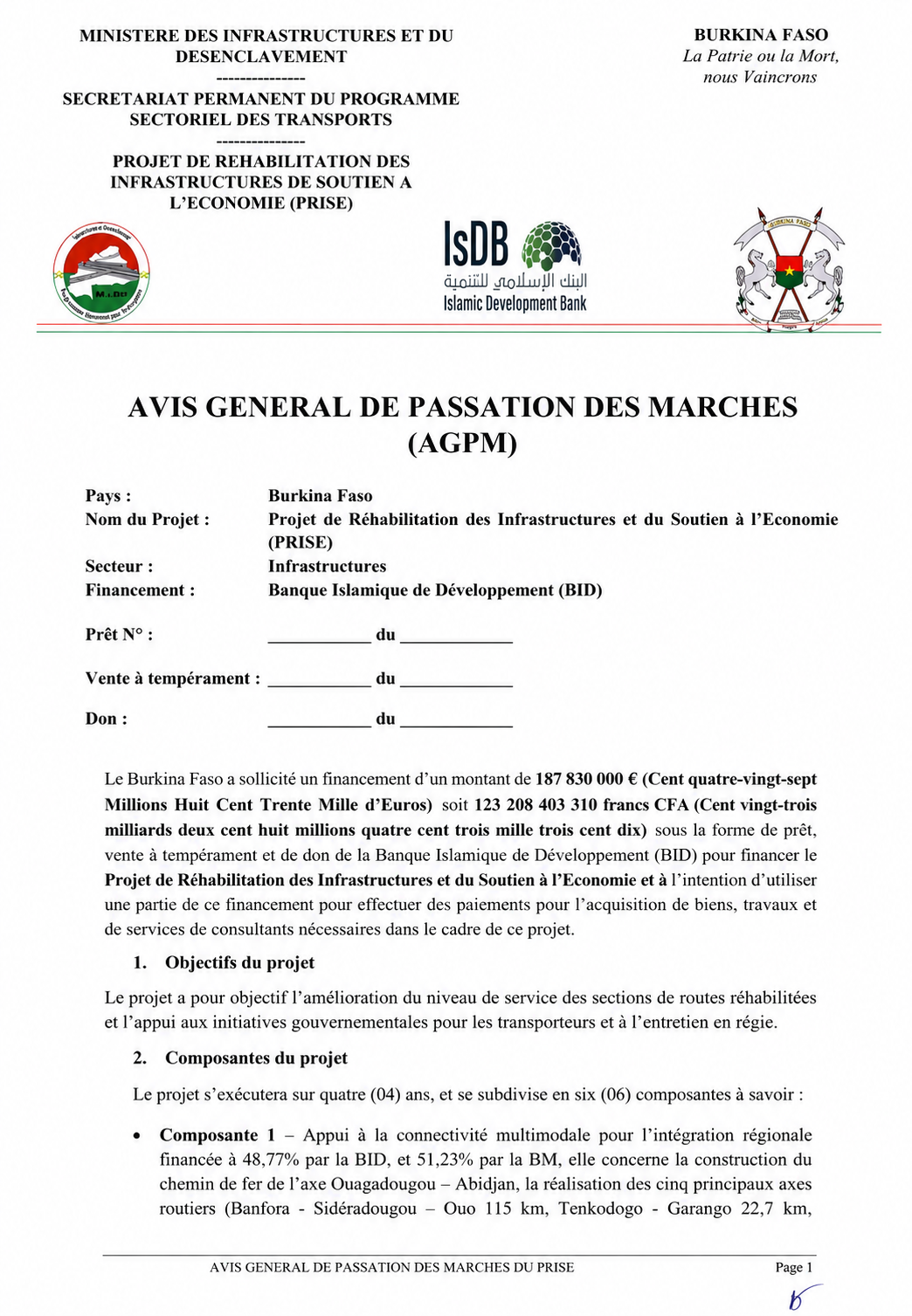
Recent agreements with international financial institutions, including the Islamic Development Bank, demonstrate ongoing reliance on concessionary loans for critical infrastructure. These funds, while carrying favorable terms, are not grants. They must be repaid according to agreed schedules, binding the country to long-term financial obligations.
The contradiction is glaring: how can officials insist there is no credit involved when financing deals are publicly recorded and debt service is budgeted for?
An Economy Burdened by Multiple Crises
The claim of self-financing becomes even harder to sustain when examining Burkina Faso’s economic landscape. The country faces overlapping pressures:
- A severe security crisis draining public resources;
- Soaring military expenditures;
- Shrinking tax revenues due to economic slowdowns in conflict-affected zones;
- Massive displacement of civilians disrupting local economies;
- Urgent needs for roads, schools, and healthcare facilities.
In such a climate, financing multi-billion-franc infrastructure projects without external support would strain any national budget. Economists caution that while borrowing isn’t inherently harmful—especially when used for productive investments—its absence from public discourse raises serious questions about transparency.
Transparency, Not Rhetoric, Builds Credibility
The public has a right to know more than slogans. Clear, accessible information is essential to assess whether loans are being used responsibly:
- Where do the funds originate?
- What are the interest rates and repayment terms?
- Which projects are prioritized, and why?
- How will future generations be affected?
True economic sovereignty isn’t measured by the absence of debt, but by the presence of accountability. Citizens deserve to see not just the finished bridges or renovated hospitals, but the full financial trail that made them possible.
A Political Strategy Masquerading as Economic Policy
The slogan “no credit included” serves a clear political purpose. It reinforces the narrative of a government reclaiming agency after years of international influence. For many supporters, it evokes national pride and validates the current leadership’s break from past practices.
But when communication overshadows clarity, it risks breeding unrealistic expectations. A population convinced that development is entirely homegrown may struggle to accept future austerity measures or tax increases needed to service debt. The disconnect between word and reality could erode trust—not just in economic policy, but in governance itself.
Debt Today, Accountability Tomorrow
Every loan contracted today will be repaid tomorrow—by future taxpayers. While well-managed infrastructure can spur long-term growth, poor choices today saddle future generations with financial burdens they did not incur. This is why debt transparency is not just an economic issue, but a democratic one.
The path to true sovereignty lies not in denying debt, but in managing it wisely. It means:
- Publishing full financial statements;
- Ensuring borrowed funds are invested in high-impact projects;
- Demonstrating that each franc borrowed will generate more than its repayment cost;
- Gradually reducing dependence through sustainable growth, not slogans.
A strong nation is not one that claims to owe nothing. It is one that owes clearly—and pays responsibly.
Conclusion
The phrase “no credit included” has captured public imagination. But the sustainability of Burkina Faso’s development cannot rest on catchphrases alone. International financing continues to play a central role in funding infrastructure, from roads to public buildings. The real test of leadership lies not in rejecting external support, but in using it transparently, efficiently, and for the benefit of all citizens.
The debate should not be about whether to borrow, but about how to borrow wisely. Because in the end, the people of Burkina Faso—not just its leaders—will bear the weight of every financial decision made today.