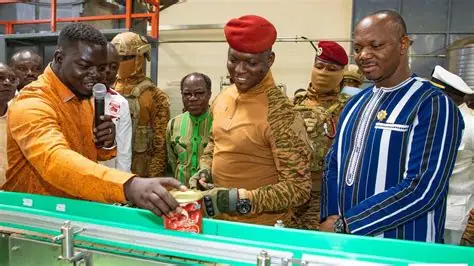
The transition government under Captain Ibrahim Traoré has recently intensified its efforts to showcase Burkina Faso’s industrial ambitions, unveiling new factories and infrastructure projects with considerable fanfare. From tomato processing plants to gold refineries, the administration has leveraged state media to project an image of resilience and economic progress. Yet beneath the carefully curated narratives lies a stark reality: the nation is grappling with severe security threats and economic instability that no amount of propaganda can obscure.
Grandiose projects overshadow systemic challenges
This approach mirrors a familiar political tactic—leveraging high-profile infrastructure to bolster legitimacy. In major cities such as Ouagadougou and Bobo-Dioulasso, the government emphasizes self-sufficiency and local job creation, framing these initiatives as triumphs against foreign interference. Proponents argue that despite the withdrawal of international partners and territorial blockades, Burkina Faso is forging its own path to prosperity. Critics, however, view these displays as superficial gestures rather than evidence of a coherent development strategy.
Transparency and feasibility under scrutiny
Scrutiny of these flagship projects reveals concerning inconsistencies. While ribbon-cutting ceremonies dominate headlines, critical details—such as actual production capacities, funding sources, and long-term sustainability—remain shrouded in ambiguity. Additionally, allegations of financial mismanagement have surfaced, particularly regarding funds designated for both security operations and industrial development. As traditional businesses struggle under heavy taxation and insecurity, the emergence of entities with close ties to power raises serious questions about procurement transparency and equitable resource allocation.
Humanitarian and economic realities diverge from official narratives
The disconnect between government messaging and ground-level conditions is glaring. While state broadcasts celebrate industrial milestones, ordinary citizens face an escalating cost-of-living crisis.
- Rising inflation: Staple foods such as rice, cooking oil, and millet have surged in price, disproportionately affecting low-income households and deepening food insecurity.
- Severe humanitarian crisis: Over two million internally displaced persons languish in precarious conditions, with entire villages cut off due to terrorist blockades and reliant on sporadic humanitarian aid.
- Informal economy collapse: The backbone of Burkina Faso’s economy—the informal sector—has ground to a halt. Persistent power shortages and road insecurity have crippled trade, stifling livelihoods across the nation.
The limits of propaganda in a fractured nation
The stark contrast between polished state media productions—depicting gleaming machinery and resolute leadership—and the lived experiences of Burkinabè is impossible to ignore. Glossy videos of industrial progress stand in stark relief against the struggles of parents unable to send their children to school and soldiers operating under extreme duress.
While the government insists on a narrative of national resilience, the foundation of this story is increasingly fragile. Sovereignty cannot be proclaimed from podiums if fields lie fallow and inaugurated factories remain non-operational outside of staged events. Captain Traoré’s gamble on perception carries significant risk: the more disconnected the leadership becomes from the daily hardships of its people, the more hollow its promises appear. Industrialization remains a commendable goal, but without financial transparency and genuine territorial security, these initiatives risk becoming ephemeral illusions in a landscape already scarred by instability.