
Published today Reading time: 3 minutes.
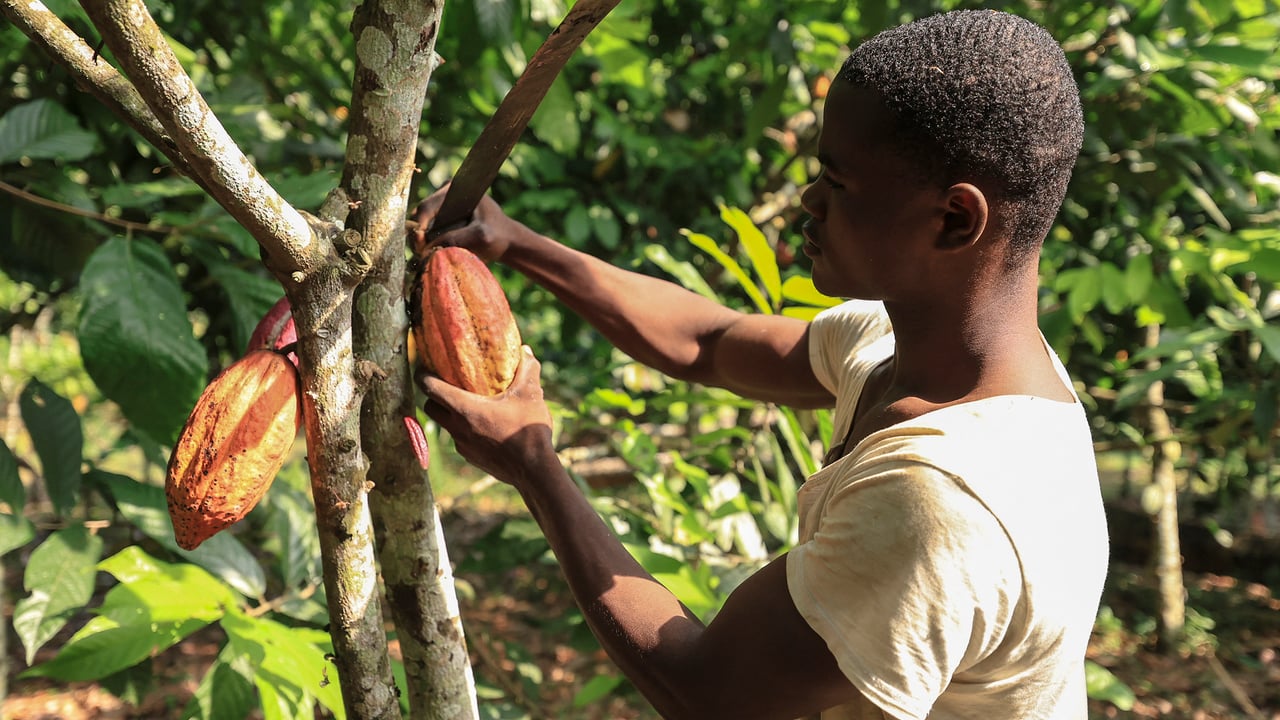
In the heart of Cameroon’s lush southern regions, cocoa farmers are navigating a challenging season. Despite rising global demand for high-quality cocoa, local producers face mounting obstacles that threaten their livelihoods.
The current harvest season has brought unexpected hurdles. Unpredictable weather patterns disrupted flowering cycles, while soaring production costs—fueled by rising fuel and fertilizer prices—eroded profit margins. Many small-scale farmers, who form the backbone of Cameroon’s cocoa industry, are struggling to break even.
Economic pressures squeeze producers
For decades, cocoa has been Cameroon’s third-largest agricultural export, after coffee and cotton. However, the economic landscape for growers has shifted dramatically. The devaluation of the local currency against major trading currencies reduced earnings from exports, while inflation drove up the cost of essential inputs.
Local cooperatives report that many members are reducing their planting areas or abandoning cocoa farming altogether in favor of more lucrative crops. The exodus from cocoa threatens not only individual livelihoods but also the country’s long-term position in the global cocoa market.
Global demand meets local struggles
While international buyers continue to seek premium Cameroonian cocoa—renowned for its unique flavor profile—the realities on the ground paint a different picture. Farmers cite delayed payments from traders and exporters as a persistent issue, forcing some to sell at lower prices just to maintain cash flow.
Efforts to improve transparency in the supply chain have gained traction, but progress remains slow. Some farmers have begun exploring organic certification as a way to access higher-value markets, though certification costs remain prohibitive for many.
A call for systemic change
Industry analysts emphasize the need for coordinated action between government agencies, financial institutions, and agricultural organizations. Proposed solutions include subsidies for fertilizers, investment in irrigation systems to mitigate drought impacts, and improved access to credit for smallholders.
Without urgent intervention, Cameroon risks losing ground in a market where it has historically held a competitive edge. For the thousands of families who depend on cocoa, the stakes couldn’t be higher.