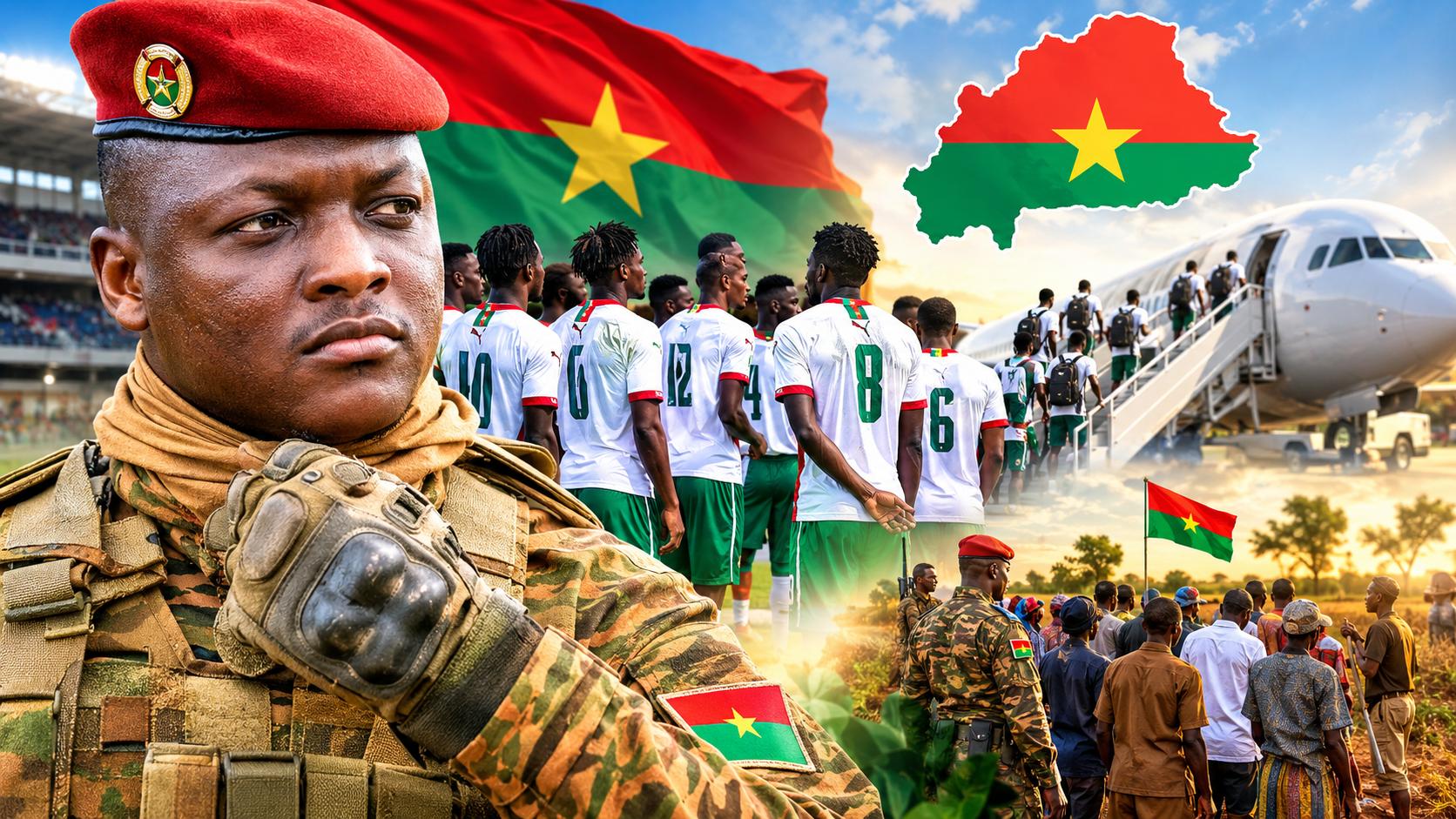
The absence of Burkina Faso’s senior national football team from a scheduled fixture in Argentina has raised pointed questions. Information reaching this publication through a correspondent indicates that the entire squad may have been requisitioned at the request of Captain Ibrahim Traoré as part of what is described as a “patriotic insertion.” If confirmed, the development would prompt scrutiny of the priorities assigned to the nation’s athletes and, more broadly, of the role patriotic mobilisation now plays in the country’s daily functioning.
What the reported requisition entails
According to the account provided by our correspondent, the players were reportedly summoned to take part in activities framed as patriotic engagement. Should this prove accurate, it could explain why the senior team did not travel to Argentina. Yet the implications extend well beyond the fate of the Stallions, feeding a wider debate: how far can the mobilisation of citizens and institutions be pushed in the name of patriotic duty?
Mobilisation as a governing logic
For several years, Burkina Faso has experienced a pronounced militarisation of public life, alongside the mobilisation of various segments of society around the national effort. While the authorities justify these initiatives by citing security imperatives, their extension into domains such as sport warrants careful documentation and explanation.
From security policy to the football pitch
The reported call-up of the national squad illustrates how measures originally rooted in the security context can reach unexpected areas. When the country’s most visible sporting representatives are drawn into non-sporting assignments, the boundary between civic duty and competitive ambition becomes blurred.
A case that remains unconfirmed
Prudence is nonetheless essential. At this stage, the available elements rest on testimony passed on by our correspondent and are not, on their own, sufficient to establish definitively that the entire senior team was indeed requisitioned on the orders of Ibrahim Traoré.
What official clarification would resolve
Confirmation from the Burkinabè Football Federation, the ministry responsible for sports, or the relevant authorities would help clarify the precise circumstances of this absence. Until such verification, the matter remains a question of considerable public interest rather than an established fact.
The stakes for national sport and national purpose
If the facts were confirmed, one question would persist: is Burkina Faso gradually turning every sector of activity into a space of patriotic mobilisation, to the point that even the national football team may be called upon to answer priorities other than sporting competition? The answer will shape not only the future of the Stallions but also the wider relationship between sport, citizenship, and the state in Burkina Faso.