A delicate balance for Kinshasa
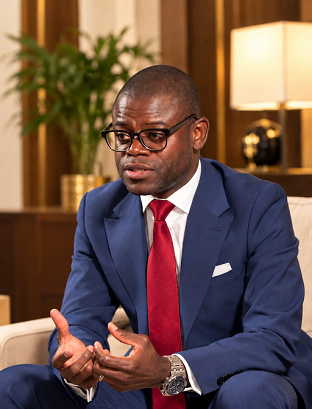
When President Félix Tshisekedi announced a national dialogue for the Democratic Republic of Congo, it immediately raised a strategic question: can such a forum bring peace and cohesion without turning into a shadow institution that competes with the country’s constitutional bodies? For Me Ben Touere, a lawyer at the Paris Bar and a doctor of public law who teaches at Sorbonne Paris Nord University, the answer lies in a clear distinction between consultation and institutional power.
Speaking in an interview, he argued that the initiative should be understood strictly as a political mechanism for concertation and pacification. Its purpose, he said, is to seek compromises on peace, national cohesion, institutional reforms and the functioning of the state. It must never become a second parliament, a parallel government, a political court or a de facto constituent assembly.
From dialogue to legal effect: the necessary chain
The lawyer emphasised that any political conclusions emerging from the talks cannot produce lasting legal effects until they are translated by the institutions that hold constitutional authority. In his view, a legislative reform belongs to Parliament, a public policy falls under the Government, a constitutional question is for the Constitutional Court, and any matter reserved for the direct decision of the people must be submitted to them through the forms prescribed by law.
This creates a clear sequence: dialogue, consensus, intervention by the competent institutions, constitutional review and, where required, popular consultation. Each link in that chain matters because it prevents the process from short-circuiting the existing legal order.
Sovereignty belongs to the people, not to participants
Me Elenga also pointed to Article 5 of the Constitution, which enshrines the principle that national sovereignty belongs to the people. The people exercise it directly through elections or referendums, and indirectly through their representatives.
From that principle, he drew a firm conclusion: neither the majority, nor the opposition, nor the participants in a dialogue can claim national sovereignty for themselves. The process must ultimately aim to reform and consolidate the state through dialogue, rather than create mechanisms that weaken it or share its prerogatives.
Why the stakes go beyond the room
The debate is not merely procedural. How the national dialogue is framed will determine whether it strengthens the rule of law in DR Congo or opens the door to institutional confusion. By insisting on the primacy of constitutional bodies, the Paris-based jurist offers a framework that seeks to protect the state while still allowing the kind of national conversation that can address deep fractures.
The challenge for Kinshasa is therefore double: to make the dialogue inclusive enough to build consensus, and disciplined enough to respect the limits that keep a consultation from becoming a rival centre of power.