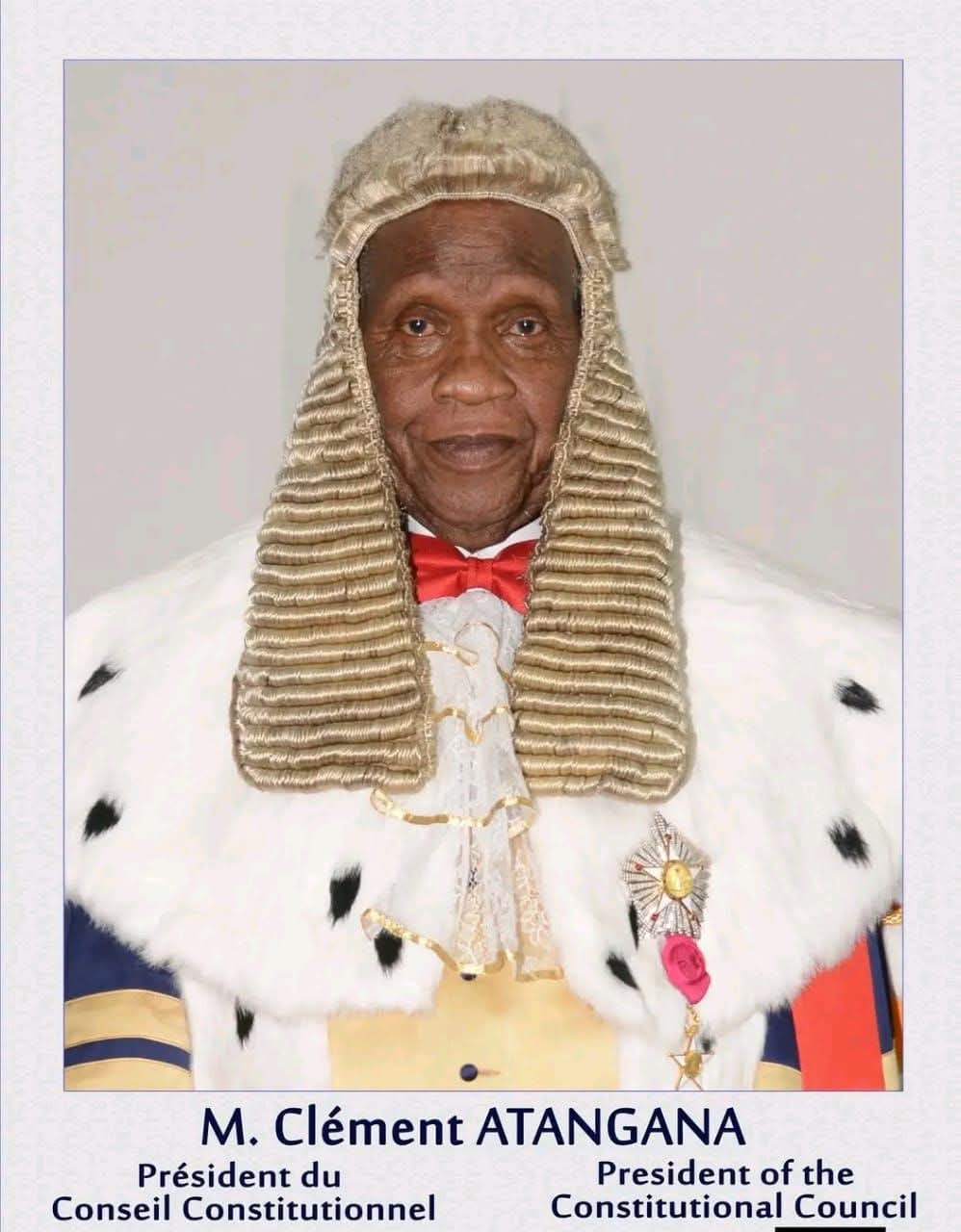
Cameroon woke to news that has left its highest constitutional authority in uncharted territory. Clément Atangana, the man who presided over the Constitutional Council, died in Paris, where he had been evacuated for advanced medical treatment. He was 85. The illness that prompted his transfer ultimately claimed his life, closing a chapter that had long divided public opinion.
Born in Ngomedzap, in the Nyong and So’o division, Atangana spent decades in the magistracy, rising to the rank of out-of-hierarchy magistrate. His final years in office, however, were anything but serene. As head of the Constitutional Council, he was expected to embody impartial arbitration. Instead, his tenure became synonymous with a single word that would come to define him in the public eye.
How ‘irrecevable’ became the defining verdict of a presidency
The 2018 presidential election dispute etched that word into the national consciousness. Under Atangana’s direction, the Constitutional Council dismissed every petition it received with the same terse formula: “irrecevable”—inadmissible. The repetition was so systematic that the public began calling him by that very label. From that moment, the institution he led was widely viewed as beholden to the ruling party, the RDPC, and to the presidency itself.
Atangana did little to dispel those perceptions. On the evening the presidential results were announced, a video circulated on social media showing him celebrating with his family, openly crediting himself with securing victory for the incumbent, Paul Biya. Addressing those close to him, he referred to the RDPC candidate as “your candidate”—a remark that deepened suspicions of partiality.
The 2025 meeting that reignited questions of bias
More fuel was added in 2025, when Atangana took part in a gathering of the Nyong and So’o Development Committee. The meeting produced a motion supporting Paul Biya and urging him to stand in the next presidential election. A reporter from Cameroon Tribune, the government newspaper, covered the event, and the story quickly spread, sparking debate and criticism.
Atangana fought hard to repair his image. He insisted he had attended a meeting of a non-political association and that he had left before the session that produced the support motion. Yet for many opposition figures, the impression of allegiance to Paul Biya had already taken root—reinforced by footage of him celebrating shortly after his appointment.
What happens now to the institution he leaves behind
His death removes a figure whose legacy is inseparable from the controversies that surrounded him. The question now is whether the Constitutional Council can rebuild confidence at a time when its impartiality remains under scrutiny. For a body that plays a decisive role in electoral disputes, the stakes could hardly be higher.