What does it take to rebuild confidence in a regional court that sits at the heart of West African justice? That question hung over Abuja on 6 October 2026, when five new judges took their oaths at the ECOWAS Court of Justice, stepping into a four-year, non-renewable mandate with the weight of public expectation on their shoulders.
The oath that carries a region’s hopes
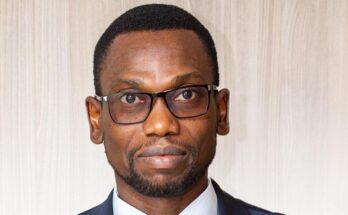
The ceremony in Nigeria’s capital formally installed Awa Bah of The Gambia, Charlyne M. Brumskine of Liberia, Henrietta Uzoamaka Didigu of Nigeria, Yaouza Ouro-Sama of Togo, and Désiré Henri Aihou of Benin. Their appointments were sealed at the 69th ordinary summit of the ECOWAS Authority of Heads of State and Government, held on 19 July 2026 in Sierra Leone.
For the citizens of the fifteen-member bloc, the moment raises a direct question: will this new bench deliver the impartial justice that the region’s legal architecture promises, or will it struggle under the pressures that have long shadowed supranational courts?
A court built to keep community law alive
The ECOWAS Court of Justice is more than a ceremonial institution. It is the guardian of the interpretation and application of the community’s legal texts. Its docket includes disputes over whether member states have honoured their obligations, as well as complaints alleging human rights violations that fall within its jurisdiction.
That dual role means the court stands as a rare avenue of judicial recourse for individuals and states alike, tasked with making regional law a lived reality rather than a paper commitment.
The independence pledge at the centre of the debate
At the swearing-in, each magistrate committed to serving with independence, impartiality and integrity. They vowed to carry out their duties without bias and to protect the confidentiality of deliberations.
Those words matter because they go to the core of what makes a court credible. Judges are expected to follow the law alone, insulated from political pressure and private interests. During the ceremony, the sitting ECOWAS chairman, Bassirou Diomaye Faye, urged the new judges to safeguard the court’s credibility and to earn the public’s continued trust.
What the renewal means for litigants and member states
The arrival of this fresh team marks another stage in the court’s renewal. For those who bring cases before it, and for the states bound by its rulings, the test is straightforward: will the institution keep issuing decisions that are genuinely impartial and keep the community’s legal promises alive?
The answer will not be found in the oath alone. It will be written in the judgments that follow, and in whether West Africans come to see the court as a defender of their rights rather than a distant institution.