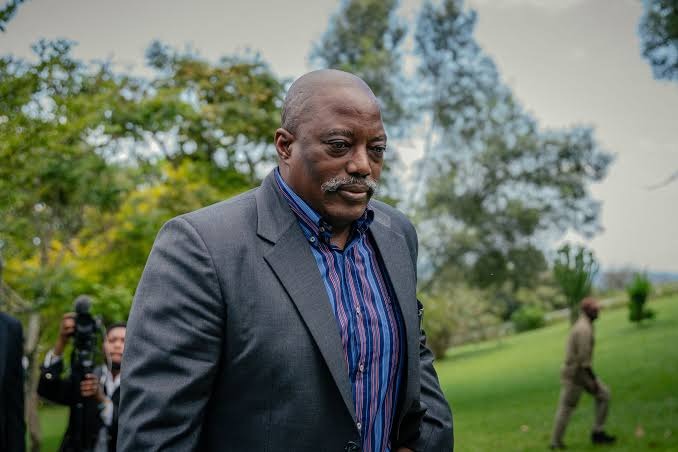
Why Joseph Kabila’s leadership of the FRN could be a game-changer in Congo’s power struggle
In a bold move that reshapes the political and military landscape of the Democratic Republic of the Congo (DRC), former president Joseph Kabila has taken the helm of the newly formed Front for the Refoundation of the Nation (FRN). The announcement, made in Goma on October 12, marks the formalization of a coalition uniting key opposition figures from the Alliance of the Congo River (AFC) and the M23 rebel group. Together, they vow to challenge the administration of President Félix Tshisekedi, accusing his government of tyranny, corruption, and systemic failure.
The FRN’s founding declaration, read by advisor Claude Ibalanky, leaves little room for ambiguity. The coalition frames its struggle as a necessary resistance against what it describes as an illegitimate regime, explicitly reserving the right to use force to achieve its objectives. This direct challenge to Kinshasa’s authority arrives at a precarious moment, as diplomatic efforts to stabilize the region strain under persistent conflict and mutual distrust.
Leadership reshuffle: Kabila at the center, M23 gaining ground
The FRN’s leadership structure reflects a strategic convergence between political and military opposition. Joseph Kabila, the coalition’s president, oversees a leadership team that includes Corneille Nangaa, former head of the Independent National Electoral Commission and AFC leader, as vice president. Bertrand Bisimwa, the political head of the M23, also occupies a vice-presidential role, signaling a fusion of civilian and armed resistance. General Sultani Makenga, the M23’s military chief, assumes command of the coalition’s armed wing, the Congolese Revolutionary Army, while Freddy Rukema Kaniki is named secretary general.
The FRN’s founding document formally dissolves the AFC and declares itself its successor, though the status of the M23 within the new structure remains unspecified. This ambiguity raises immediate questions: How will the FRN coordinate between political factions and armed groups? And what will become of the M23’s existing chain of command and territorial control, particularly in Goma and surrounding areas captured during its 2025 offensive?
Goma under rebel control: a new phase in Congo’s eastern conflict
The timing of the FRN’s emergence cannot be overstated. The M23, along with its political affiliate the AFC, currently controls large swaths of eastern DRC, including the strategic city of Goma—seized during a major rebel offensive earlier this year. International observers, including the United Nations, have repeatedly accused Rwanda of supporting the M23, a claim Kigali vehemently denies. Meanwhile, Kinshasa continues to dismiss these accusations as baseless propaganda.
The FRN’s declaration accuses the Tshisekedi government of failing to honor ceasefire agreements and release detainees—charges the coalition frames as evidence of the regime’s illegitimacy. These accusations come amid fragile diplomatic efforts, including talks in Doha and ongoing negotiations between Kinshasa and Kigali aimed at de-escalation. The FRN’s emergence threatens to derail these fragile processes, injecting fresh uncertainty into an already volatile region.
From denial to command: Kabila’s evolving role in Congo’s rebellion
Joseph Kabila’s leadership of the FRN represents a dramatic reversal from his earlier stance. Up until recently, he had denied any connection to the M23 or the AFC. Authorities in Kinshasa, however, have long accused him of orchestrating the rebellion from exile. In 2025, a military tribunal convicted Kabila in absentia on charges including treason, war crimes, and rebellion—charges he dismisses as politically motivated. Despite the condemnation, he remains a central figure in the opposition, and his leadership of the FRN cements his role as a unifying antagonist to President Tshisekedi’s government.
As the FRN consolidates its ranks and articulates its demands—ranging from institutional reform to the resignation of Félix Tshisekedi—the path forward appears increasingly treacherous. Is this a legitimate struggle for democracy and accountability, or a dangerous escalation that risks plunging the region deeper into chaos?
What’s next for the FRN—and Congo?
The FRN’s formation raises critical questions about the movement’s short-term strategy and long-term viability. Will the coalition launch coordinated military operations, or focus on political mobilization and international lobbying? How will Kinshasa respond to this unprecedented challenge from a former president now openly leading an armed opposition? And what role will regional actors like Rwanda and Uganda play in shaping—or exploiting—the evolving crisis?
One thing is certain: the creation of the FRN has transformed Congo’s political and military equation. With Joseph Kabila at its head, the coalition brings together political heavyweights and armed factions under a unified banner. Whether this alliance will succeed in toppling the government or further destabilize the region remains to be seen—but one thing is clear: the ground beneath Kinshasa’s feet has shifted, and the stakes have never been higher.
