Why replacing Wagner in Mali hasn’t stopped civilian suffering
As Africa Corps took over security operations in Mali, the promise was clear: a new structure would bring accountability and protect civilians. Yet a recent investigation reveals a troubling pattern—violence against non-combatants has persisted, with reports of extrajudicial killings, torture, and forced disappearances continuing unabated. The question looms large: has this transition merely reshaped the actors involved rather than the abuses themselves?
Civilian casualties surge in military operations under new security framework
Between June 2023 and December 2025, at least 34 civilians were killed in seven localities along the Mali-Mauritania border during joint military operations. Survivors and witnesses describe chilling scenes: individuals shot after arrest, others found with slit throats or burned bodies. A drone strike on a busy market in Ejdeir on March 16, 2025, claimed 16 lives, while another attack in Tangata a month later killed seven—no evidence emerged of military targets at either site. Such incidents raise serious concerns about adherence to international humanitarian law and the measures in place to prevent civilian harm.
Patterns of violence emerge in key conflict zones
Detailed accounts from regions including Ségou, Mopti, and Tombouctou paint a grim picture. Operations targeting armed groups have increasingly blurred the line between combatants and civilians, with communities paying the price through collective punishment, property destruction, and livestock theft. The vulnerability of Fulani, Arab, and Tuareg communities has been particularly acute, as baseless accusations of collaboration with militant factions have fueled further violence.
Torture and arbitrary detentions expose systemic failures
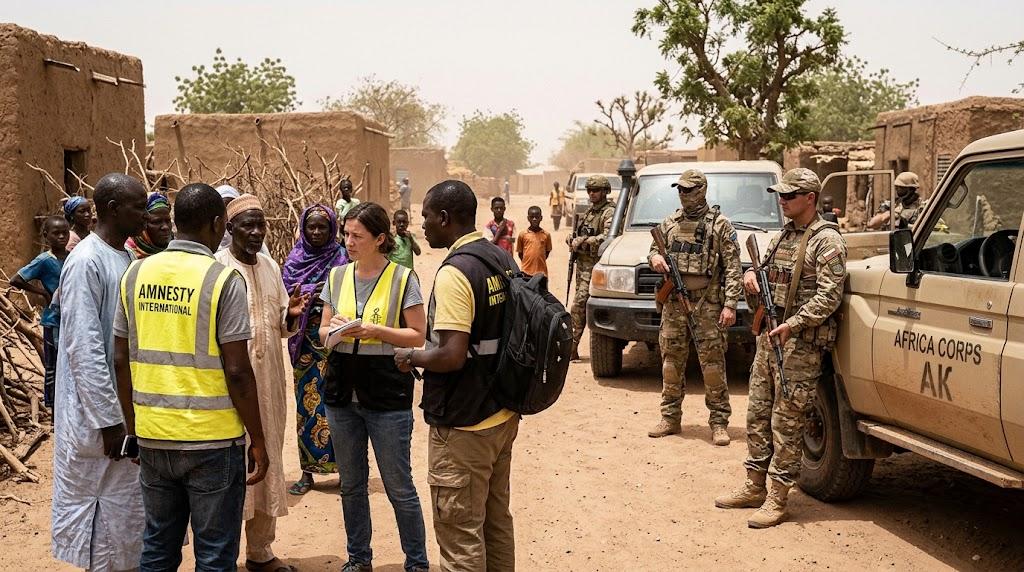
Amnesty International’s findings reveal a disturbing system of abuse within detention centers and during field operations. Fifteen survivors reported horrific methods, including waterboarding, electric shocks, beatings with metal rods or rifle butts, and sexual violence. At least five detainees died from torture or neglect, while others faced months of isolation without access to legal counsel or judicial review. Shockingly, some abuses allegedly occurred in the presence of Malian soldiers, with reports suggesting complicity or passive participation during interrogations. Independent forensic investigations are urgently needed to establish accountability.
Who bears responsibility under Africa Corps’ command?
Africa Corps, described as directly controlled by Moscow, officially began replacing Wagner in January 2025, with full transition completed by June. Yet evidence suggests the shift has done little to curb abuses. In July 2026, 80 men in the Fulani quarter of Bombori were reportedly detained, beaten, and interrogated about militant activities. Six attempting to escape were shot, and three more were executed. The incident underscores troubling questions about the chain of command, oversight mechanisms, and the role of Malian authorities in joint operations with foreign forces.
The crisis of impunity: silence protects abusers
Since 2023, no judicial proceedings have been initiated against government forces for civilian-targeted violence—a damning indictment of systemic impunity. The lack of investigations not only emboldens perpetrators but also discourages victims from speaking out, while restricted access to affected areas hampers efforts to document crimes. Amnesty International has called for immediate, independent probes, transparent agreements with Africa Corps, and robust controls over military operations to ensure civilian protection remains a priority.
Accountability or continuity? The future hangs in the balance
The transition from Wagner to Africa Corps was positioned as a chance to break the cycle of abuse. Yet the evidence suggests a worrying continuity. If Mali’s counterterrorism strategy cannot safeguard civilians, what does that say about the true nature of this security shift? The international community—and Malian authorities—must confront this reality: no military operation can claim legitimacy if it tramples the very people it claims to protect. Justice, not just structural change, is the only pathway to lasting peace.