Congo’s senator Kalonda slams ‘constitutional coups’ during Addis Ababa address
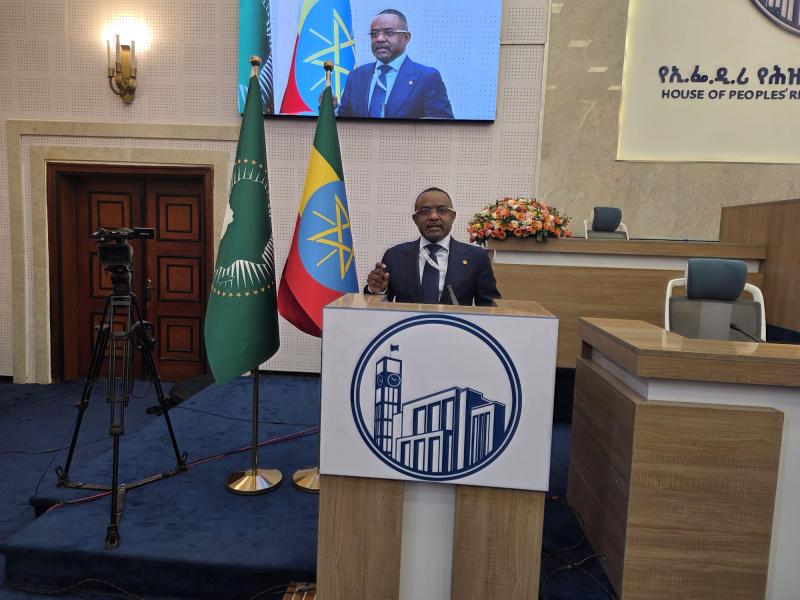
In a bold and impassioned speech delivered at the Ethiopian Parliament in Addis Ababa, Democratic Republic of the Congo (DRC) Senator Salomon Kalonda Idi Della has issued a stark warning to Africa about the growing threat of constitutional coups disguised as legal reforms. Speaking at the Forum on Intelligence and Security, focusing on electoral integrity and democracy across the continent, the senator from Haut-Katanga pulled no punches in his assessment of the current political climate in the DRC and beyond.
DRC as a case study in constitutional manipulation
The senator placed the DRC at the center of his argument, highlighting what he described as a deliberate attempt by the current administration to bypass constitutional term limits through a so-called constitutional reform. “This isn’t just a political maneuver—it’s an assault on democracy itself,” Kalonda declared before a captivated audience of African parliamentarians and international observers.
He painted a vivid picture of the repression faced by citizens protesting these reforms: “The opposition and civil society have risen up. People have taken to the streets in peaceful protest. And what has been the response? Bullets. Bloodshed. More blood on Congolese soil.” The senator’s voice grew more somber as he described the crackdown on dissenting voices, emphasizing that the international community’s muted response amounted to complicity rather than neutrality.
Drawing the line between military and constitutional coups
Kalonda drew a crucial distinction between two forms of illegitimate power grabs. While military coups are universally condemned and often met with sanctions, he argued that constitutional coups represent an even greater danger because they wear the mask of legitimacy. These maneuvers, he explained, often involve carefully orchestrated referendums, co-opted judiciaries, and rubber-stamp legislatures—all designed to create the illusion of democratic process while systematically erasing term limits and consolidating power.
“There are no good coups and bad coups,” the senator asserted. “A violation of constitutional order is a violation of constitutional order, regardless of the method used to achieve it.” He called for an end to the international community’s inconsistent treatment of these two phenomena, urging African nations to adopt a unified stance against all forms of unconstitutional power retention.
Systemic flaws undermining African elections
The senator didn’t stop at critiquing the DRC’s situation. He expanded his critique to highlight systemic issues plaguing elections across the continent:
- Lack of electoral commission independence – Many countries maintain electoral bodies that operate under direct government control, rendering them incapable of conducting free and fair elections.
- Targeted disqualification of popular candidates – Opposition figures are systematically removed from ballots through politically motivated judicial rulings.
- Internet shutdowns during vote counting – The senator condemned these as admissions of guilt, revealing governments’ lack of confidence in their own electoral processes.
A four-point plan for electoral integrity
To combat these challenges, Kalonda proposed a comprehensive four-point strategy:
- Permanent African Electoral Monitoring Cell – A continental body tasked with real-time monitoring of electoral processes across member states.
- African Electoral Digital Sovereignty – Development of homegrown digital infrastructure to prevent external interference and ensure transparent vote counting.
- Transparent and Inclusive Audits – Comprehensive post-election audits conducted by independent bodies with full transparency and civil society participation.
- Pre-electoral Parliamentary Observation Protocol – Mandatory parliamentary observation covering the entire electoral cycle, from voter registration to result proclamation.
The senator concluded by turning his attention to the DRC’s mining sector, arguing that the absence of genuine democracy puts Western economic partners at a disadvantage. “When democratic principles are sidelined, it’s not just the people who suffer—it’s also our partners who find themselves competing on an uneven playing field,” he noted.
Categories: Politics
Date: Saturday, July 11, 2026 – 12:06