
Was there a handball by Saka? Controversial PSG-Arsenal incident analyzed

The opening minutes of the Champions League final proved disastrous for PSG. Despite dominating possession early on—78% to 22%—the French side found themselves trailing Arsenal (0-1) in Budapest. The Parisians’ misfortune struck in the 5th minute when Marquinhos’ poor clearance gifted Leandro Trossard the ball, who then inadvertently set up Kai Havertz for a deep run. On the left flank, the German striker evaded Matvey Safonov before unleashing a thunderous shot past the goalkeeper (5th).
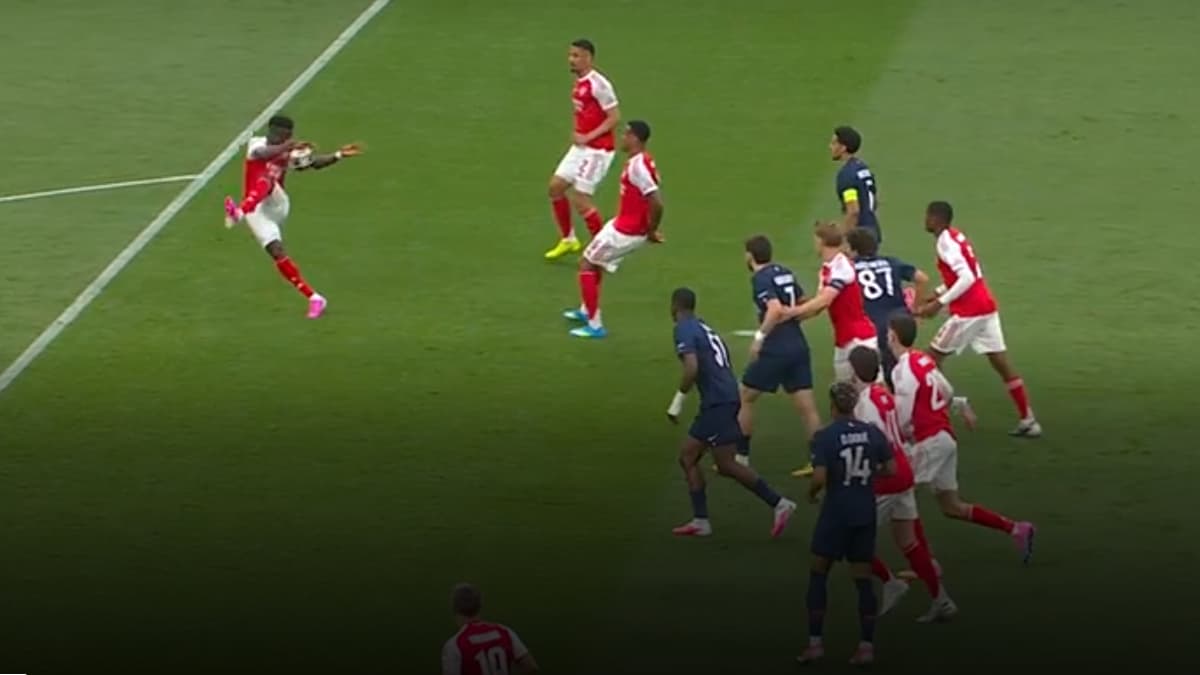
Minutes later, PSG thought they had salvaged a lifeline. Just past the quarter-hour mark, Bukayo Saka received a corner from Ousmane Dembélé. The England international, standing near the edge of the penalty area, deflected the ball onto his forearm before touching it a third time with his hand. The French side immediately protested for a penalty, but the referee and VAR saw no grounds for intervention.
Did Saka artificially extend his body’s coverage?
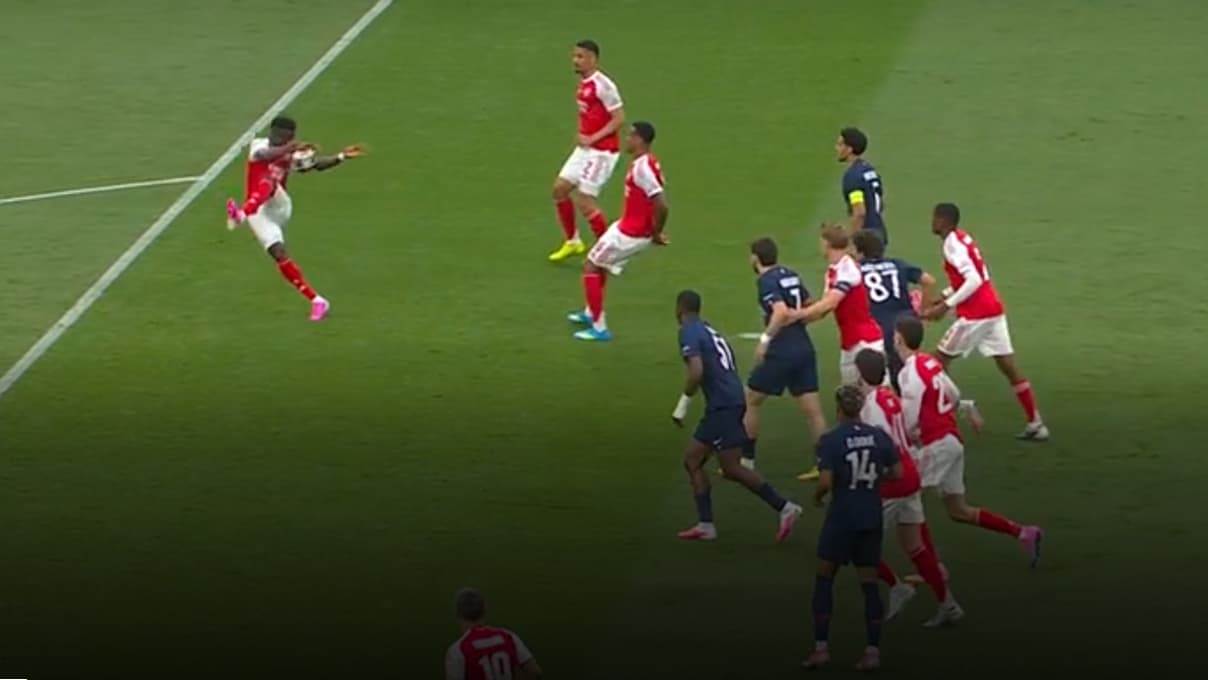
According to IFAB Laws of the Game, not every ball-to-hand contact constitutes an offense. A handball is penalized if deliberate or if the player artificially increases the area covered by their body. This occurs when the arm or hand position is not a natural consequence of the player’s movement. In Saka’s case, his arms were clearly away from his body, suggesting his position was a direct response to clearing the ball. Officials likely deemed his action justified under the circumstances.
Reactions on social media remain divided. Some critics argue, “He touched the ball with his hand 27 times in two seconds—yet nothing was called,” while others defend the decision, stating, “He couldn’t have controlled it; it was a natural clearance.” At halftime, PSG had failed to equalize despite several attempts, though none were truly clear-cut chances.