Côte d’Ivoire has achieved a remarkable milestone by securing investment commitments far exceeding expectations for its National Development Plan (PND) running through 2030. The announcement was made by the Minister of Planning to the press, revealing that international partners have pledged over $80 billion—four times the anticipated amount.
This unprecedented financial backing underscores the country’s economic resilience and renewed stability, following a turbulent period of political and military unrest in the early 2000s. Côte d’Ivoire now boasts one of the strongest growth rates in West Africa, averaging 6.5% annually in recent years, reinforcing investor confidence in its long-term prospects.
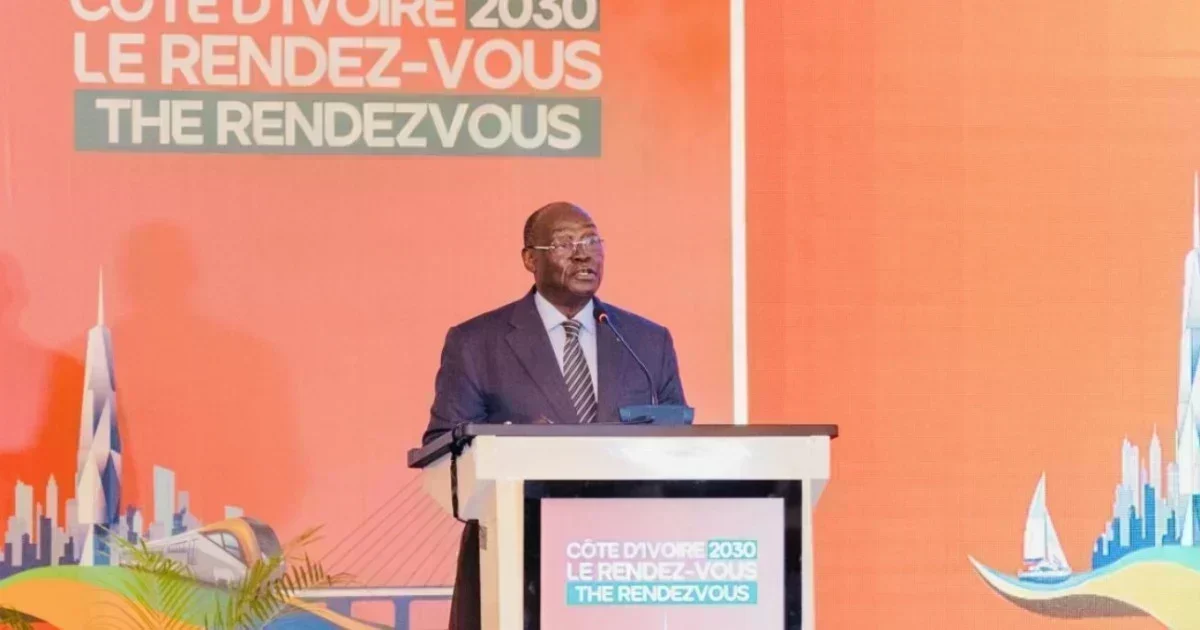
A high-profile event in Abidjan brought together government officials and hundreds of public and private investors to finalize funding for the PND. The plan encompasses critical priorities such as security enhancements, agricultural modernization—contributing 20% to GDP—and the development of national champions through targeted business support. Major infrastructure projects, including a high-speed rail network, are also part of the ambitious roadmap.
Investment commitments surpass all expectations
The government had initially projected a public financing need of approximately $20 billion. However, development partners have committed to providing more than $80 billion—a staggering fourfold increase. Key contributors include major institutions such as the World Bank, African Development Bank, and European Union.
Speaking at the event, Minister Souleymane Diarrassouba highlighted the overwhelming response, noting that over 70% of the PND’s total financing—amounting to $147 billion—is expected to come from the private sector. The overall PND funding target now stands at $209 billion, with the Ivorian government also contributing to the effort.
Côte d’Ivoire’s growing appeal to global markets was further demonstrated in February, when it successfully raised $1.3 billion through international bond issuance at exceptionally favorable interest rates for an emerging economy. Additionally, the International Monetary Fund approved a disbursement of nearly $833 million in June, supporting ongoing economic reforms.
While the IMF commended the country’s resilient economic performance, it projected a slight moderation in growth to 6% in 2026 from 6.5% in 2025, alongside a modest rise in inflation to around 3.3% this year.
The Ivorian economy, long driven by agriculture, has been diversifying in recent years. New opportunities in mining, oil, and gas are emerging as key pillars of future growth, signaling a strategic shift toward a more balanced and sustainable economic model.